Finding the right wireless speaker adapter for a receiver lets you stream music from phones, tablets, or TVs to legacy stereo systems without rewiring. The table below summarizes five top adapters chosen for compatibility, features, and connection flexibility.
| Product | Key Features |
|---|---|
| esinkin Bluetooth Audio Adapter | 3.5mm/RCA, easy setup, ~30–40 ft range |
| 1Mii 2.4GHz Transmitter Receiver Set | Long 260 ft range, AUX/RCA in/out, low latency |
| KAIY Bluetooth 5.3 Receiver | RCA/AUX/Optical outputs, USB playback, Bluetooth 5.3 |
| UGREEN Bluetooth 6.0 Receiver | LDAC codec, Hi-Res, dual pairing, Bluetooth 6.0 |
| 1Mii B06 Plus Bluetooth Receiver | Class 1 range, aptX HD/Adaptive, auto reconnect |
esinkin Bluetooth Audio Adapter
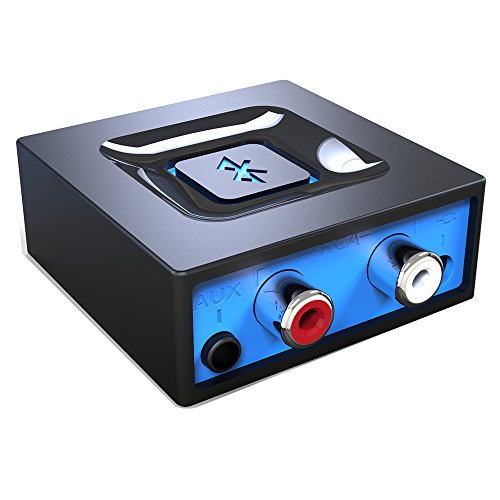
This esinkin adapter is designed to turn speakers and home stereo systems into Bluetooth-capable devices. It connects via 3.5mm or RCA and pairs with smartphones and tablets for streaming. Setup is simplified by a single central button that handles pairing, play/pause, and power operations.
Key features include automatic reconnect to previously paired devices and an indoor wireless range of about 30–40 ft (10–12 m). The adapter includes the necessary cabling for common stereo inputs and targets users with basic Bluetooth streaming needs and simple installation requirements.
1Mii 2.4GHz Transmitter Receiver

This 1Mii kit includes both a transmitter and receiver, using a 2.4GHz link designed for longer range and stable connection. It supports simultaneous AUX and RCA output and provides plug-and-play operation for TVs, PCs, and powered speakers.
Highlights are the reported 260 ft (80 m) long-range capability (line-of-sight) and 25 ms low latency, suitable for minimizing lip-sync issues with video sources. The kit powers on automatically and enters pairing mode, offering quick reconnection behavior for home AV setups where a dedicated transmitter is useful.
KAIY Bluetooth 5.3 Receiver

The KAIY receiver focuses on compatibility with legacy systems by offering RCA, AUX, and Optical outputs. It supports Bluetooth 5.3 for improved pairing, signal stability, and lower latency compared with older Bluetooth versions.
Additional features include USB flash drive playback and plug-and-play operation, making this adapter versatile for users who want both wireless streaming and direct playback from USB storage. The 33 ft connectivity spec suits typical living-room distances for stereo receivers.
UGREEN Bluetooth 6.0 Receiver

UGREEN’s adapter emphasizes high-resolution audio support via the LDAC codec and claims Hi-Res certification. It can handle audio sampling up to 24bit/96kHz, dependent on source device codec support.
The unit uses a modern Bluetooth 6.0 chip for improved connection stability and lower power consumption. It supports dual pairing so two phones can be paired simultaneously (playback is single-source). This adapter targets listeners prioritizing higher-fidelity wireless audio with modern codec support.
1Mii B06 Plus Bluetooth Receiver
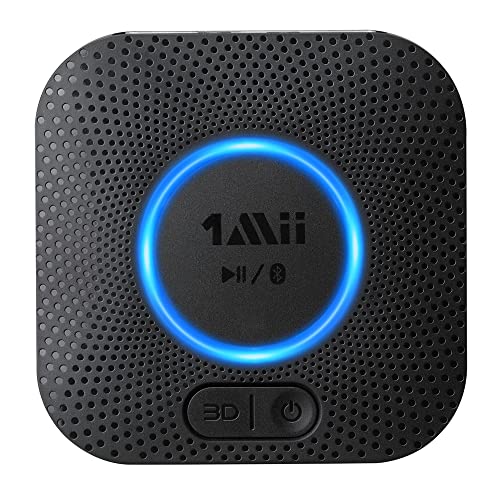
The 1Mii B06 Plus is a Class 1 Bluetooth receiver that advertises an extended range up to 164 ft (50 m) line-of-sight and improved indoor reach. It supports aptX HD and aptX Adaptive codecs and includes a selectable 3D surround mode to alter audio presentation.
Designed for home stereo streaming, it auto powers on and reconnects to previously paired devices when plugged into power. The combination of long range and higher-quality codecs makes it suitable for larger homes and higher-quality Bluetooth audio streaming to legacy receivers.
Buying Guide: How To Choose A Wireless Speaker Adapter For A Receiver
Choosing the right adapter depends on the receiver’s inputs, desired audio quality, latency tolerance, and range needs. Below are key considerations and comparison perspectives to guide selection.
Connection Types
- RCA and 3.5mm AUX: Most legacy receivers support RCA; ensure the adapter has compatible outputs.
- Optical (TOSLINK): Preferred for digital audio paths and reduced interference; useful for TVs and some receivers.
- XLR or Balanced Outputs: For pro audio gear, look for specialized adapters (e.g., XLR receivers) for mixers and PA systems.
Audio Codec And Quality
- SBC vs aptX/LDAC: SBC is basic; aptX/aptX HD/Adaptive and LDAC enable higher bitrate transfers and better fidelity when both source and adapter support them.
- Hi-Res Support: Adapters claiming Hi-Res (LDAC, high sampling rates) deliver better detail but require compatible source devices.
Range And Environment
- Short vs Long Range: Bluetooth Class 2/5–33 ft is fine for a single room; Class 1 or 2.4GHz kits provide extended line-of-sight range for larger spaces.
- Interference And Walls: Expect reduced range through walls. 2.4GHz systems may perform differently from Bluetooth in dense RF environments.
Latency And Use Case
- Low Latency Needed? For TV or video, choose adapters with low-latency specs (aptX Low Latency or dedicated 2.4GHz low-latency links) to reduce lip-sync issues.
- Music-Only Streaming: If primarily listening to music, focus on codec support and sound quality over latency.
Power And Setup
- Power Options: Some adapters use USB power, others include an AC adapter. Ensure placement near a power source.
- Auto Reconnect: Auto-power-on and auto-reconnect features improve convenience for permanent installations.
Multi-Device And Multi-Room
- Dual Pairing: Allows two phones to pair simultaneously for shared control, though only one can play at a time on most devices.
- Multi-Room Solutions: These adapters generally provide single-room streaming; for multi-room setups consider dedicated whole-home audio systems.
Durability And Professional Use
- Consumer vs Pro Gear: Consumer adapters suit home stereo receivers. For PA, DJ, or pro installations, choose specialized XLR or balanced-output receivers with higher durability and lower noise.
Price-To-Feature Trade-Off
- Essential Features: RCA/AUX outputs, stable Bluetooth version, and reliable pairing are baseline needs.
- Advanced Features: Hi-Res codecs, long-range Class 1 chips, and optical outputs add value if you need those specific capabilities.
Comparison Checklist
- Does the adapter match the receiver inputs (RCA/AUX/Optical)?
- Which codecs does the adapter support and does your source support them?
- Is the listed range sufficient for the placement and environment?
- Is low-latency required for TV use?
- Does the power method and form factor fit your installation?