Old video tapes such as 8mm, Hi8, and Digital8 hold irreplaceable memories. This guide highlights reliable options to play, transfer, and digitize these tapes for modern devices. Each entrant below is evaluated for compatibility, transfer features, and ease of use to help you choose the best fit for preserving footage.
| Product | Brand | Key Benefit |
|---|---|---|
| Sony Camcorder for 8mm Digital8 Hi8 Tape Transfer to Computer USB and DVD | Sony | All-tape compatibility with USB capture |
| Hi8 8mm VCR Video Cassette Recorder, Play and Digitize Your Old 8mm and Hi8 Tapes | Tech Collector | Built-in camcorder for playback and digitizing |
| Sony Standard Grade 8mm Camcorder Videotape Cassette, 120 Minutes | Sony | Reliable, long-format recording |
| Sony Hi-8 HMPD 120 minute 2-Pack Video Camcorder Cassette Tapes | Sony | Higher picture quality and durability |
| Portta VHS to Digital Converter, Video to Digital Recorder | Portta | Plug-and-play digital conversion |
Sony Camcorder For 8mm Digital8 Hi8 Tape Transfer
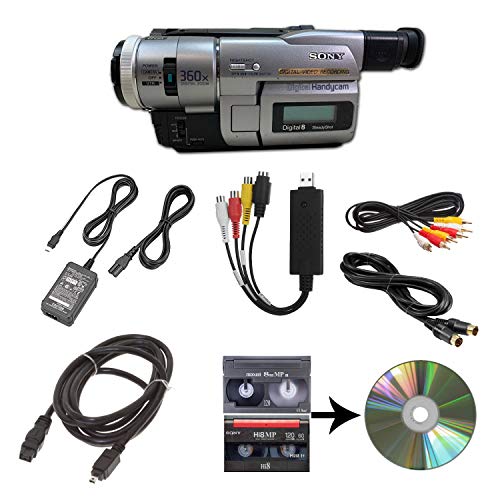
The Sony camcorder shown provides playback across common 8mm formats, including 8mm, Video8, Hi8, and Digital8 tapes. It includes a USB capture device to transfer footage to computer files or burn to DVD, streamlining digitization. Ancillary cables for AV and S-Video ensure compatibility with TVs and older systems. This solution combines playback with straightforward digital transfer, reducing the number of separate devices you might need.
Hi8 8mm VCR Video Cassette Recorder

This device blends playback with digitization capabilities for old 8mm tapes and Hi8 formats. It includes a USB adapter to facilitate digitizing tapes on a PC, enabling preservation without needing specialized equipment. The integrated playback feature simplifies checking footage before digitization, helping you select the best clips to convert first.
Sony Standard Grade 8mm Camcorder Videotape Cassette, 120 Minutes

These 8mm tapes provide a reliable, long recording time suitable for archival projects. While not a transfer device themselves, pairing these tapes with a compatible player or converter can help ensure you have ample capture time per tape, reducing interruptions during digitization sessions. Sony’s 120-minute standard-grade tapes are widely compatible with compatible camcorders and decks.
Sony Hi-8 HMPD 120 Minute 2-Pack Tapes

This two-pack offers enhanced picture quality with a claimed 12 percent improvement over standard metal-patron tapes and a Depression Surfacing technology for smoother tape playback. They are well-suited for archival projects where preserving video quality is a priority. Use with compatible Hi-8 devices or camcorders to maximize fidelity during digitization.
Portta VHS To Digital Converter

Portta’s converter/recorder is designed to digitize analog video directly to digital files via USB, without needing a PC for operation (though optional). It supports AV, S-Video, and AUX inputs and records in MP4 or MP3 formats. It’s a practical, plug-and-play option for converting taped footage to modern formats, with a built-in preview screen and USB/SD storage options. It does not play tapes by itself but captures output from compatible players.
Buying Guide
When selecting a device to handle 8mm, Hi8, and related tapes, consider format compatibility, ease of use, and how you plan to store and share the digitized footage. The primary paths include standalone players with built-in transfer capabilities, camcorders that can play tapes while capturing output, and dedicated video capture/conversion boxes. Each option has trade-offs.
- Format compatibility: Verify whether the device supports 8mm, Hi8, Digital8, and VHS-C in addition to broader analog formats. Wide compatibility reduces the need for multiple devices.
- Input/output options: Look for devices with USB capture, SD/USB storage, or direct computer connectivity. Ensure you have the right cables (AV, S-Video, RCA).
- Digitization quality: Higher capture resolution (1080p or better where possible) yields crisper playback on modern devices. Some devices specify 640×480 outputs, which is common for older transfers; others offer better scaling.
- Ease of use: All-in-one solutions reduce setup complexity. If you prefer minimal steps, consider a device that handles playback and transfer in a single workflow.
- Preservation approach: Decide whether you want physical media to accompany digital files or purely digital storage. Some services offer cloud delivery and recycling; others require manual archiving.
- Safety and handling: Tape decks and cassettes are sensitive to wear. Use proper cleaning routines and handle reels to avoid further degradation during playback or transfer.
- Future-proofing: Store digitized files in widely supported formats (MP4 with H.264/AAC) and maintain multiple backups (local and cloud) to guard against data loss.
What to expect in a transfer project
Transferring old tapes can reveal degraded footage, color shifts, or audible artifacts. A staged approach—cataloging tapes, performing test transfers, and batch processing—helps manage time and storage. If you’re handling valuable footage, consider preserving original tapes as a separate, long-term backup while prioritizing high-quality digital copies for everyday viewing.
By aligning format coverage with your goals—whether quick digitization for sharing, or archival-quality preservation—you can choose the right combination of playback, capture, and conversion tools. The selections above provide practical options across compact players, multi-format tapes, and standalone converters to help you preserve memories reliably.