Answering the need for reliable, car-friendly USB C to USB C charging, this guide highlights five well-suited options. These picks are best for drivers who want fast charging, compact designs, and minimal cable clutter. Ideal buyers include frequent commuters, road-trippers, and stay-connected professionals who rely on USB-C devices in their vehicles. Below is a quick snapshot of the top five products followed by detailed sections and a practical buying guide.
| Product | Best For | Key Benefit |
|---|---|---|
| KIYODA USB C To C Cable 3ft Coiled | Car users needing tidy cables | Coiled design saves space and reduces tangles |
| KENHAO 3-Port 67W Car Charger | Multi-device households | Fast PD and QC charging for multiple ports |
| Anker USB C Car Charger 40W | All-around reliability | PowerIQ 3.0 for fast, safe charging |
| KENHAO 67W 3-Port Car Charger + Cable | Samsung and Apple ecosystem users | Strong multi-port performance with broad compatibility |
| Sailift USB C Cable 2ft | Ultra-short, tidy car setup | Compact 2ft cable, 60W max |
KIYODA USB C To C Cable 3ft Coiled — Best For Minimalist Car Setups

The KIYODA 3ft coiled USB C to USB C cable offers a tangle-free solution for car use. Its spring-like design compresses when not in use and stretches when needed, making it ideal for front-seat charging or desk use in tight spaces. Best for drivers who value organized consoles and a compact charging setup. USB PD 3.0 and QC 3.0 support provide up to 60W and data transfer up to 480Mbps, making it suitable for charging compatible devices quickly while navigating or streaming. A potential limitation is the 3ft length; in larger vehicles or rear-seat setups, you may prefer a longer option.
KENHAO Car Charger USB C 3-Port 67W — Best For Multiple Devices

KENHAO’s 67W three-port car charger provides PD 37W for USB-C and QC 30W for USB-A, enabling fast charging for most devices concurrently. It’s designed for travelers who carry multiple devices, including iPhones and Android phones, tablets, or even laptops capable of USB-C charging. The all-metal housing promotes heat dissipation and durability. Best for households or teams that rely on shared vehicle charging. A caveat is that total output depends on connected devices; charging two power-hungry devices at once may reduce peak speed.
Anker USB C Car Charger — Best For Reliability

Anker’s 40W USB C car charger uses PowerIQ 3.0 to optimize charging for USB-C devices, including iPhone and Android devices. Its compact, space-saving design makes it easy to access dashboard controls while providing fast charging across compatible devices. Best for drivers who want a dependable, simple charging solution with broad device compatibility. Limitations include reliance on the car’s power port to support the maximum 60W PD; lower-powered ports may reduce peak speeds for demanding devices.
KENHAO 67W 3-Port Car Charger — Best For Samsung/Apple Ecosystems

This 67W car charger targets users with devices from Samsung and Apple ecosystems. It supports PD 37W for USB-C and QC 30W for USB-A, allowing fast charging for iPhones and Galaxy devices while simultaneously powering a second device. Its broad compatibility covers many models, including iPhone 17 and Galaxy S-series. Best for travelers who want a single charger handling multiple devices. A caution: USB-A may heat up slightly during heavy use; monitor for comfort in very hot environments.
Sailift USB C Cable 2ft — Best For Short, Clean Cables
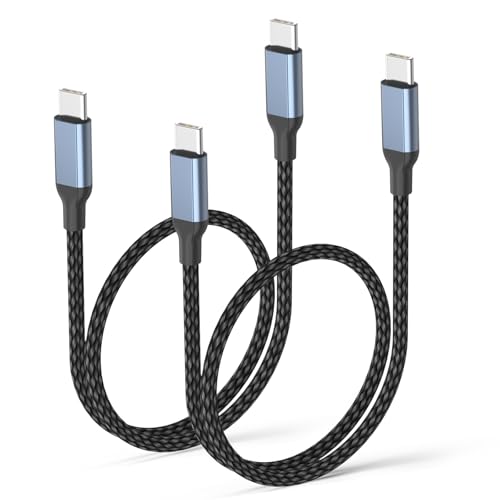
The Sailift 2ft USB C to USB C cable is ideal for compact car setups where space is at a premium. It supports up to 60W PD charging and 480Mbps data transfer, making it suitable for quick top-ups and data syncing. Best for drivers who want a short, tangle-free option that stays neatly housed in a console or cup holder. Limitation: shorter length may not reach rear-seat devices without a mid-cabin placement.
Bkduice Coiled USB C Cable — Best For Charge-and-Go

The Bkduice coiled cable offers a compact solution with a spring design to minimize clutter. It can stretch from 1ft to around 3ft and supports up to 60W charging with a 480Mbps data rate. Best for drivers who want a flexible coil that retracts easily into a center console. The note: a dedicated USB-C charger is required on the device end for power transfer to occur efficiently.
LISEN Coiled USB C Cable — Best For Clean, Tidy Cabins

LISEN’s coiled USB C cable combines a retractable design with 60W PD capability and a tidy profile. It stretches from about 1ft to 3.5ft, offering flexibility for CarPlay or Android Auto while keeping the cabin neat. Best for drivers who want a balance of speed, compactness, and retraction. Limitation: the maximum stretch is 3.5ft, so frequent long distances may require an alternative longer cable.
Buying Guide: Key Considerations For USB C To USB C Car Cables
Choosing the right USB C to USB C car cable depends on length, charging speed, and use case. Consider PD and QC support to ensure fast charging for phones, tablets, and laptops. If you drive with multiple devices, prioritize multi-port adapters and heat resistance. Coiled cables save space but confirm their extended reach if you often charge from back seats or trunks. For front-seat setups, shorter cables can reduce clutter and distraction.
Tips for selecting the best option:
- Best for minimalism: Coiled cables that retract and stay tidy.
- Best for multi-device households: Car chargers with multiple ports and high total output.
- Best for quick top-ups: PD-enabled cables and chargers with 60W or higher output.
- Avoid this if: You need a very long reach regularly in larger vehicles; choose a longer cable or separate longer extension.
Frequently Asked Questions
- What does 60W PD mean for car charging? It indicates the maximum power delivery capability, enabling faster charging for compatible devices.
- Can USB C car cables transfer data in addition to charging? Yes, many support data transfer, commonly up to 480 Mbps.
- Is a multi-port car charger better than a single-port? Yes, if you need to charge multiple devices at once, but peak speed may drop per device depending on total output.
- Do coiled cables work with all USB-C devices? They work with USB-C devices that support standard USB-C charging; adapters are not required for compatibility.
- Will a higher-watt charger damage my phone? No, devices only draw what they need; the charger should have proper protections against over-current and overheating.
- Is length important for safety while driving? Yes; shorter cables reduce clutter around pedals and gear shifts, improving safety and focus.