The right ultra thin center channel speaker improves dialogue clarity without blocking your flat-panel TV. Below is a quick comparison of five slim center channel options selected for low-profile design, compatibility, and voice-focused performance.
| Product | Brand | Key Feature |
|---|---|---|
| Polk Monitor XT35 | Polk Audio | Slim Profile, 1″ Tweeter + Four 3″ Woofers |
| Polk Reserve R350 | Polk Audio | Slim, Hi-Res Certified, 1″ Pinnacle Tweeter |
| Polk TL1 | Polk Audio | Time Lens Driver Alignment, Curved Slim Enclosure |
| Yamaha NS-C210 (Bundle) | Yamaha | Designed For Clear Dialogue With Subwoofer Bundle |
| Klipsch R-52C | Klipsch | Aluminum Tweeter With Tractrix Horn |
Polk Monitor XT35 Slim Center

The Polk Monitor XT35 is explicitly marketed as a slim center channel that won’t block a TV. It pairs a 1″ Terylene tweeter with four 3″ dynamically balanced woofers to produce focused midrange and vocal clarity. The design supports 4- and 8-ohm compatibility and is advertised as compatible with Dolby Atmos & DTS:X.
Key design points include a low-profile enclosure to sit beneath modern screens and a driver complement tuned for dialogue intelligibility. The listed features emphasize high-resolution sound from multiple sources and a build intended to blend with contemporary décor.
Polk Reserve R350 Slim Center

The Polk Reserve R350 is a slim center channel with a 1″ Pinnacle Ring Radiator tweeter and four 4″ turbine cone woofers. It is Hi-Res Audio certified and supports Dolby Atmos and IMAX Enhanced workflows, indicating a focus on extended bandwidth and detailed mids for clear dialogue.
Its flexible placement options let the R350 serve horizontally as a center channel or vertically as left/right surrounds. The features list highlights modern slim aesthetics while promising smooth midrange performance and compatibility with high-resolution formats.
Polk TL1 Slim Center Channel
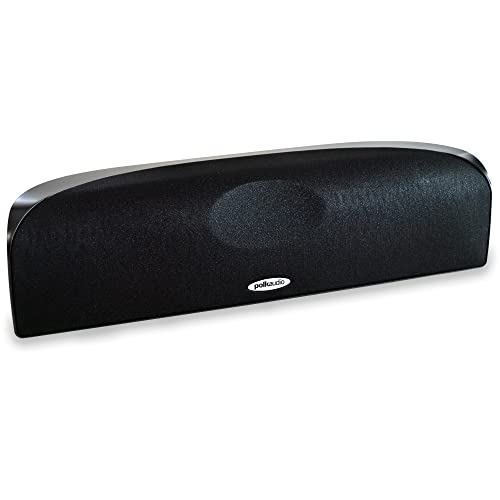
The Polk TL1 uses Polk’s Time Lens technology to align driver output for improved soundstaging and imaging in a compact, curved enclosure designed to match flat-panel TVs. It includes a 1/2″ silk dome tweeter and dual 2.5″ dynamic balance mid/woofers intended to prioritize clear vocals.
The slim, curved form factor minimizes visual obstruction while the driver alignment aims to maintain coherent phase and imaging. The manufacturer lists a high-gloss finish and design features intended to complement modern displays.
Yamaha NS-C210 Center (Receiver Bundle)

The Yamaha bundle pairs an RX-V385 AV receiver and NS-C210 center channel. The NS-C210 is designed for crystal-clear dialogue and pairs with Yamaha’s powered subwoofer for extended bass, forming a system-oriented approach to slim center channel integration.
The bundle’s features emphasize room-filling 5.1 performance when paired with the receiver and subwoofer. The NS-C210 is presented as a center channel tuned for natural vocals, suitable for users seeking an integrated package rather than a standalone speaker purchase.
Klipsch R-52C Center Channel
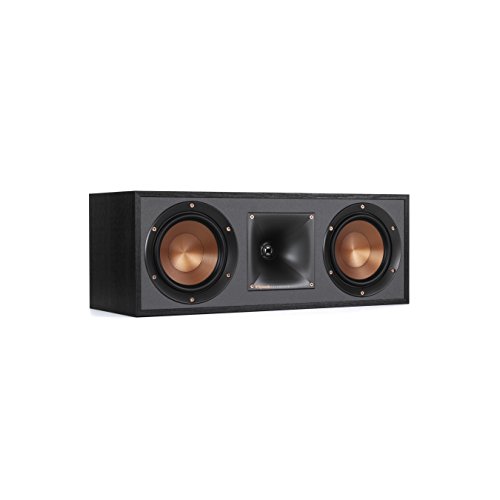
The Klipsch R-52C uses dual 5.25″ spun-copper IMG woofers and a 1″ aluminum LTS tweeter mated to a 90×90 square tractrix horn, a configuration that emphasizes efficient delivery and articulate dialogue. Listed frequency response is 89Hz–21kHz ±3dB.
While not the slimmest model in this list, the R-52C is relatively low-profile compared to traditional large-format center speakers and emphasizes horn-loaded high-frequency dispersion for clear vocal presence and high sensitivity.
Buying Guide: How To Choose An Ultra Thin Center Channel Speaker
Choosing an ultra thin center channel requires balancing physical fit with your TV, acoustic performance, and system matching. Key considerations below cover technical, aesthetic, and system-level perspectives.
Physical Fit And Mounting
- Height And Depth: Measure the clearance under your TV. Ultra thin models are designed to avoid screen obstruction and often include grille shapes or curved enclosures for low-profile placement.
- Wall-Mount or Shelf: Confirm whether the speaker includes keyholes, brackets, or is intended to sit on furniture. Slim speakers may also double as shelf surrounds when needed.
Voice Clarity And Driver Design
- Tweeter Type: Silk, aluminum, or ring radiators affect perceived vocal smoothness and detail. Choose based on whether you prefer warmer (silk) or more revealing (metal/radiator) highs.
- Driver Alignment: Time-aligned or phase-coherent designs help vocals remain centered and intelligible, especially important for dialogue-focused listening.
Power, Sensitivity, And Impedance
- Sensitivity: Higher sensitivity speakers require less amplifier power for a given loudness, useful if using a mid-power AVR.
- Impedance: Check 4Ω vs 8Ω ratings to ensure compatibility with your receiver or amp. Slim center channels vary; matching load expectations improves reliability and performance.
System Integration And Features
- Formats Supported: If you use Atmos or object-based formats, ensure speaker and surround setup compatibility. Some slim centers are rated for Dolby Atmos and Hi-Res audio.
- Paired Subwoofer: Many slim centers lack deep bass; pairing with a subwoofer corrects low-frequency deficit and improves overall balance.
- Matching With Left/Right Speakers: Consider timbral match with front left and right speakers to maintain coherent imaging across the front soundstage.
Listening Environment And Placement
- Room Size: Larger rooms benefit from larger cone area or higher sensitivity centers; small rooms can favor compact, precise models.
- Placement Height: Position the center speaker so the tweeter aligns close to ear height when seated to preserve imaging.
Durability, Finish, And Aesthetics
- Cabinet Build: Damped, well-braced cabinets reduce coloration. Materials and finishes should match or complement your TV and room décor.
- Grille And Styling: Removable grilles and slim bezels maintain a low visual profile while allowing driver access if desired.
Comparison Perspectives
- Dialogue Focus vs. Full-Band Performance: Slim centers prioritize mids and highs for speech; evaluate whether you also need low-frequency extension or will rely on a subwoofer.
- Integrated Package vs. Standalone Speaker: Bundled solutions (receiver + center) simplify matching but may limit upgrade flexibility compared with standalone center channels.
- Objective Measurements vs. Listening Preference: Look for frequency response, sensitivity, and impedance specs, but also audition when possible because room interactions affect perceived clarity.