Answer: Use a dedicated bias probe to measure plate or cathode currents with precision across common vacuum tubes. This guide highlights five top options suited for technicians, hobbyists, and audio enthusiasts who tune tube amplifiers. Each product is selected for compatibility, ease of use, and durable construction. The buying table below the introduction helps compare key features at a glance.
| Product | Best For | Key Benefit |
|---|---|---|
| Douk Audio Nobsound CT1-P | Plate current tester | Wide tube compatibility |
| Nobsound CT1-C | Cathode current tester | Clear readings for cathode bias |
| Douk Audio CT1-BOX Dual | Dual current measurements | Two meters, broad range |
| Bias Master BM4 (TAD) | Comprehensive bias monitoring | 4 probes included |
| AMPTATA V8 / M2-EL84 | DIY bias testing | Low voltage bias for EL/6L types |
Note: The choices focus on ease of use, durable construction, and broad tube compatibility, helping you select the right probe for your amplifier setup.
Douk Audio Nobsound CT1-P Plate Current Probe
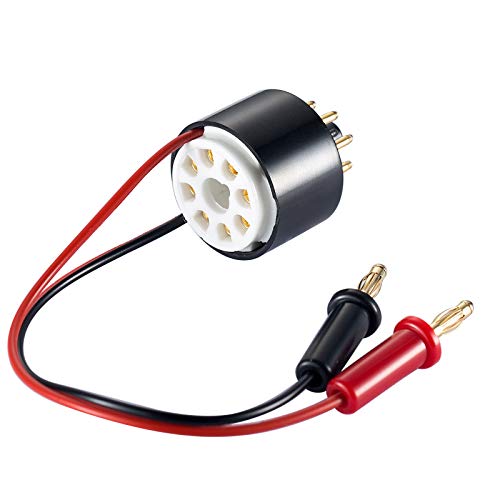
Best for measuring plate current across a wide range of vacuum tubes, including EL34, KT88, 6L6, 6V6, 5881, 6550, KT66, KT100, KT120, and 7027 (CT1-P). The copper body and ceramic socket with gold pins ensure reliable long-term performance. A 23 cm tube socket cable aids flexibility during testing. The simple process involves inserting the probe and connecting a multimeter to read milliamps. This makes it ideal for technicians and hobbyists who need accurate bias readings without complicated setup.
Who it’s for: Best for amp builders and service technicians who require a universal plate current probe with straightforward operation. Limitations: Reading stability can depend on coupled stages; ensure your multimeter is set to an appropriate range for milliamps.
Nobsound CT1-C Cathode Current Probe
This probe tester targets cathode current, covering the same broad tube lineup as the plate version. It offers a user-friendly interface: insert the probe, connect the multimeter, and read current in milliamps. Built with a copper body and gold-plated ceramic socket, it provides robust connections and durability. The 23 cm lead length enhances testing reach for tight chassis spaces.
Who it’s for: Best for bias adjustments focused on cathode current, especially in power tube amps. Limitation: It shares the same generalized data notes as the plate variant—readings may vary slightly with tube brand and bias network design.
Douk Audio CT1-BOX Dual Bias Probes

Best for simultaneous bias monitoring, the CT1-BOX dual probes pair two meters with a single kit. It supports a wide range of tubes and uses durable construction with a ceramic socket and gold-plated pins. The dual current meter reader reaches up to 100 mA, enabling clear readings for more complex bias adjustments or balanced tube sets in push-pull configurations.
Who it’s for: Choose this if you need parallel bias checks or testing two tubes at once. Caution: Dual meters may require careful wiring to avoid cross-talk between channels in crowded electronics layouts.
Bias Master BM4 by TAD

The Bias Master BM4 is a complete bias monitoring system, including four probes and a clear manual. It enables safe, easy bias current measurement for vacuum tubes within amplifiers. The BM4 system supports straightforward operation and provides reliable readings, helping maintain stable bias conditions over time.
Who it’s for: Best for dedicated bias control setups or workshops that require a multi-probe solution for frequent testing. Limitation: May be more than enough for simple DIY projects, so consider your required probe count before purchasing.
AMPTATA V8 Bias Probe (8-pin)
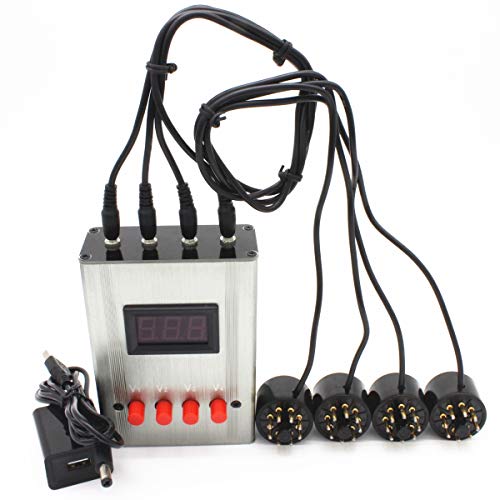
The AMPTATA V8 is a global voltage standard bias tester designed to measure cathode current for bias reading in EL34, KT88, 6L6, 6V6, 5881, 6550, KT66, KT100, KT120, and 7027 types. It is suitable for testing at the low voltage side of tubes, addressing bias in a range of common power tubes. The V8 model emphasizes versatility for DIY testers and hobbyists.
Who it’s for: Choose if you want a versatile, low-voltage bias tester for common power tubes. Caution: V8 focuses on low-voltage testing; verify compatibility with your amp’s bias network before use.
AMPTATA M2-EL84 Bias Tester

The M2-EL84 is tuned for EL84 and related tubes (6BQ5, 6P14, 7189, 6P1). It measures cathode current to provide bias readings from the low-voltage side of the tube. This makes it a practical option for owners of vintage or compact amplifiers using EL84-based output stages.
Who it’s for: Best for EL84-focused builds or repairs where a dedicated EL84 bias tool is preferred. Limitation: Primarily targeted at EL84-family tubes; compatibility breadth is narrower than other options.
Bias Master BM4 Octal Probes

Bias Master BM4 Octal Probes offer adapters for testing other tube types and are designed for use with the S-TBM4-X Bias Master system. This expands testing coverage beyond the base four-probe option and helps maintain bias control across varied amplifier configurations.
Who it’s for: Choose if you need adapter probes to broaden the testing range. Caution: This accessory kit is most beneficial when paired with the main Bias Master system.
Buying Guide: How to Choose a Tube Amp Bias Probe
What to consider when selecting a bias probe:
- Tube compatibility: Ensure the probe supports the tubetypes you use most, such as EL34, KT88, 6L6, 6V6, 5881, 6550, and others.
- Current range: Look for a device with a current range that covers milliamps typical for your tubes to prevent overload or inaccurate readings.
- Measurement type: Decide between plate current, cathode current, or dual-current probes based on your biasing needs.
- Build quality: Copper body, ceramic sockets, and gold-plated pins typically offer better durability and signal integrity.
- Ease of use: Simple plug-in operations and clear manual help reduce setup time and errors.
- Reading stability: Some kits perform better with stable power supplies and proper grounding in vintage gear.
- Expansion potential: Consider whether you need multi-probe sets or adapter options for broader tube families.
Buying tips: Quick-Reference Comparison
- Best overall versatility: Dual and multi-probe sets that cover plate and cathode currents across many tube types.
- Best for EL84 and similar tubes: Tools explicitly designed for EL84 bias measurement.
- Best for DIY and hobbyists: Low-cost, straightforward units with clear instructions for beginners.
Frequently Asked Questions
- What is a tube amp bias probe used for?
It measures plate or cathode current to set proper bias in vacuum-tube amplifiers, ensuring optimal operating points.
- Can I use any multimeter with these probes?
Most designs require a standard digital multimeter; check the included manual for voltage and current range requirements.
- Are bias probes suitable for all amplifier brands?
They cover a wide range of common tubes, but always verify compatibility with your specific amplifier’s bias network.
- Is dual-probe testing necessary?
Dual probes help when balancing bias across two tubes in push-pull configurations or for simultaneous measurements.
- Do these probes affect audio quality?
Proper bias optimization can improve linearity and reduce distortion; probes themselves are measurement tools and should not alter audio signal when used correctly.