Thin center channel speakers are designed to fit under or in front of flat-panel TVs without blocking the screen while delivering clear dialogue and balanced midrange. Below is a quick comparison of five slim center channel options that prioritize low profile design and vocal clarity.
| Product | Brand | Key Feature |
|---|---|---|
| Polk Monitor XT35 | Polk Audio | Low-Profile Design, Hi-Res Certified |
| Polk Signature Elite ES35 | Polk Audio | Slim With Power Port Bass |
| Polk TL1 | Polk Audio | Curved Slim Enclosure, Time Lens Tech |
| Saiyin Slim Center Channel | Saiyin | Compact Desktop/Wall-Mount Option |
| Yamaha NS-C210 | Yamaha Audio | Two-Way Bass-Reflex Compact Design |
Polk Monitor XT35 Slim Center Channel Speaker

The Polk Monitor XT35 is engineered as a slim center channel that aims not to block TVs while delivering clear dialogue. It uses a 1″ Terylene tweeter paired with four 3″ dynamically balanced woofers, providing an open midrange and impactful bass for its size. The unit is listed as Hi-Res Audio certified and compatible with Dolby Atmos and DTS:X sources. Its 4- & 8-Ohm compatibility allows flexibility with most receivers and amplifiers, and the wall-mountable form factor helps maintain a low-profile setup. The construction emphasizes modern design and premium build quality intended to blend with flat-panel TVs.
Polk Signature Elite ES35 Slim Center Channel Speaker

The Polk Signature Elite ES35 is a slim center channel that prioritizes high sensitivity and full-range performance in a narrow footprint. It features a 1″ Terylene tweeter and six 3″ woofers arranged in a dynamically balanced acoustic array with cascading crossovers. Polk’s Power Port technology is integrated to extend perceived bass from a slim enclosure, aiming to deliver cleaner, louder low-frequency content for dialogue-centric material. The ES35 is also Dolby Atmos and DTS:X compatible and offers 4- & 8-Ohm compatibility for broader AVR pairing. Its design focuses on producing a life-like soundstage while maintaining a low visual profile.
Polk Audio TL1 Center Channel (Each)
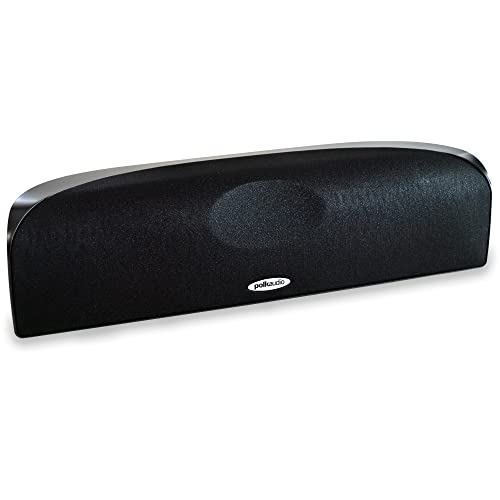
The Polk TL1 is a compact center channel with a curved enclosure designed to sit unobtrusively beneath modern flat-panel TVs. It uses Time Lens technology to align drivers for improved soundstaging and imaging, combining a 1/2″ silk dome tweeter with dual 2.5″ Dynamic Balance mids/woofers. The curved, slim cabinet and high-gloss finish are meant to match contemporary TV aesthetics while delivering focused dialogue reproduction. The TL1 is a practical choice when space is constrained and visual integration is a priority.
Saiyin Slim Center Channel Speaker For Desktop Or Home Theater

The Saiyin Slim Center Channel is positioned as a compact, flexible option for desktop stereo or small home theaters. It includes dual 3.5″ woofers and a horn tweeter to emphasize vocal clarity and crisp highs. The speaker requires a separate amplifier or receiver, offering installation flexibility for custom systems. Wall-mountable and sized to fit tight spaces, this model aims to balance a slim profile with clear dialogue reproduction for smaller rooms or desktop setups where a low visual footprint is helpful.
Yamaha Audio NS-C210BL Compact Center Channel Speaker

The Yamaha NS-C210 is a two-way bass-reflex center channel designed to reproduce the dynamic sound of HD sources in a compact enclosure. It uses light aluminum cone woofers for fast transient response and a dedicated tweeter for clarity. The bass-reflex design helps extend low-frequency output relative to the cabinet size. Yamaha includes a speaker cable and warranty, positioning the NS-C210 as a compact, reliable center channel with attention to vocal detail and fast response characteristics for typical living-room installations.
Buying Guide: Choosing A Thin Center Channel Speaker
This buying guide highlights the key factors to consider when selecting a thin center channel speaker to ensure proper fit and performance for your home theater.
Physical Size And Mounting
- Height And Depth: Measure the space under or above your TV. Low-profile speakers are ideal for tight clearances and should not block the screen or IR sensors.
- Wall-Mounting Vs Shelf Placement: Some slim models are wall-mountable or come with feet for shelf placement. Verify bracket compatibility and clearance for ports.
Dialogue Clarity And Driver Configuration
- Tweeter Type: Silk or Terylene domes tend to smooth high frequencies, while horn tweeters can increase perceived clarity in small rooms.
- Midrange Drivers: Multiple small woofers can improve vocal projection in a slim enclosure. Check driver sizes and dynamic balance claims for imaging quality.
Low-Frequency Performance In A Slim Enclosure
- Porting And Power Ports: Slim cabinets often rely on tuned ports (e.g., Polk’s Power Port) or advanced internal tuning to extend bass. Consider whether a slim speaker can meet your expectation for low-end or if a subwoofer will be necessary.
- Sensitivity And Impedance: Higher sensitivity helps achieve louder vocal levels with less amplifier power. Ensure 4- & 8-Ohm compatibility with your amplifier or AVR.
Compatibility And System Matching
- Timbre Matching: If you have existing speakers or plan a multi-channel setup, choose a center that closely matches the tonal character of the mains for cohesive imaging.
- AVR Features: Ensure your AVR supports the speaker’s impedance and speaker-level requirements, and that it can leverage formats like Dolby Atmos or DTS:X if relevant.
Room Size And Listening Distance
- Small Rooms: Slim center channels with horn tweeters or higher sensitivity can provide clear dialogue without overpowering the space.
- Larger Rooms: Consider models with more woofers, better bass-porting, or pairing with a subwoofer to maintain authority in the mid and low ranges.
Installation And Aesthetic Considerations
- Finish And Visual Profile: Slim speakers often emphasize modern finishes and low visual impact. Match finishes and proportions to your TV and furniture.
- Cable Access And Terminals: Check terminal placement for easy connection behind a TV or in tight spaces; some slim models use spring clips, others use binding posts.
Multiple Comparison Perspectives
- Performance vs. Size: Larger slim models with multiple small woofers (e.g., Polk ES35) can offer more output than ultra-compact desktop models but still maintain a low profile.
- Value vs. Integration: Midrange slim centers balance cost and integration; premium slim models add advanced ports and design features for better low-end and sensitivity.
- Use Case: Desktop and small-room setups benefit from compact horn-equipped speakers, whereas living-room home theaters may prefer slim center channels with enhanced porting and compatibility for AVRs.