Choosing the right floor stand or isolation platform can dramatically improve bass clarity, reduce cabinet buzz, and limit transmission of vibration through floors. The table below summarizes five well-regarded options for floor-mounted subwoofers and studio monitors selected for stability, isolation method, and build quality.
| Product | Type | Key Benefit |
|---|---|---|
| IsoAcoustics Iso-200Sub | Isolation Stand (Single) | Proven isolation; NRC-tested |
| bimiti Subwoofer Isolation Stand | Platform With Copper Feet | Anti-slip base and adjustable copper nails |
| 2-Pack AlloverPower Foam Speaker Risers | 3-Layer Acoustic Foam Pads | Thick anti-vibration foam for 8–10″ drivers |
| Preffair Audiophile Isolation Spikes | Aluminum Spikes + Rubber Pads | High hardness spikes for decoupling and load |
| Sanus AV Base Heavy Duty | Steel Floor Stand / Isolation Shelf | High weight capacity and airflow |
IsoAcoustics Iso-200Sub Subwoofer Isolation Stand (Single)
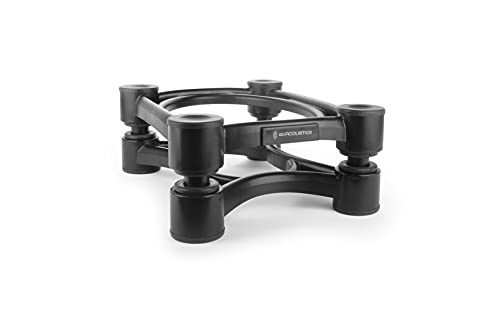
The Iso-200Sub is a compact isolation platform designed to decouple subwoofers from the supporting surface. Dimensions are 7.8” wide x 10” deep x 3.5” high with a 75 lb weight capacity. The design is PATENTED ISOACOUSTICS ISOLATION and has been tested at the National Research Council of Canada (NRC).
IsoAcoustics states the isolators manage speaker energy to reduce vibrations resonating through the floor and minimize dissonant sounds in the listening area or adjoining rooms. The product includes one stand and targets subwoofers where minimizing transmitted vibration is a priority.
bimiti Subwoofer Isolation Stand 14x14in Subwoofer Base

This 14x14in isolation stand is built as a stabilizer base for subwoofers and studio monitors. It features copper shock-absorption foot nails for height adjustment and improved stability, plus an anti-slip rubber base pad to secure the speaker.
Manufacturer claims highlight reduced resonance and improved bass accuracy by isolating the subwoofer from the floor. The combination of metal feet and rubber pad provides both decoupling and mechanical support for heavier cabinets.
2-Pack AlloverPower 3-Layer Acoustic Stand Foam

These foam risers are designed for 8–10 inch studio monitors and subwoofers. The 3-layer construction combines shock-absorbent rubber sponge with a non-slip fibreboard base to provide thick anti-vibration damping.
AlloverPower positions the product as improving audio clarity by isolating vibration from the supporting surface. The set is useful for smaller subwoofers or for adding an isolation layer beneath a larger cabinet when a full platform is not needed.
Preffair Audiophile Speaker Isolation Spikes Set

Preffair offers an aluminum spike and rubber-pad combination intended to decouple speakers and subwoofers from floor surfaces. Specs list OD44.5mm and 33mm height with a set load capacity of 220 lbs / 100 kg.
The product emphasizes low harmonic vibration and high damping due to aluminum hardness. Spikes separate the cabinet from the floor while the rubber bumpers absorb residual vibration, which can reduce cabinet-induced buzzing and tighten bass response.
Sanus AV Base Heavy Duty Floor Stand

The Sanus AV Base is a heavy-duty steel shelf intended for AV equipment and as a sturdy isolation platform. It features a hand-sanded black lacquered shelf and can hold up to 125 lbs, offering an isolation option for larger subwoofers or amplifiers.
Open architecture promotes airflow and the unit includes adjustable feet to keep the platform level. Sanus positions this as a multifunction stand that can serve as an isolation platform, with a focus on stability and equipment ventilation.
Buying Guide: How To Choose The Best Floor Subwoofer Stand
Choosing the right floor stand or isolation solution depends on cabinet size, floor type, isolation goals, and room usage. Below are key considerations to compare options effectively.
Isolation Method
- Decoupling Platforms (IsoAcoustics, bimiti, Sanus): Use engineered suspensions or feet to separate the subwoofer from the floor and reduce transmitted energy.
- Foam Pads (AlloverPower, Liquid-style pads): Absorb vibration through layered foam; effective for smaller subs or to supplement other solutions.
- Spikes (Preffair): Concentrate weight through points to reduce contact area and isolate mechanical coupling; best on solid floors and with optional rubber cups for protection.
Weight Capacity And Size
Match rated weight capacity to the subwoofer or monitor mass. Large subwoofers require heavy-duty platforms or rigid steel stands, while foam pads and spikes often suit smaller monitors or compact subs.
Floor Type And Transmission
- Hard Floors (wood, tile): Isolation platforms and spikes are effective; ensure floor protection where needed.
- Carpeted Floors: Foam pads can work but may compress; platforms with adjustable feet or spikes through cups can improve stability.
- Shared Living Spaces: Prioritize solutions proven to reduce structure-borne noise (e.g., tested isolation stands).
Acoustic Goals
Decide if the aim is to tighten bass response, reduce room coupling, or prevent neighbor complaints. Decoupling platforms typically yield the best reduction in transmitted vibration, while spikes can sharpen perceived bass definition on certain floors.
Stability And Safety
Ensure the platform provides a secure footprint and non-slip base. For elevated stands, check center-of-gravity and anti-tip measures. Adjustable feet or nail-based leveling can help on uneven floors.
Compatibility And Form Factor
Measure subwoofer base dimensions. Platforms and pads should support full contact or provide stable contact points. Avoid stands designed for irregular shapes unless explicitly compatible.
Durability And Materials
- Metal Platforms: Offer rigidity and long-term support; often better for heavy subs.
- Composite/Particle Board Platforms: May include anti-slip layers; suitable for moderate loads.
- High-Density Foam: Effective for damping but can compress over time under heavy loads.
Multiple Comparison Perspectives
- Performance vs. Cost: IsoAcoustics and engineered metal platforms generally prioritize measurable isolation, while foam pads provide budget-friendly dampening.
- Space and Aesthetics: Floating or tensegrity stands suit modern decor but may have lower load limits. Heavy-duty shelves are utilitarian and best for large equipment.
- Tested Efficacy: Products with lab testing or manufacturer data (e.g., NRC testing) provide more predictable results for vibration control.
When comparing options, prioritize the isolation method that matches your floor type and subwoofer mass, then confirm footprint and weight capacity. Proper placement and small adjustments (isolation feet, foam pads, or spikes) often produce noticeable improvements in bass clarity and reduced vibration transmission.