Choosing the right subwoofer splitter or RCA Y adapter can affect bass distribution, channel routing, and signal integrity in home theater and hi-fi systems. This guide reviews five commonly used RCA Y adapters that fit subwoofer and receiver setups, summarizing key features and use cases to help with practical selection.
| Product | Type | Key Feature |
|---|---|---|
| FosPower RCA Y-Adapter (6 Feet) | 1 Male To 2 Male | 24K gold plated, dual shielding, 6 ft length |
| DteeDck RCA Splitter 2 Pack | 1 Male To 2 Female | Durable PVC, dual shielding, short cable |
| Devinal RCA Y Cable 3.3ft | 1 Male To 2 Male | OFC conductors, heavy-duty shielding |
| Arklove 1ft Shielded RCA Splitter (2 Pack) | 1 Male To 2 Female | 4N OFC, 24K gold-plated plugs, twin pack |
| FosPower Y Adapter 8 inch | 1 Male To 2 Female | Compact 8″ adapter, 24K gold plated |
FosPower RCA Y-Adapter (6 Feet) 1 To 2
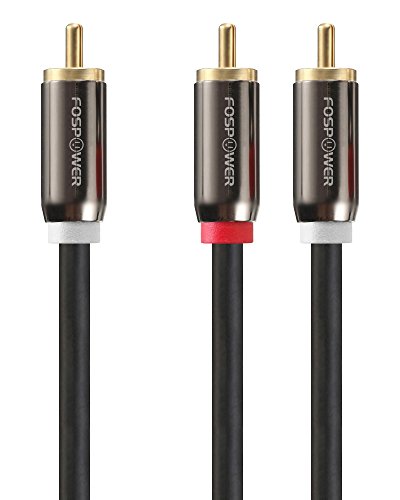
This FosPower cable is a 1 RCA Male to 2 RCA Male Y splitter at a 6-foot length. The product lists 24K gold-plated connectors to resist corrosion and dual shielding (copper braid plus aluminum foil) to reduce EMI/RFI. The PVC jacket is described as flexible while maintaining shielding integrity.
Use cases include splitting a mono subwoofer output to feed two inputs or combining signals where a longer reach is required. The cable’s construction targets reduced interference and improved contact reliability for stable audio transfer.
DteeDck RCA Splitter 1 Male 2 Female

The DteeDck RCA Y splitter is supplied as a short extension (0.2m / 0.65ft) with a 1 male to 2 female configuration. It emphasizes soft PVC construction and thick gold-plated connectors for durability and oxidation resistance.
The listing highlights dual shielding to reduce EMI/RFI and stresses wide compatibility with subwoofers, HDTVs, gaming consoles, and Hi-Fi systems. The short form factor suits tight rack spaces or inline splitting close to devices.
Devinal RCA Y Cable 1 To 2 Male 3.3ft

Devinal’s 3.3-foot RCA Y splitter is described as 1 male to 2 male, suitable for splitting a mono signal or combining stereo to mono. The product features oxygen-free copper (OFC) conductors and heavy-duty, high-density shielding to limit EMI/RFI.
The features state compatibility with common audio devices—subwoofers, receivers, DVD/Blu-ray players—and emphasize clarity, reduced distortion, and minimal signal loss due to its shielding and materials.
Arklove Shielded RCA Splitter 1ft (2 Pack)

Arklove provides a 1 male to 2 female RCA splitter in a twin-pack format. It lists 4N OFC (oxygen-free copper) wire and 24K gold-plated pure copper plugs. The design supports using two amplifiers concurrently or separate runs for different components.
This pack is positioned for users needing multiple adapters or spares. The one-foot length is practical for close connections where signal path length should be minimal to reduce potential interference.
FosPower Y Adapter 8 Inch 1 To 2 Female
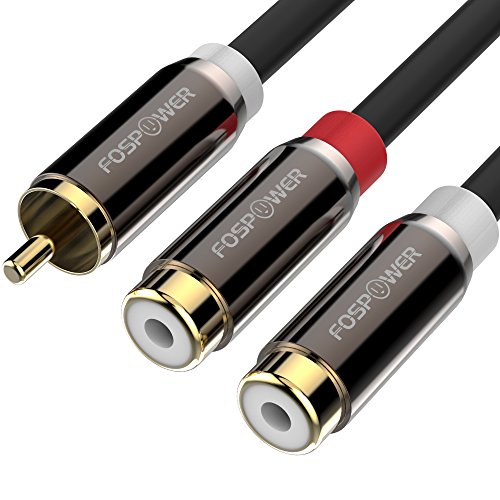
This compact FosPower Y adapter is an 8-inch 1 RCA Male to 2 RCA Female cable. It highlights 24K gold-plated connectors and braided plus foil shielding for flexibility and interference reduction.
The short, stubby adapter is convenient for splitting a subwoofer mono out to two inputs directly behind equipment where cable slack or long runs are undesired. The product promotes corrosion resistance and ease of routing in tight setups.
Buying Guide For Subwoofer Splitter Y Adapters
Selecting the right RCA Y adapter depends on system topology, signal type, and installation constraints. Below are focused considerations to compare options effectively.
Connector Configuration
- 1 Male To 2 Female: Use when the source has a single output and you need two device inputs or when you want a compact inline adapter behind equipment.
- 1 Male To 2 Male: Useful when connecting from one source to two inputs using longer cables or when combining two outputs into a single input requires male ends.
- Confirm whether you need stereo-to-mono conversion or splitting a mono subwoofer output before choosing configuration.
Cable Length And Form Factor
- Longer cables (e.g., 6 ft) allow flexible routing but can add potential for interference if not well shielded.
- Short adapters (8 in to 1 ft) suit cramped racks and reduce unnecessary cable slack, which can simplify signal paths.
Shielding And Conductor Quality
- Dual Shielding (copper braid + foil) reduces EMI/RFI and crosstalk—important near video gear, power supplies, or wireless devices.
- Oxygen-Free Copper (OFC) conductors improve conductivity and can reduce signal loss over runs.
- Gold-plated connectors resist corrosion and improve long-term contact reliability; look for 24K or similar plating claims.
Compatibility And Use Cases
- Confirm device port types: some subwoofers accept dual RCA inputs for L+R; others expect a single mono LFE input. Match adapter type accordingly.
- For combining stereo to mono, verify the adapter is wired for combination rather than a straightforward parallel split to avoid load issues on source outputs.
- For multi-amplifier setups, ensure the adapter supports feeding separate amps or preamp/receiver inputs without creating ground loops.
Durability And Installation Environment
- Thicker jackets and strain reliefs improve longevity in high-traffic or frequently reconfigured setups.
- Short, high-quality splitters reduce wear at connection points and are advantageous in concealed installations.
- Multi-packs can be useful for multi-room installations or to keep spares on hand for troubleshooting.
Comparison Perspectives
- Performance-Focused: Prioritize OFC conductors and dual shielding if long runs or noise-prone areas are expected.
- Space-Constrained: Choose compact 8″–12″ adapters or short RCA splitters for tight racks.
- Multiple Connections: Consider pack sizes (2-pack) when deploying several splitters across a system.
- Longevity: Gold plating and robust jackets matter for long-term, reliable connections.
When comparing adapters, match connector type to the subwoofer and receiver wiring, weigh shielding and conductor quality against required cable length, and choose a form factor that fits the physical layout of your equipment. Objective evaluation of these factors will guide a suitable purchase for optimal signal routing and minimal interference.