Finding a subwoofer box with a plexiglass window usually means prioritizing build quality, internal volume tuning, and visual display features. Below is a compact comparison of five subwoofer enclosures that pair well with plexiglass window installations, either as ready systems with visual elements or as solid enclosures suitable for custom plexi panels.
| Product | Type | Key Feature |
|---|---|---|
| Pyramid BNPS102 Dual 10″ | Bandpass System Kit | Neon Accent Lighting + Amp Kit |
| Q Power Dual 12″ Vented | Dual-Chamber Vented Box | Dual Chamber, Shared Slot Port |
| QPower Single 12″ Dual-Vented | Single Vented Enclosure | 1.65 Cu Ft, Tuned 42 Hz |
| Skar Audio AR1X12V | Ported Universal Fit | Armor Coated, Kerf Port |
| Q Power 10″ Vented | Single 10″ Vented Box | 1.1 Cu Ft, Tuned 37 Hz |
Pyramid BNPS102 10″ Dual Bandpass System

This complete kit includes the Dual 10″ bandpass subwoofer enclosure with neon accent lighting, a mono amplifier, and an installation amp kit. The listed features highlight a 1000W peak dual 10″ subwoofer bandpass system and a BOSS R1100M mono amplifier rated at 1100W max (250W RMS). The inclusion of a full amplifier installation kit simplifies setup when planning to integrate a plexiglass window: the bandpass design provides sealed internal chambers that can be suitable for adding a plexi display area, while neon lighting enhances visual presentation behind plexiglass.
Q Power 12 Inch Dual Subwoofer Box Vented

The Q Power dual 12″ vented enclosure is built as a dual-chamber design with a shared slot port vent. Its features emphasize strong bass, heat management, and a design that holds two 12″ subwoofers (not included). For a plexiglass window installation, the dual-chamber layout provides a clear structural separation to mount a plexi panel over one chamber for visual displays while keeping porting integrity. The shared slot port design supports efficient airflow, relevant when cutting or modifying front-facing panels for window placement.
QPower Single 12″ Dual-Vented Enclosure

This QPower single 12″ enclosure is specified at 1.65 cubic feet tuned to 42 Hz and constructed from MDF for reduced vibration. Listed features include stable build, dual-vented performance for heat management, and tabletop portability. The relatively compact internal volume and robust MDF construction make this unit a practical candidate for adding a plexiglass window on the front baffle, provided correct sealing and bracing are applied to maintain tuned volume and prevent flex that could affect sound performance.
Skar Audio AR1X12V 12″ Ported Subwoofer Box
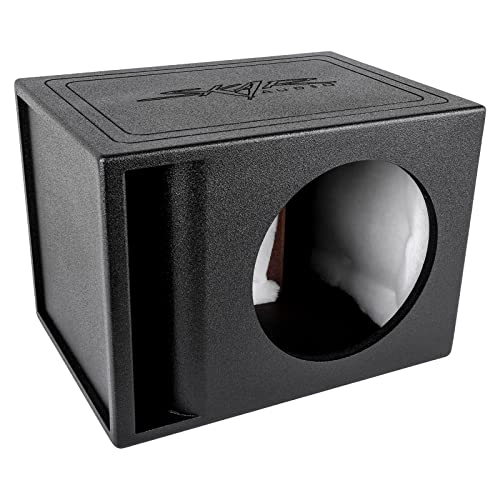
The Skar Audio AR1X12V is a universal fit, ported enclosure with an armor-coated exterior and a 2″ wide kerf port, tuned to 36 Hz with 1.75 ft³ internal air space. Its solid construction and port design support high output and low-frequency extension. For plexiglass integration, this enclosure’s durable outer finish and consistent internal volume reduce the likelihood of resonance or leakage when replacing or modifying the front panel with plexiglass, though attention must be paid to port tuning and kerf port dimensions to retain target frequency response.
Q Power 10 Inch Vented Subwoofer Box

This single 10″ vented enclosure lists a 1.1 cubic foot internal space tuned to 37 Hz and is built from heavy-duty MDF coated in charcoal carpeting. The vented design aims at maximum output and low-frequency performance. Its smaller footprint and defined tuning make it suitable for custom front baffle work with plexiglass, especially for installations prioritizing a visible driver or lighting behind a small plexi window while preserving the venting path and tuning frequency.
Buying Guide
When choosing a subwoofer box intended to incorporate a plexiglass window or visual panel, consider the following technical and practical factors to preserve audio performance and achieve the desired visual effect.
1. Enclosure Type And Tuning
- Vented/Ported enclosures deliver higher output at tuned frequencies; altering the front baffle or port can change tuning and SPL performance.
- Sealed enclosures offer tighter transient response; sealed designs are more tolerant of small panel modifications but require precise internal volume maintenance.
- Bandpass designs have internal chambers and ports that are sensitive to any front-face changes; use caution when adding windows.
2. Internal Volume And Acoustic Integrity
- Ensure any plexiglass installation preserves the specified internal cubic feet. Removing or adding volume will shift the low-frequency tuning.
- Use proper sealing (silicone, gasket) and bracing to prevent air leaks and resonant panel flex behind the plexi.
3. Material And Structural Stiffness
- MDF construction is standard for sub boxes due to stiffness; choose thick panels and add internal bracing if cutting openings for plexiglass.
- Armor-coated and carpeted exteriors like those on Skar and Q Power help protect finishes where plexi edges will be exposed.
4. Panel Mounting And Visual Integration
- Decide between flush-mounted plexiglass, recessed window, or framed mounting. Flush installations require precise cuts and edge sealing; recessed windows need rabbets or frames in the baffle.
- Consider lighting options (LED strips, neon accents) and driver placement so visuals complement acoustic ports and driver cones without obstructing airflow.
5. Port Configuration And Airflow
- Shared slot ports and kerf ports affect airflow and tuning. Maintain port cross-sectional area and length when modifying the front baffle.
- Relocate or redesign ports only after recalculating tuning frequency to avoid degraded performance.
6. Fitment And Vehicle Space
- Measure trunk or cargo space and account for plexiglass thickness, mounting hardware, and any protruding ports or amplifiers.
- Consider universal-fit enclosures for flexible placement versus vehicle-specific shapes that may limit window installation options.
7. Installation Considerations
- If you lack woodworking experience, prioritize boxes that require minimal modification (e.g., using plexi as an external overlay rather than replacing the front baffle).
- Use vibration-damping adhesives and mechanical fasteners; test for rattles at varied volume levels before final sealing.
8. Comparison Perspectives
- Performance-Focused: Choose ported/vented designs with accurate tuning if low-frequency extension and loud SPL are priorities; avoid major baffle changes unless recalculated.
- Display-Focused: Bandpass or custom MDF enclosures with lighting accessories support visual displays; ensure chamber integrity when adding plexiglass windows.
- Durability-Focused: Armor-coated and heavy MDF enclosures resist wear and tolerate modifications better for long-term installations.
Careful planning and attention to enclosure specifications will preserve acoustic performance while enabling a plexiglass window installation that highlights driver visuals or lighting. Match the enclosure type and construction to your priorities—sound, looks, or a balanced approach—before modifying any baffle or port.