Choose The Right Speaker Selector to route audio from one stereo amplifier to multiple speaker pairs with safety and control. Below is a quick summary of the five speaker selector switches covered in this guide so you can compare form factor, zones, and core features at a glance.
| Product | Zones/Function | Key Feature |
|---|---|---|
| Pyle 4-Zone Speaker Switch Selector – PSS4 | 4 pairs | Simple A/B/C/D switch |
| Pyle 6-Zone Speaker Switch Selector – PSS6 | 6 pairs | Up To 6 Separate Speaker Pairs |
| Pyle 4 Channel Speaker Selector – PSLSW4 | 4 pairs | Independent Volume Controls |
| Kurrent Electric A/B A+B Switch | 1 In – 2 Out | Metal 2-Way Panel, A/B/A+B |
| SOLUPEAK P2 2(1)-in-1(2)-Out Switcher | Reversible 2-way | Banana Jacks, Passive A/B Switching |
Pyle 4-Zone Speaker Switch Selector – PSS4
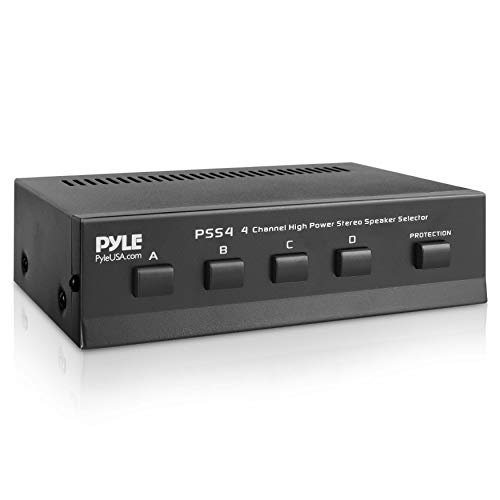
The Pyle PSS4 is a compact distribution box designed to let one stereo amplifier feed up to four separate speaker pairs. The front panel offers clearly labeled A/B/C/D push switches for routing, and screw-type speaker terminals on the rear accept standard speaker wire. The unit focuses on simple zone selection without individual zone volume controls or impedance-matching circuitry.
Features listed: SPEAKER SELECTOR. This product is suitable when you need straightforward selection among multiple fixed speaker sets and your amplifier can handle the combined load or you use impedance protection on the amp. Installation is basic and fits tabletop or shelf placement.
Pyle 6 Zone Speaker Switch Selector – PSS6

The Pyle PSS6 expands the same concept to support up to six pairs of speakers. The hub-style distribution box provides labeled push buttons for each zone and terminal strips for hookup. It is intended for multi-room setups where selection is the primary requirement rather than per-zone volume control.
Features listed: Up to 6 Separate Speaker Pairs to Your Stereo System. Use cases include feeding different rooms or outdoor speakers from a single amplifier. Consider amplifier output capacity and speaker impedance when connecting many zones to prevent overloads.
Pyle 4 Channel Speaker Selector – PSLSW4
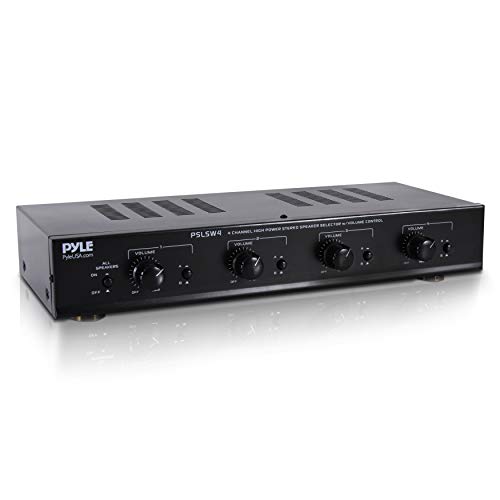
The Pyle PSLSW4 offers multi-zone distribution with independent volume controls for each of four speaker pairs. Rated for 100W max per channel, it specifies compatibility with 8-ohm speakers and uses screw-type terminals for wiring. The push-button activation combined with rotary volume knobs allows per-zone level matching.
Features listed: 100 WATT MAX, CONTROL 4 SPEAKERS, INDEPENDENT AUDIO CONTROL. This model adds more control than simple selector boxes and is useful where volume balancing across rooms is important. Note amplifier load implications when multiple zones are active simultaneously.
A/B A+B Switch 1 In – 2 Out Speaker Selector
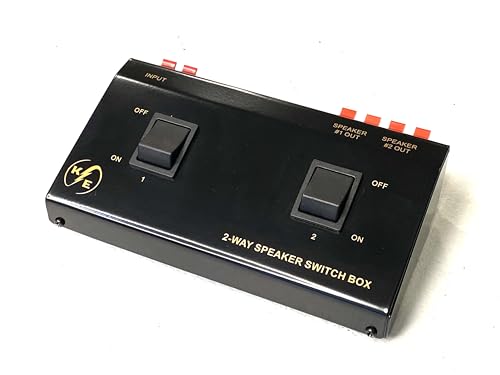
The Kurrent Electric A/B A+B panel is a straightforward metal switch offering 1-in 2-out control with selectable A, B, or A+B outputs. This is a traditional passive switch panel intended for situations where you want to choose between two speaker sets or play both concurrently. Construction is metal for panel durability.
Features listed: 2 Way Stereo Speaker Switch Panel, Select Speaker Set A, B or A+B (1 IN – 2 OUT), Sturdy Metal Construction. This style is common for basic A/B comparisons or toggling between living-room and patio speakers without complex electronics.
SOLUPEAK P2 2-In-1-Out 2-Way Speaker Switcher
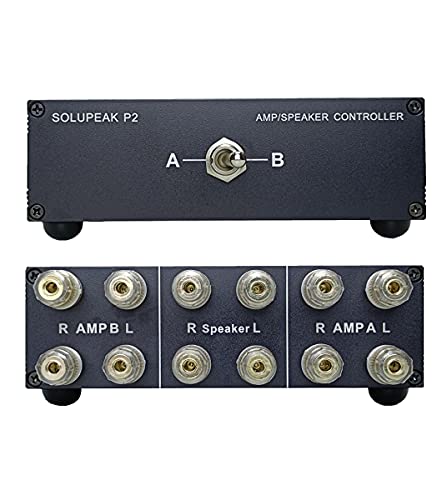
The SOLUPEAK P2 is a passive A/B switcher with reversible 2-in/1-out or 1-in/2-out functionality using gold-plated banana jacks compatible with up to 12 AWG wiring. It is designed for quick comparisons between two amplifiers or two speaker pairs, and it uses a simple push-button switch. Only one speaker pair can operate when in 1-in-2-out mode unless configured otherwise.
Features listed: reversible direction switching, passive non-powered device, banana jack connections. This product is useful for testers, reviewers, or DIYers needing an easy way to swap sources without rewiring.
Buying Guide: How To Choose A Stereo Speaker Selector Switch
Selecting the right speaker selector depends on multiple technical and practical factors. Below are the key considerations with comparison perspectives to help match a selector to your setup.
Number Of Zones
- Low Count (1–2 zones): A/B A+B panels or 1-in-2-out switchers are sufficient for toggling between two speaker sets or quick A/B comparisons.
- Mid Count (4 zones): Four-zone selectors suit small multiroom setups; choose models with volume control if room-level balancing is needed.
- High Count (6+ zones): Use distribution hubs that explicitly support six pairs and ensure amplifier capacity or use impedance protection modules.
Power Handling And Impedance
- Per-Channel Wattage: Match the selector’s wattage rating to your amplifier and speakers. Models like Pyle list a max wattage per channel; this helps avoid overload.
- Impedance Load: Passive selectors can change load on the amplifier when multiple zones are active. Choose units with impedance-matching or ensure the amp can tolerate combined loads.
Volume Control And Zone Independence
- No Volume Control: Simple switching only—best for single-room source selection or where each zone has its own volume control.
- Per-Zone Volume: Useful for balancing loudness across rooms; examples include PSLSW4 and PSLSW6 style units.
Connection Types And Wire Gauge
- Screw Terminals: Common and accepts various wire gauges; good for permanent installs.
- Banana Jacks: Quick-connect and tester-friendly; check compatibility with speaker wire or banana plugs.
- Wire Gauge: Thicker wires (12–14 AWG) reduce loss for long runs; ensure terminals fit the gauge.
Passive Vs. Active (Powered) Selectors
- Passive: No power required, simpler, often smaller. May affect amplifier load when multiple outputs active.
- Active/Impedance-Matching: Uses circuitry to protect amplifier and maintain consistent impedance with multiple zones. Preferable for many simultaneous zones or sensitive amplifiers.
Use Case Comparisons
- Home Multiroom With Balanced Volume: Choose a multi-zone selector with independent volume control to adjust levels per room.
- Quick A/B Comparisons Or Amp Tests: A/B switch panels or reversible switchers (SOLUPEAK) provide fast switching and banana-jack convenience.
- Outdoor/Multiple Rooms Simultaneously: Consider impedance protection or an amplifier designed to drive multiple parallel loads to prevent damage.
Durability And Installation
- Metal Panels offer more physical durability for wall or rack mounting.
- Tabletop Hubs are easier to place on shelves for casual setups.
- Labeling And Layout matters—clearly labeled switches and terminals speed wiring and reduce mistakes.
Final Technical Checks Before Purchase
- Confirm maximum wattage and impedance compatibility with your amplifier and speakers.
- Verify the connector types match your wiring (banana plugs vs. bare wire).
- Plan for future expansion—choose a selector that covers expected zones or allows chaining with protective circuitry.