Choosing the right speaker volume control switch helps you manage multi-room audio, protect amplifiers, and maintain sound quality. Below is a quick comparison of five well-regarded in-wall and selector-style controls chosen for power handling, impedance protection, and zone flexibility.
| Product | Type | Key Feature |
|---|---|---|
| OSD SVC100 | In-Wall Volume Control | 100W per channel, impedance matching |
| Pyle PVCD15 | In-Wall Dual Knob | Dual independent rotary controls, installs like a switch |
| STUDIOFINIX ST-VC100 | In-Wall Impedance Matching | 100W, supports up to 8 pairs |
| RECOIL VC-R100 | In-Wall Rotary Volume | 12-step linear rotary control, impedance protection |
| Monoprice SSVC-4.1 | 4-Channel Selector | Individual zone on/off & volume, automatic impedance protection |
OSD 100W In Wall Volume Control SVC100
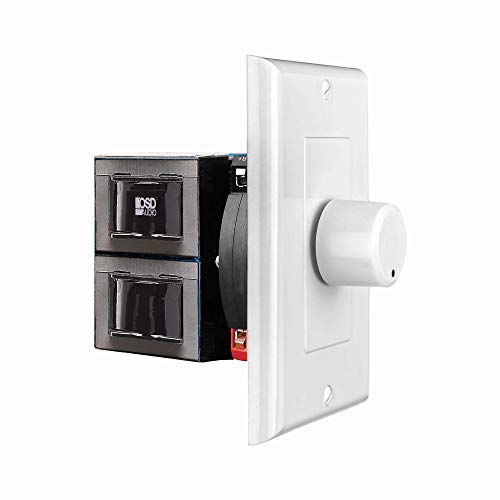
The OSD SVC100 Is A Dedicated In-Wall Volume Control Designed For Home Speakers. It Is Rated At 100 Watts Per Channel And Incorporates Impedance Matching To Stabilize The Load Seen By The Amplifier When Multiple Speakers Are Paralleled.
- High Power Handling: Rated 100W per channel with minimal bass roll-off.
- Volume Control: Independent adjustment for a pair of speakers in a zone.
- Impedance Protection: Front-mounted jumpers and matching network to reduce amplifier stress when connecting multiple speaker pairs.
Pyle In-Wall Dual Knob PVCD15
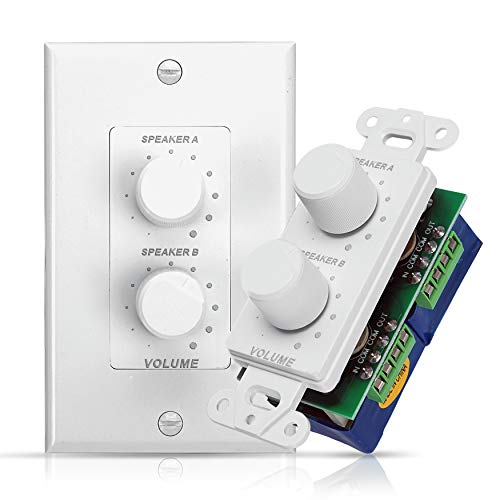
The Pyle PVCD15 Is A Simple, Two-Channel In-Wall Volume Plate That Fits Standard Junction Boxes. It Provides Two Independent Rotary Knobs To Control Two Speaker Pairs Or Stereo Channels From One Wall Location.
- Easy Installation: Installs like a light switch in a gang box.
- Rotary Knobs: Smooth rotary faders for intuitive volume adjustment.
- Operation Notes: Designed For Use With Amplifier Set To A Reference Level; Adjust Remote Volume From The Wall Plate.
STUDIOFINIX 100W Wall Volume Control

The STUDIOFINIX ST-VC100 Combines A Passive, High-Power Design With Impedance Matching For Flexible Multi-Speaker Installations. It Emphasizes Versatility And Ease Of Installation For Indoor Or Outdoor Zones.
- Multiple Speaker Compatibility: Can connect up to 8 pairs of speakers.
- High-Power Passive Design: Handles 100W and does not require external power.
- Installation Flexibility: Suitable For Large Home Audio Environments And Outdoor Areas.
RECOIL VC-R100 In-Wall Rotary Control

The RECOIL VC-R100 Is A Flush-Mount In-Wall Unit With A 12-Step Linear Rotary Knob For Zone-Level Adjustment. The Design Focuses On Maintaining Full Frequency Response While Allowing Multi-Speaker Expansion.
- High Power: 100W per channel with minimal bass roll-off.
- Rotary Adjustment: 12-step linear control for predictable level changes.
- Multi-Speaker Connection: Jumpers Allow Adding Up To Eight Pairs While Preserving Hi-Fi Frequency Response.
Monoprice 4-Channel Speaker Selector SSVC-4.1
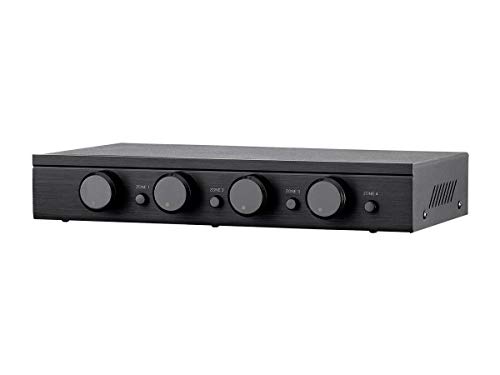
The Monoprice SSVC-4.1 Is A Tabletop Selector Hub Rather Than An In-Wall Plate. It Provides Individual Zone On/Off Buttons And Separate Volume Controls For Up To Four Zones, Along With Automatic Impedance Protection.
- Automatic Impedance Protection: Safeguards The Amplifier When Multiple Zones Are Active.
- Power Handling: Rated For Continuous And Peak Power, With Specified Minimum Amplifier Impedance Requirements.
- Zone Control: Individual On/Off Buttons And Volume Controls For Each Zone.
Buying Guide For Speaker Volume Control Switches
This guide highlights key factors to consider when selecting a speaker volume control or selector switch for home audio installations.
Power Handling And Amplifier Compatibility
Match The Control’s wattage rating To Your Amplifier’s Output And The Speaker Load. In-Wall Controls Listed Here Handle Around 100W Per Channel; selector boxes specify continuous and peak power. Ensure Your Amplifier Meets The Minimum Impedance Specs When Multiple Zones Are Active.
Impedance Matching And Protection
Impedance matching and protection circuitry are important when paralleling speakers across zones. Look For Jumpers Or Automatic Protection To Prevent Overloading The Amplifier. This Is Critical When Adding Multiple Speaker Pairs.
Number Of Zones And Layout
Decide Between In-Wall Volume Controls For Individual Zones And Selector Hubs For Centralized Control. In-Wall Plates Are Discreet For Single Zones; Selector Boxes Offer Central Management For Several Rooms.
Type Of Control
Choose Between Rotary Knobs, Sliding Controls, Or Push-Button/Knob Combinations. Rotary Knobs Offer Familiar, Smooth Adjustment. Sliding Controls Provide Visual Positioning. Consider User Preference And Accessibility.
Installation And Compatibility
Verify That In-Wall Models Fit Standard Junction Boxes And That Selector Units Have Accessible Terminal Blocks For Your Wire Gauge. Confirm Whether The Unit Requires Additional Back-Box Depth Or Specific Wiring Methods.
Multi-Speaker Support
For Large Homes, Seek Controls That Support Multiple Pairs (4–8 Pairs) Without Significant Frequency Loss. Check Manufacturer Notes On How Many Pairs Can Be Paralleled Safely And Whether Frequency Response Is Preserved.
Frequency Response And Sound Integrity
Look For Units That Advertise Minimal Bass Roll-Off And Maintenance Of Hi-Fi Frequency Response. Passive Controls Can Affect Low Frequencies If Poorly Matched; impedance-matching networks Help Retain Sound Quality.
Control Features
Consider Whether You Need Individual Zone On/Off Buttons, Step-Level Controls, Or Continuous Rotary Dials. Step-Level Controls Provide Repeatable Settings; continuous knobs Allow Finer Adjustment.
Durability And Materials
Metal Guts, Quality Pots, And Solid Terminal Blocks Improve Longevity. For Outdoor Or High-Use Areas, Choose Units With Robust Construction And Corrosion-Resistant Terminals.
Comparison Perspectives
- In-Wall Plates (OSD, RECOIL, STUDIOFINIX, Pyle PVCD15): Best For Discreet Local Control, Zone-Level Tuning, And Standard Wall-Mount Aesthetics.
- Selector Hubs (Monoprice): Better For Centralized Management Of Multiple Zones, With Clear On/Off And Volume Per Zone.
- Power & Protection: Units With Impedance Matching Or Automatic Protection Are Preferable When Running Many Speakers From One Amplifier.
- Ease Of Install: Pyle In-Wall Models Emphasize Simple Junction Box Installation; Selector Boxes Typically Sit Near The Amplifier For Easier Wiring.
When evaluating options, prioritize compatibility with existing equipment, the number of zones you need to control, and whether impedance protection is required for safe multi-speaker setups. Each product reviewed here targets different installation styles and control preferences.