Finding the right speaker stands can make a measurable difference in surround sound clarity, imaging, and bass response. Below is a concise comparison of five top-rated stands that suit satellite, bookshelf, and rear surround speakers in common home theater setups.
| Product | Brand | Key Feature |
|---|---|---|
| SANUS Speaker Stands Pair | Sanus | Tool-free height adjustment 28″–38″, steel construction |
| PERLESMITH PSSS2 | PERLESMITH | Adjustable width 4.5″–9″, height 33.3″–45.1″, 11 lb capacity |
| Universal Rear Speaker Stands (notiela) | notiela | Includes wall brackets, height 33″–42″, multi-mount options |
| Perlegear 28″ Bookshelf Stands (PGSS6) | Perlegear | Flat 7.79″ top plate, 22 lb capacity, 27.5″ height |
| USX MOUNT Adjustable Pair | USX MOUNT | Height 30″–39.1″, fits back screw/keyhole mounts, 11 lb per stand |
SANUS Speaker Stands Pair

Build And Height Adjustment: Steel construction with a wide base and a tool-free collar allows height adjustment from 28″ to 38″ to position satellite and bookshelf speakers at listening level.
Compatibility And Capacity: Designed for small satellite speakers up to 3.5 lbs and noted compatible brands include Bose, Polk, JBL, Sony, and others. Ideal for very lightweight surround modules.
Cable Management And Stability: Built-in cable channel routes wires through the column for a tidy setup. The wide base improves stability for small speakers but check weight limits for heavier monitors.
PERLESMITH Universal Speaker Stands

Adjustability: Height range from 33.3″ to 45.1″ with a twist-lock collar for tool-free changes. Top plate width adjusts from 4.5″ to 9″, accommodating many rectangular speakers.
Load And Stability: Rated to support up to 11 lbs per stand. Solid steel tubing, deeper threaded connections, and non-slip foot pads enhance stability on hard floors.
Fit Considerations: Not suitable for round or irregular speaker shapes; confirm top-plate fit and mounting hole alignment before purchase for a secure installation.
Universal Surround Sound Stands With Wall Bracket

Multi-Installation Options: Includes two floor stands and two wall mounts. Choose floor placement or wall mounting depending on room layout and surround speaker positions.
Compatibility & Adjustment: Height adjustable 33″–42″ with tool-free rotary knob. Supports speakers with M6 or 1/4″-20 threaded holes and keyhole slots; suitable for many Samsung, Vizio, Sony, JBL, and Polk models.
Material And Capacity: Heavy-duty steel construction supporting up to 5 lbs per stand. Select installation method based on your speaker’s hole position for best fit and rigidity.
Perlegear 28 Inch Bookshelf Speaker Stands
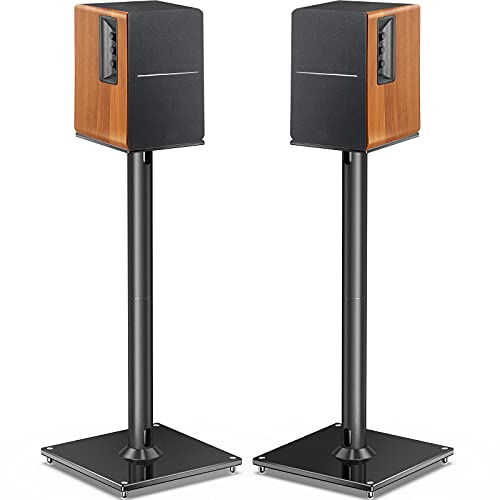
Top Plate And Capacity: A 7.79″ x 7.79″ flat top plate supports up to 22 lbs, accommodating larger bookshelf monitors and studio speakers regardless of shape.
Height And Placement: Fixed-height 27.5″ is aimed at seated listening positions. The 11.8″ square base and included rubber pads improve stability and reduce vibration transmission.
Use Cases: Suitable where heavier bookshelf speakers are used as surrounds or nearfield monitors. The larger top plate and weight rating make it versatile for multi-media setups.
USX MOUNT Height Adjustable Pair

Height Range And Adjustment: Collar-adjustable from 30.0″ to 39.1″, enabling proper ear-level placement for surround channels and reducing floor reflections.
Mounting Compatibility: Designed for rear screw hole and keyhole mounts; metric screws included but check compatibility with specific models (some Samsung models may differ).
Base And Stability: Square base construction with rubber feet and an 11 lb per-stand capacity. For carpeted floors, carpet spikes may be required for maximum stability.
Buying Guide: Choosing Speaker Stands For Surround Sound
Speaker Weight And Top Plate Size: Match the stand’s weight capacity to your speaker. Small satellite speakers often need only 3–6 lbs support, while bookshelf monitors may require 15–22 lbs and a larger top plate for stability.
Height And Listening Position: Surround and rear channels are most effective when tweeters sit near ear height of seated listeners. Look for stands with an adjustable range that covers your seated ear height; fixed-height stands are fine if they match your setup.
Mounting Options & Compatibility: Confirm whether speakers use threaded inserts, keyholes, or no mounting holes. Stands offering multiple mounting methods or adjustable top-plate widths increase compatibility with varied speaker geometries.
Stability And Base Design: Wider or heavier bases reduce tipping risk. Consider square or large circular bases for heavy speakers; non-slip feet or spikes improve stability on different floor types. For homes with kids or pets, prioritize sturdier, heavier-base stands.
Cable Management: Built-in cable channels keep wiring hidden and reduce clutter. If aesthetics matter, choose stands with integrated routing or hollow columns for clean runs to the receiver.
Floor Type Considerations: Use spikes for carpeted floors to secure stands, and rubber pads for hardwood/tile to prevent scratching. Some stands include interchangeable feet or spike kits for mixed-floor environments.
Placement Flexibility: If wall proximity or shelving limits floor placement, consider stands with included wall brackets or convertible designs that offer both floor and wall mounting.
Acoustic Isolation: Rubber pads, isolation gels, or decoupling top plates reduce vibration transfer to the stand and floor. If accurate imaging is a priority, look for stands that provide damping solutions or allow adding isolation pads.
Adjustability Vs. Rigidity: Tool-free collars and twist locks speed setup but verify locking robustness. Heavy, fixed-height stands often provide superior rigidity for larger monitors, while adjustable stands suit evolving systems.
Multiple Comparison Perspectives: Compare stands by capacity, height range, and mounting compatibility first. Next, evaluate base footprint and vibration control for your room acoustic needs. Lastly, consider installation options—wall brackets, spikes, and cable management—based on room layout and aesthetics.