Choosing the right speaker stands lifts bookshelf speakers to ear level, reduces vibration, and improves stereo imaging. Below is a quick comparison of five reliable, widely compatible stands selected for common bookshelf and satellite speakers.
| Model | Brand | Height / Key Feature |
|---|---|---|
| Perlegear Universal Speaker Stands (PGSS6) | Perlegear | 27.5″ Height / 22 lb Capacity |
| PERLESMITH 26 Inch Floor Stands | PERLESMITH | 26″ / 45° Adjustable Top Plate |
| PERLESMITH Height Adjustable Extend (PSSS2) | PERLESMITH | 33.3″–45.1″ Adjustable Height / Small Speaker Focus |
| SANUS Adjustable Height Stands | Sanus | 28″–38″ / Tool-Free Adjustment |
| Rfiver 45° Swivel Speaker Stands | Rfiver | 27″ Pole / 45° Swivel Top Plate |
Perlegear Universal Speaker Stands For Surround Sound
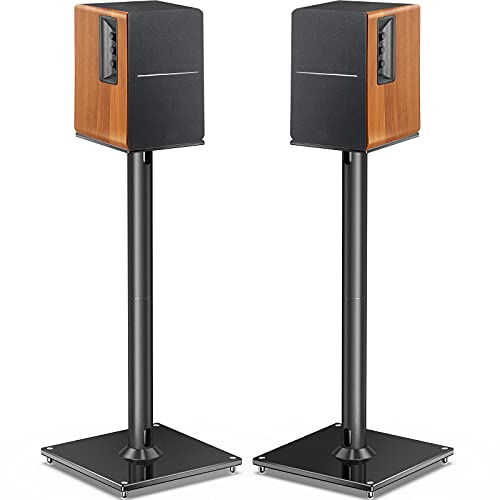
This Perlegear model features a 7.79 x 7.79 inch top plate and supports up to 22 lbs, making it compatible with many bookshelf speakers. The stand is 27.5 inches tall, a common listening height for seated positions. Design elements include an 11.8 inch square base for stability and rubber pads for decoupling and anti-skid protection. The manufacturer positions it as a multifunctional stand suitable for speakers, TV peripherals, and studio monitors. This stand is a practical option when you need a solid, simple platform with basic cable management and vibration damping features.
PERLESMITH Universal Floor Speaker Stands 26 Inch

The PERLESMITH 26-inch stands include a 45° adjustable glass top plate to angle speakers toward the listening position. Top plate size is ~7.8 inches and supports up to 22 lbs. Construction uses metal with an 11.81 inch glass base for weight and stability. Rubber isolation pads are included to reduce resonances. The set is described as compatible with many mainstream brands and offers both metal and rubber foot options for different floor types. This model is oriented to users who want adjustable angling and a visually minimal base while maintaining stability.
PERLESMITH Height Adjustable Extend Speaker Stands

This PERLESMITH pair targets small bookshelf and satellite speakers, with a width-adjustable bracket from 4.5″ to 9″ and a capacity up to 11 lbs. Height adjusts from 33.3″ to 45.1″ using a twist-lock design for tool-free changes. The stands emphasize a deep-threaded connection and solid-steel construction for enhanced stability, plus non-slip foot pads. This option suits compact speaker models and listeners who prefer higher placements or adjustable elevation for optimal acoustics.
SANUS Speaker Stands Pair Adjustable Height

SANUS offers a tool-free collar for height adjustments between 28″ and 38″, delivering up to 10 inches of travel. The design supports lightweight satellite speakers up to 3.5 lbs and incorporates a wide steel base plus a built-in cable management channel. The product is positioned toward users of compact satellites and bookshelf speakers requiring quick, incremental height changes without tools. Emphasis is on simple, durable construction and tidy cable routing for living-room setups.
Rfiver Upgraded 45° Swivel Speaker Stands Pair

Rfiver combines a 45° swivel top plate with a one-piece molded glass base and alloy-steel pole. The 27-inch pole includes cable-routing holes and the base measures ~11.81 inches, supporting speakers up to 22 lbs. This model emphasizes precise orientation, elegant aesthetics, and cable concealment. The construction is described as heavy-duty for reliable support and reduced vibration transmission. Users who prioritize angling capability and an upscale glass base aesthetic will find these features relevant.
Buying Guide: How To Choose Speaker Stands For Bookshelf Speakers
Selecting stands depends on speaker size, listening position, room layout, and floor type. Below are key considerations and comparison perspectives to guide purchase decisions.
Weight Capacity And Top Plate Size
Match the stand’s weight capacity and top-plate area to your speaker dimensions. Larger bookshelf speakers often require 20+ lb capacity and at least a 7.5″ square top plate. Smaller satellites can use narrower plates and lower capacities.
Height And Listening Position
Aim to position the speaker tweeter near ear level when seated. Typical heights range from 26″ to 38″ depending on sofa height and room use. Adjustable stands offer flexibility for placement refinements and room repurposing.
Top-Plate Adjustability And Angling
Top-plate tilt or swivel (e.g., 45°) allows aiming speakers for better imaging. Choose adjustable plates if your listening position is off-center or if stands will serve multiple seating areas.
Stability, Base Design, And Materials
Wide bases, heavier materials (steel, tempered glass), and secure connections reduce resonance and tipping risk. Consider floor protectors (rubber pads) or spikes for carpeted surfaces to optimize stability.
Vibration Damping And Isolation
Rubber pads, isolation feet, or decoupling materials reduce cabinet transmission to the floor, improving clarity. Look for included pads or the ability to add aftermarket isolation discs.
Cable Management And Aesthetics
Integrated cable channels and discreet holes keep wiring tidy behind the stand. Material and finish (black steel, glass base) influence visual integration with room decor.
Installation & Adjustability
Tool-free height collars and twist-lock mechanisms simplify setup and future changes. Evaluate how often you’ll need to reconfigure stands when choosing between fixed and fully adjustable models.
Comparison Perspectives
- Value For Versatile Use: If you need stands for different speaker sizes or rooms, prioritize adjustable-height models with broader capacity ranges.
- Audio-Focused: For critical listening, choose heavier bases and effective isolation to reduce resonances.
- Space & Decor: If floor footprint and look matter, glass-base or slim-pole designs provide a minimal visual profile while still offering stability.
- Budget Constraints: Simpler fixed-height stands often offer necessary support at lower costs but sacrifice long-term flexibility.