Choosing the right car door speaker affects clarity, bass, and fitment in most vehicles. Below is a concise comparison table of five popular Amazon-listed door speakers chosen for common door mount sizes, power handling, and driver configurations. Use the table to match speaker specs to your car audio goals before checking detailed product sections.
| Product | Size / Type | Key Specs |
|---|---|---|
| BOSS CH6530 | 6.5″ 3-way Coaxial | 300W Peak, 4Ω, 2.1″ Mounting Depth |
| JVC CS-J620 | 6.5″ 2-way Coaxial | 300W Peak / 30W RMS, 35Hz–22kHz, 92 dB Sensitivity |
| JBL CLUB6520 | 6.5″ 2-way Coaxial | High Sensitivity Design, 1 Pair |
| Pyle PL613BK | 6.5″ 3-way Triaxial | 300W Peak, 150W RMS, 4Ω, Piezo Tweeters |
| BLAUPUNKT 6.5″ | 6.5″ 4-way Coaxial | 360W Peak, 120W RMS, 4-Way Driver |
BOSS Audio Systems CH6530 6.5 Inch Car Door Speakers

This pair of BOSS CH6530 speakers is a 3-way coaxial design intended for standard 6.5″ door locations. The listed dimensions are 6.6 x 6.6 x 2.4 inches with a mounting depth of 2.1 inches and a mounting hole around 5.5 inches, making them compatible with many factory door openings.
Electrically, the speakers present a 4 ohm impedance and are rated for up to 300W peak. The 3-way layout (woofer, mid, tweeter) targets a fuller frequency spread in a single unit suited to door mounts where space limits component separate installs.
JVC CS-J620 6.5″ 2-Way Coaxial Car Speakers
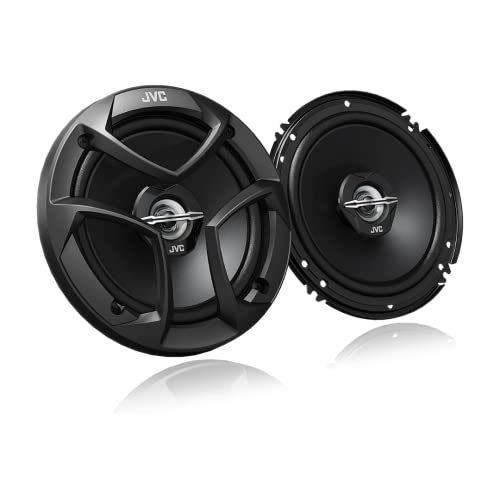
The JVC CS-J620 uses a 6.5″ mica cone woofer with a 1″ PEI tweeter and hybrid surround for durability. Rated for 300W peak and 30W RMS, it lists a wide frequency range of 35Hz–22kHz and a sensitivity of 92 dB, which helps extract detail from mid and high ranges with modest head unit power.
Design features include ABS composite grills and a rubber/cloth diaphragm intended for daily automotive use. The combination of high sensitivity and broad frequency response makes this a common OEM replacement option for door locations.
JBL CLUB6520 6.5″ Club Series Coaxial

The JBL CLUB6520 is positioned as a high-sensitivity 6.5″ 2-way speaker pair suitable for door installs. High sensitivity typically reduces the need for high amplifier power to reach louder volumes, which benefits factory head units.
Manufactured following JBL’s noted quality processes, this model aims to balance dynamic range and efficiency. The coaxial approach integrates tweeter and woofer into one assembly to fit common door spaces without separate crossovers or external tweeter locations.
Pyle PL613BK 6.5″ 3-Way Triaxial Car Speakers

Pyle’s PL613BK is a triaxial 3-way 6.5″ speaker offering a layered driver setup: woofer, midrange, and piezo tweeters. The spec sheet cites 150W RMS (300W peak) and a 4 ohm impedance, with a heavy-duty poly injection cone and substantial magnet assembly for door mounting.
Included features list a ¾” piezo tweeter and a 1″ neodymium film dome midrange, aiming to extend the upper frequencies while maintaining mid clarity. This configuration can be useful where separate mid and tweeter installs are impractical.
BLAUPUNKT 6.5-Inch 4-Way Coaxial Car Speakers
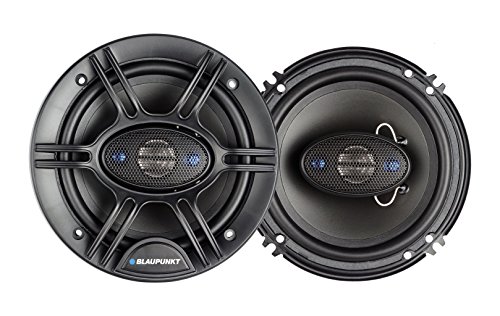
The Blaupunkt 6.5″ model is a 4-way coaxial set designed to deliver a broader frequency spread from a single, compact assembly. The product lists 360W peak with an RMS handling rating cited on the feature list, aiming to provide robust power handling for upgraded door systems.
Manufacturing and materials are emphasized for reliability, and the 4-way architecture combines multiple small drivers to reproduce highs and mids with less need for external crossovers, making them convenient for direct swaps into door openings.
Buying Guide: How To Pick The Best Car Door Speaker
Selecting the right car door speaker involves matching size, power, sensitivity, and driver configuration to your vehicle and listening goals. Below are core factors to compare and test before purchase.
Size and Fitment
- Measure the door opening and mounting depth. Most OEM doors use 6.5 inches or 6×9 inches—ensure mounting depth (e.g., 2.1″) clears the inner door panel and window mechanisms.
- Check the mounting hole diameter and bracket compatibility for direct replacement.
Power Handling And Impedance
- RMS power is the meaningful continuous rating for pairing with an amplifier or head unit. Peak ratings are short-term maxima and less useful for matching.
- Match speaker impedance (commonly 4 ohms) to the amplifier/head unit rating to avoid mismatches and potential damage.
Sensitivity
- Sensitivity (dB) indicates how loud a speaker will play with a given power. Higher sensitivity (e.g., 90–92 dB) is beneficial when using factory radios with limited power.
Driver Configuration: 2-Way, 3-Way, 4-Way, Triaxial
- 2-way (woofer + tweeter): simple, often good clarity and easier power matching.
- 3-way / 4-way / triaxial: multiple drivers aim to cover more frequencies from one mount but can complicate tonal balance and require a competent crossover design.
- Coaxial designs place tweeters over the woofer for compact installation, suitable for door mounts without separate tweeter locations.
Material And Durability
- Cones: mica, polypropylene, or composite cones offer different tonal characters and moisture resistance.
- Surrounds: rubber surrounds typically outlast foam in automotive environments.
- Voice coils: higher-temperature materials (Kapton, for example) tolerate more power and heat for longer life.
Sound Goals And System Integration
- For improved clarity with a stock head unit, prioritize high sensitivity and broad frequency response.
- If adding an amplifier or subwoofer, focus on speakers with higher RMS power handling and stable impedance.
- Consider crossovers and time-alignment when integrating multi-way door speakers with separate components.
Installation Considerations
- Check wiring harness compatibility or plan for adapter harnesses to avoid cutting OEM connectors.
- Account for grilles, mounting hardware, and foam baffles to reduce road noise and improve bass response.
- Confirm the mounting depth to prevent interference with window regulators and door bracing.
Comparison Perspectives
- Budget vs. Performance: More drivers and exotic materials can improve fidelity but may cost more and require amp power.
- Door Space vs. Output: Larger cones (e.g., 6×9) can produce more bass but may not fit all doors; 6.5″ is most universal for doors.
- OEM Replacement vs. Upgrade: OEM-style 2-ways and high-sensitivity speakers match factory radios. Multi-way coaxials are better for one-box upgrades when separate components aren’t possible.