The right amp or speaker changes how an acoustic guitar projects in practice, small gigs, or recording. Below is a quick comparison of recommended options chosen for tonal fidelity, portability, inputs, and effects. Use the table to jump to models that match your needs.
| Product | Output / Key Feature | Best For |
|---|---|---|
| Fender Acoustasonic 15 | 15 Watts, Dual Inputs, Whizzer Cone | Small acoustic gigs & vocal+guitar |
| COOLMUSIC 30W Portable Acoustic Amp | 30 Watts, Bluetooth, Reverb & Chorus | Practice with backing tracks, portable use |
| COOLMUSIC BP40D 80W | 80 Watts, 6 Inputs, Battery, Effects | Small band setups, louder venues |
| COOLMUSIC BP80 100W | 100 Watts, 6 Inputs, Larger Woofer | Powerful portable PA for medium crowds |
| Positive Grid Spark GO 5W | 5 Watts, Smart Amp, Bluetooth Speaker | Bedroom practice, headphone use, tone modeling |
Fender Acoustasonic Guitar Amp — Dual Inputs

The Fender Acoustasonic 15 is designed specifically for acoustic instruments. It delivers 15 Watts through a 6-inch speaker and includes a unique whizzer cone that enhances high-frequency detail for acoustic tone. Dual front-panel inputs (1/4″ instrument and XLR mic) make it easy to run vocal and guitar simultaneously without external DI boxes.
Controls are straightforward, allowing quick adjustments to blend mic and guitar levels. The unit’s compact dimensions make it suitable for home practice, vocal-acoustic duos, or coffeehouse sets. Its construction and feature set align with players seeking natural acoustic reproduction and simple connectivity.
Acoustic Guitar Amplifier 30W Bluetooth — Portable Practice Amp
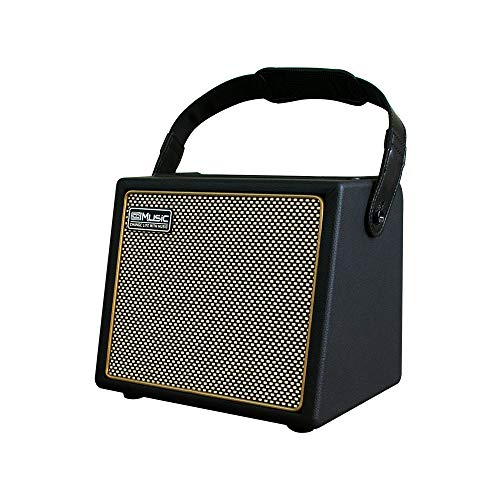
This 30 Watt portable amp is tuned to restore acoustic tone with a 6.5-inch speaker and built-in effects like reverb and chorus. It offers two channels to connect an instrument and a microphone simultaneously, and the mic channel includes a 2-band EQ to tailor voice presence.
Bluetooth streaming enables backing tracks during practice sessions. The unit’s portability and clip-in features make it appropriate for players who need a compact solution for rehearsals, small gatherings, or busking where moderate power and tonal shaping are required.
Coolmusic BP40D 80W Powered Acoustic Guitar Amplifier

The BP40D provides 80 Watts, supporting a fuller sound for small band contexts. It includes six inputs (4 instrument + 2 aux), allowing multiple musicians or mics to share the amplifier. Onboard effects include reverb, chorus, and delay, plus a 3-band EQ for detailed tone control.
Battery operation and Bluetooth compatibility make this model flexible for outdoor gigs or busking. The design focuses on multi-source mixing and higher SPL while keeping portability reasonable for mobile performers.
Coolmusic BP80 100W Battery Powered Acoustic Guitar Amplifier

The BP80 is a high-output, battery-powered option with 100 Wattssix inputs, master control, DI output, and a built-in USB/CD/MP3 interface for varied source playback.
This model suits performers who need PA-style volume and connectivity in a portable package. Independent EQ and input routing provide flexibility for multi-instrument setups and small events where a robust, standalone sound system is preferred.
Positive Grid Spark GO 5W Ultra-Portable Smart Guitar Amp

The Spark GO is an ultra-portable 5W smart amp that blends guitar modeling with Bluetooth speaker functionality. It includes multiple amp models and effects, and the companion app offers tone presets, song analysis, and an Auto Chords feature for practice.
With a focus on bedroom practice, headphone use, and smart features, the Spark GO emphasizes tonal versatility over raw power. It’s appropriate for players who prioritize tone modeling, compact size, and app-driven learning tools.
Buying Guide: Choosing The Best Speaker Or Amp For Acoustic Guitar
Selecting the right speaker or amplifier for an acoustic guitar depends on several practical factors. Below are key considerations and comparison perspectives to help match a product to your use case.
Power And Venue Size
- Home/Bedroom Practice: Low-watt amps (5–30W) like the Spark GO or 30W portable models are sufficient and often include headphone outputs for silent practice.
- Small Gigs/Coffeehouses: 15–50W amps with good midrange clarity (Fender Acoustasonic or 30W with effects) can cover solo performances and small audiences.
- Small Band Or Outdoor Use: Higher-watt models (80–100W BP40D/BP80) provide extra headroom and projection when competing with other instruments.
Tonal Fidelity And Speaker Design
- Whizzer Cone / Tweeter: Features that enhance high-frequency detail (found in some acoustic amps) improve string articulation and presence.
- Woofer Size: Larger woofers deliver fuller low-end but can affect portability. Choose based on desired tonal balance and weight constraints.
Inputs, Connectivity, And Flexibility
- Dual Inputs (Instrument + Mic): Useful for singer-songwriters who need to run both without an external mixer.
- Multiple Channels / Aux / DI Out: Essential for small bands or when sending a signal to a PA/FOH system.
- Bluetooth: Convenient for backing tracks and practice; prioritize models with stable streaming if you use play-alongs often.
Effects And EQ
- Built-In Reverb/Chorus/Delay: Adds depth to acoustic sound without pedals. Evaluate the quality and adjustability of effects.
- EQ Controls: A 2- or 3-band EQ lets you correct feedback-prone frequencies and shape tone in live settings.
Portability And Power Options
- Battery Operation: For buskers and outdoor gigs, battery-powered amps provide freedom from mains power. Check estimated battery life and recharge time.
- Weight And Form Factor: Consider carry convenience vs. sonic performance; larger speakers are heavier but can produce fuller sound.
Use-Case Comparison
- Practice-Focused Players: Prioritize modeling, headphone outputs, Bluetooth, and compact size (Spark GO).
- Singer-Songwriters: Look for dual inputs, natural acoustic response, and vocal-friendly EQ (Fender Acoustasonic).
- Performers/Bands: Choose higher wattage, multiple inputs, DI out, and robust SPL capability (BP40D/BP80).
Final Tips
- Test the amp with your guitar, as instrument pickup/preamp and playing style influence perceived tone.
- Consider future needs: a model with more inputs and EQ flexibility may serve beyond solo use.
- Read specs for speaker size, wattage rating (continuous vs peak), and whether DI output is present for PA integration.