Direct answer: For snare batter heads, choose models that balance durability, focus, and controllable overtones. The best options in this list are Evans Genera HD Dry and EC Reverse Dot for studio clarity and attack, Evans Power Center for focused tone, Evans Heavyweight for durability and punch, and Evans dB Snare Batter for a snappy, mesh-inspired response. This guide compares each product’s features, best-use scenarios, and practical trade-offs to help you pick the right batter head for live gigs or studio sessions.
The top buyers for these heads include:
– Studio players seeking controlled sustain and clean articulation.
– Live performers needing durability and focused attack.
– Session drummers who want reliable tuning stability and versatile response.
– Players experimenting with feel and brush techniques who may prefer lighter or more open heads.
Summary table of selected products:
| Product | Best For | Key Benefit | Limitations |
|---|---|---|---|
| Evans Genera HD Dry Snare Head (14″) | Studio and Live | Vent holes reduce harmonics; overtone control ring; two plies for balanced attack | May feel less punchy in very loud settings |
| Evans Power Center Reverse Dot (14″) | Durability and focused attack | Reverse dot improves durability and focus; single 10mil ply | Less overtone control than multi-ply designs |
| Evans EC Reverse Dot (14″) | Balanced studio and stage tone | Two plies with reverse dot; edge control | May require more tuning for brushes |
| Evans Genera HD Dry (13″) | Studio clarity and live control | Same vent and overtone features as 14″ with 13″ size | Smaller diameter may alter feel vs 14″ |
| Evans Heavyweight (14″) | Durability and punch | Two plies plus reverse dot; Level 360 tuning | Heavier; may feel stiffer to some players |
Evans Genera HD Dry Snare Head 14″

This 14″ snare head uses two film plies (5 mil outer, 7.5 mil inner) to deliver an aggressive rimshot with balanced response. Precision vent holes around the edge reduce stray harmonics and tighten sustain. An onboard 2 mil overtone control ring floats under the head, dampening excess overtones for studio-friendly control.
- Best for: players needing a punchy, focused snare with controlled sustain both live and in the studio.
- Why selected: provides a strong, articulate attack while taming overtones for clarity.
- Caution: vent-hole design may lessen some open-sustain preference in very room-reverberant settings.
Evans Power Center Reverse Dot Snare Head 14″

This 14″ batter head uses a single 10 mil ply with a reverse dot for durability and focused attack. The reverse dot and center-slot design help keep the head open and resonant while improving durability under hard hitting conditions.
- Best for: players needing strong focus and resilience during aggressive playing or heavy-handed styles.
- Why selected: durability and attack are enhanced, with a clear, present snare response.
- Caution: may feel tighter or less open to brushes compared to multi-ply, open heads.
Evans EC Reverse Dot Snare Head 14″
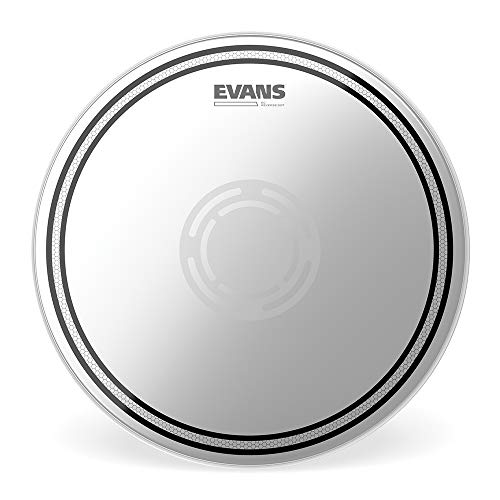
This batter head features two plies (7 mil outer, 10 mil inner) with a reverse dot on the underside to boost durability, focus, and attack without dulling sensitivity. Edge Control technology pre-EQs the sound to reduce mid-range muddiness.
- Best for: players seeking a balanced, studio-friendly head with strong focus and durability.
- Why selected: combines durable construction with a clearer attack and refined midrange.
- Caution: may require careful tuning to optimize brush and rimshot interaction.
Evans Heavyweight Coated 14″ Snare Head

This coated batter head uses two plies of 10 mil film plus a reverse dot for added durability, focus, and attack. Level 360 Technology supports easy tuning and an extended pitch range with consistent sound across playing styles.
- Best for: drummers seeking maximum durability with a robust, punchy attack.
- Why selected: reliable performance under hard hits with stable tuning.
- Caution: may feel stiffer than lighter heads and require more tension to reach optimal tone.
Evans Clear 500 Snare Side 14″ Head

A single ply 5 mil snare side head designed for high sensitivity and articulation, particularly with brushes. It reduces sustain while preserving a crisp response, suitable for tight, detailed playing styles.
- Best for: players focusing on sensitivity and articulation with brushes or lighter hits.
- Why selected: helps interpret lighter dynamics precisely on snare top or bottom mix.
- Caution: single ply means less durability than double-ply designs in heavy hitting contexts.
Evans dB Snare Batter 14″

This 14″ batter head uses ShockWeave Mesh combined with Snare Sim Technology to mimic traditional snare wire sound while maintaining a natural attack. It features reinforced striking surfaces for longevity and a natural acoustic feel.
- Best for: players seeking a modern, mesh-inspired feel with a natural tone.
- Why selected: blends modern durability with authentic snare articulation.
- Caution: may not deliver the exact metal-on-head feel some players expect from pure metal heads.
Buying Guide
What should you consider when choosing a snare batter head?
- Sound goals: Do you want more focus, less overtones, or a warmer, fuller attack?
- Durability vs. feel: Do you frequently hit hard, or do you value a lighter touch and easier tuning?
- Vent holes and overtone control: Are you after a tighter, drier feel or a more resonant, open response?
- Two-ply versus single-ply: Two-ply heads are typically sturdier and less prone to denting; single-ply heads are often louder and more responsive to subtle dynamics.
- Brush compatibility: If you use brushes, prefer heads noted for articulation at low dynamics.
- Studio versus live: Studio work often benefits from controlled sustain and reduced ring; live settings may reward more durability and projection.
FAQ
- Q: What is the benefit of a reverse dot on a snare head? A: A reverse dot increases durability and focus, helping the head resist denting while delivering a strong attack.
- Q: Are two-ply heads always better than single-ply? A: Not always. Two-ply heads tend to be more durable and less prone to overtones, while single-ply heads offer higher sensitivity and louder response.
- Q: How does vent hole design affect tone? A: Vent holes reduce stray harmonics and tighten sustain, producing a drier, more controlled sound.
- Q: Is a coated head better for live gigs? A: Coated heads generally deliver warmer tone with slightly less overtone complexity, which can help in loud environments.
- Q: Can I mix top and bottom heads from different brands? A: Mixing can work but may result in inconsistent tuning and response. It’s often best to pair heads designed for similar performance goals.
- Q: How important is tuning stability for a snare batter head? A: Very important. Head construction and technology (like Level 360 or overtone control) can affect tuning stability and overall sound.