Direct answer: these small passive bookshelf speakers pair with an external amplifier or receiver to deliver clear, room-filling sound in compact spaces. They’re best for budget-friendly stereo listening, home theaters, desktops, or small apartments where you want clean, unobtrusive speakers. The following five models balance size, sound, and value, and are suitable for buyers who already own or plan to buy a separate amplifier or AV receiver.
Summary of chosen products:
| Product | Best For | Key Point |
|---|---|---|
| Edifier P12 | Entry-level stereo in small rooms | Requires amplifier/receiver |
| RIOWOIS Passive Bookshelf Speakers | Balanced sound with wood aesthetic | Good for multi-room or computer use |
| Polk Monitor XT15 | Dolby Atmos/DTS:X ready setups | Compact with high-res potential |
| Dayton Audio Classic B40 | Solid all-around music and TV | Wood veneer, easy to pair with amps |
| Micca MB42X G2 | Sound quality with upgrade potential | Classic upgrade path from MB42X |
Edifier P12 Passive Bookshelf Speakers
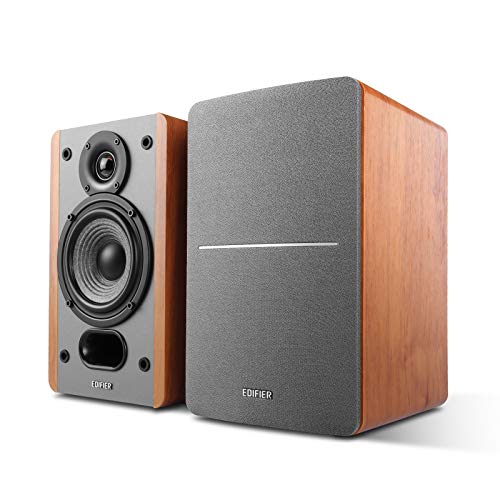
Configuration: 2-way speakers with built-in wall-mount bracket. Pair, wood color.
Best for: A budget-friendly, compact start for stereo listening in small rooms. The Edifier P12 is ideal for users who already own a power amplifier or AV receiver and want flexible mounting options.
Why selected: It offers silk-dome tweeters for refined treble, a 4-inch bass driver for natural mid-bass, and a 6-ohm impedance that can work with common amplifiers.
Caution: Requires a separate amplifier/receiver; no built-in power is provided.
RIOWOIS Passive Bookshelf Speakers

Configuration: 4.3″ long, 6.6″ high pair, wall-mountable.
Best for: Small to mid-sized rooms and computer setups where a wood grain aesthetic helps with decor. Suitable for users seeking a compact 30W peak capability with simple compatibility to various amps.
Why selected: Features a 2.75″ woofer and 2″ tweeter for clearer highs and more complete mids, with a natural wood grain finish.
Caution: No Bluetooth; relies on an external amplifier for power.
Polk Monitor XT15 Speakers

Configuration: 1″ tweeter, 5.25″ woofer; pair.
Best for: Home theaters and stereo setups that may later expand to surround formats. The XT15 blends modern design with compact dimensions and offers high-resolution sound from multiple inputs.
Why selected: The design supports Dolby Atmos and DTS:X compatibility through appropriate sources, and it provides an open mid-range with punchy bass for its size.
Caution: Requires amplification and compatible receiver for best effect; treated as part of a larger system rather than a standalone speaker.”
Dayton Audio Classic B40 Bookshelf Speakers

Configuration: 4″ woofer, 1″ tweeter; wood veneer cabinet.
Best for: Music lovers and TV listeners seeking balanced, natural sound with a traditional wood finish that fits classic interiors.
Why selected: The passive 2-way design with a solid cabinet helps deliver clear highs and controlled bass when paired with a suitable amplifier.
Caution: Requires amplifier/receiver and is best used in a system with proper impedance matching.
Micca MB42X G2 Passive Speakers

Configuration: 4″ carbon fiber woofer, 0.75″ silk dome tweeter; pair.
Best for: Audiophiles looking for a refined upgrade path from a classic MB42X, suitable for music and small home theaters.
Why selected: The upgraded woofer and tweeter deliver a balanced soundstage with better articulation and clarity across frequencies.
Caution: As a passive design, it must be paired with an amplifier/receiver; ensure your amp can handle the impedance.
Buying Guide
- What amplifier or receiver will you use? Most small passive speakers require a dedicated amp or AV receiver with enough power to drive them without distortion.
- How much space do you have? Choose speakers with a cabinet size that fits your room and consider wall-mounting options when space is tight.
- What listening purpose do you have? For music, prioritize speakers with clear highs and tight bass. For movies, look for good midrange presence and integration with a subwoofer if needed.
- What is your budget range? The listed options provide budget-friendly and slightly premium choices; plan for cables and an amplifier if you don’t already own them.
- Are aesthetics important? Wood veneer or wood grain finishes can blend with living spaces and desks, improving overall room appeal.
- What is the impedance? Ensure compatibility with your amplifier; some models are 6 ohms, others may vary. Mismatches can affect volume and clarity.
FAQ
- Do passive bookshelf speakers require an amplifier? Yes. They need an external amplifier or receiver to operate.
- Can I use these in a home theater without rear speakers? Yes, they can serve as front stereo speakers in a compact setup or paired with a subwoofer for better low-end impact.
- Is wood veneer important for sound? Wood cabinets can influence resonance; many buyers prefer wood finishes for aesthetics, but the main factor is driver quality and enclosure design.
- Are there any wireless options in this list? The products listed are passive and wired; none include built-in wireless functionality.
- What should I consider when buying for a computer desk? Look for compact depth, good midrange clarity, and ease of placement near a monitor without excessive vibration.
- Can I upgrade later with higher-end speakers? Yes, you can swap to higher-performance passive speakers and keep using the same amplifier if it matches impedance and power needs.