Choosing the right rubber feet for subwoofer can reduce vibration, improve bass clarity, and protect surfaces. Below is a quick comparison of five well-rated options selected for durability, load capacity, and isolation performance.
| Product | Type | Mount | Ideal Use |
|---|---|---|---|
| Howonder Rubber Feet (16 Pack) | Round Bumper | Screw | Multiple speakers, furniture |
| QfwdfcTrenz Heavy-Duty Rubber Feet (8 Pcs) | Heavy-Duty Pad | Screw | Subwoofers, amps, heavy gear |
| Monosaudio 40x20mm Isolation Feet (4 Pcs) | Aluminum Core With Rubber Ring | Screw / Bolt Hole | High-load audio equipment |
| Hudson Hi‑Fi Platinum Silicone Feet (8 Pack) | Silicone Adhesive Pads | Adhesive | Turntables, speakers, subwoofers |
| Komsunma Subwoofer Isolation Pads (4 Pack) | Large Rubber Feet With Screws | Screw | Guitar amps, subwoofers |
Howonder Rubber Feet, 16 Pack

This set includes 16 speaker rubber feet with Phillips screws and measures 40mm diameter by 10mm height. The design emphasizes elasticity, aging stability, and flame retardance. Key specs include a 6mm screw hole diameter and anti-static properties.
- Best For: Multiple small-to-medium speakers, cutting boards, road cases and furniture.
- Mount: Screw-mounted for secure attachment and repeatable positioning.
- Benefits: Corrosion resistant and suitable for repeated use where screw mounting is preferred.
- Consideration: Low height (0.4″) provides modest isolation compared with taller pads.
QfwdfcTrenz Heavy-Duty Rubber Feet, 8 Pcs

These heavy-duty pads are made from high-density rubber and include stainless steel screws. Each pad supports up to approximately 35 lb, and the non-slip base reduces shifting under load. Designed to absorb shock and reduce resonance transmitted to floors or stands.
- Best For: Standalone subwoofers, guitar amps, heavy speakers that need improved stability.
- Mount: Screw installation for durability under repeated loading.
- Benefits: Reinforced design and shore hardness tuned for heavier equipment; non-slip performance.
- Consideration: Fixed height (0.47″)—moderate elevation and decoupling compared with dedicated isolation platforms.
Monosaudio 40x20mm Speaker Isolation Feet, 4 Pcs

Monosaudio combines an aluminum core with removable non-slip rubber rings. Each pad claims a very high load support (around 400kg/880 lb) and includes a 4.5mm center hole for screw or bolt mounting. The high-density construction aims for low harmonic vibration and high damping.
- Best For: Heavy or high-end audio equipment where rigid support and focused decoupling are needed.
- Mount: Center hole simplifies bolt/screw attachment; rubber ring reduces surface contact.
- Benefits: High load rating and targeted vibration reduction for tighter bass response.
- Consideration: Metal core transfers some energy differently than full-rubber pads; intended for precision setups.
Hudson Hi‑Fi Platinum Silicone Feet, 8-Pack

These 2.5″ diameter, 1.25″ tall platinum silicone feet use a 20 Duro (Shore A) compound and adhesives for stick-on mounting. They are intended to reduce resonance substantially and are rated for mid-weight components (50–100 lbs per pad range described by manufacturer).
- Best For: Turntables, subwoofers, and speakers where adhesive isolation is preferred over screws.
- Mount: Adhesive-backed pads for tool-free installation and full-surface decoupling.
- Benefits: Large bearing area and softer durometer help absorb micro-vibrations and prevent surface transmission.
- Consideration: Adhesive mounts are less removable and may leave residue; check compatibility with finishes.
Komsunma Subwoofer Isolation Pads, 4-Pack
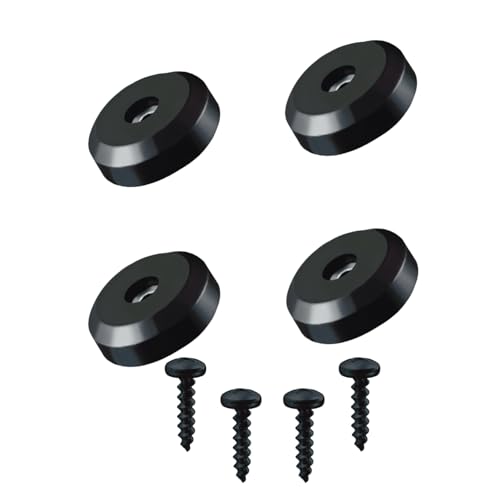
Komsunma supplies larger rubber feet (40mm diameter, 15mm height) with built-in stainless steel washers and mounting screws. These pads emphasize anti-slip characteristics, shock absorption, and straightforward installation with only a Phillips screwdriver.
- Best For: Subwoofers and amplifiers that need higher elevation and stronger isolation than typical low-profile bumpers.
- Mount: Screw-mounted with integrated washer to protect rubber integrity.
- Benefits: Taller profile enhances decoupling; robust design for long-term use.
- Consideration: Higher stiffness may change coupling characteristics depending on floor type; ensure screw compatibility with cabinet material.
Buying Guide
Selecting the right rubber feet for a subwoofer depends on equipment weight, installation preference, and acoustic goals. Below are key factors and comparison perspectives.
Mount Type: Screw vs Adhesive
- Screw-Mounted Feet: Provide secure, durable attachment and are preferred for heavy cabinets and mobile equipment. Examples: Howonder, QfwdfcTrenz, Komsunma.
- Adhesive Pads: Offer tool-free installation and full-surface contact for micro-vibration damping. Best for non-invasive retrofits and equipment with flat bases. Example: Hudson Hi‑Fi Platinum.
- Hybrid/Through-Hole: Metal-core or through-bolt options (Monosaudio) allow very high load capacity and precise mechanical coupling control.
Material And Durometer
- Softer Compounds (Lower Durometer): Better at absorbing micro-vibrations, improving clarity in turntables and sensitive gear. Adhesive silicone pads often use softer durometers (20 Duro).
- Harder Compounds (Higher Durometer): Support heavier loads with less deformation and can prevent excessive cabinet tilt under load. Heavy-duty rubber and metal-core pads typically have higher shore ratings.
Size, Height, And Bearing Area
- Diameter/Bearing Area: Larger pads distribute weight and reduce point pressure on floors. Big pads like Hudson Hi‑Fi Platinum offer wide contact areas.
- Height: Taller feet increase decoupling but may alter cabinet stability and center of gravity. Choose based on desired isolation versus stability trade-off.
Load Capacity And Equipment Weight
- Check manufacturer load ratings or choose pads with a margin above the equipment weight. Metal-core designs often list very high capacity for heavy subwoofers.
- For multi-driver subwoofers, distribute load across multiple pads rather than relying on a single point.
Floor Type And Contact Behavior
- Hard Floors (Wood, Tile): Use pads with non-slip bases or soft durometer to avoid scratching and reduce transmission to the structure.
- Carpet: Consider taller or spike-style isolation if sinking into carpet reduces effectiveness; screw-mounted solutions can remain effective if base is flat.
Installation Considerations
- Drilling/Screwing: Ensure cabinet walls or baseboards can accept screws; use proper pilot holes to avoid splitting material.
- Adhesive: Clean surfaces and allow recommended cure time; adhesive may leave residue when removed.
- Removability: If you expect to reposition equipment, choose screw-mounted pads for repeatable removal or non-damaging adhesive designed for electronics.
Acoustic Goals And Testing
- Reduce Floor-Borne Resonance: Softer, larger pads reduce low-frequency coupling into floors.
- Improve Bass Tightness: Decoupling that reduces cabinet-to-floor energy transfer can tighten bass response; try different durometers to match room acoustics.
- Compare Options: Test pads in pairs and measure subjective improvements in clarity and perceived bass control; small changes in material and height often produce audible differences.
Durability And Environmental Factors
- Consider flame retardance, aging stability, and temperature tolerance if the gear operates in variable environments. Metal-core or reinforced screw-mounted pads offer long-term mechanical stability.