Looking for effective sound panels to improve recording quality at home or in a small studio? This guide highlights five top options that balance performance, installation ease, and value. Each panel is suited for different needs—from compact home studios to mid-size spaces needing stronger reverberation control. The following selections emphasize reliable absorption, wall-safe installation, and practical use for vocal booths, podcasts, and music capture. Below is a quick summary table of the featured products to help you compare at a glance.
| Product | Best For | Key Benefit | Notes |
|---|---|---|---|
| Focusound 52 Pack Acoustic Foam Panels | Small to medium home studios | High-density foam with adhesive included | Fast setup; 300 adhesive pieces reduce wall damage |
| TroyStudio Thick Acoustic Foam Panels | Mid-sized studios | High absorption with 0.8 NRC | Flame retardant, decorative groove design |
| Knightsacoustic 50 Pack | Budget-conscious rooms | Professional absorption with 2″ thickness | No adhesive included |
| TOUO 12 Pack Acoustic Panels | Versatile home spaces | Upgraded adhesive and fast recovery | 12x12x1 inch, wedge foam |
| Saiqiang Acoustic Foam Panels 12 Pack | Sound-controlled rooms | High-density and fire-safe for studios | Black wedge design |
Focusound 52 Pack Acoustic Foam Panels

Best for compact home studios and small vocal booths. These 1″ thick panels use triangular grooves to boost noise absorption and reduce echoes, flutter, and reverb. The included 300 adhesive strips simplify installation and minimize wall damage, making them suitable for renters or quick setups. A quick recovery tip is to soak the foam briefly if it loses shape, then air dry in 24–48 hours. This panel set balances density with ease of use for beginners and experienced engineers alike.
Who it’s for: Ideal for solo producers, podcasters, and small studios needing immediate acoustic treatment without complex mounting. Why selected: The combination of open-cell foam performance and abundant adhesive reduces installation friction while delivering noticeable room control. Caution: Adhesives can leave residue if not applied carefully; test on a small area first.
TroyStudio Thick Acoustic Foam Panels
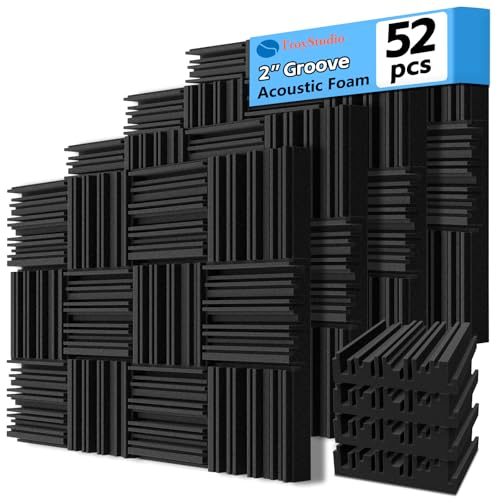
Best for mid-sized recording spaces needing strong noise reduction. This 12″ x 12″ x 2″ panel pack offers dense absorption, reducing room reverb, echoes, standing waves, and reflections. With a reported NRC of 0.8 and an average absorption coefficient around 0.77, these panels help clarify vocal and instrument capture. The design includes periodic grooves for both function and aesthetic appeal, and they’re flame retardant and eco-friendly. Use them on walls or ceilings to optimize sound without excessive panel counts.
Who it’s for: Suitable for home studios and control rooms seeking higher absorption per panel. Why selected: High density and groove structure deliver reliable performance per square foot. Caution: Heavier panels may require sturdier mounting hardware for older walls.
Knightsacoustic 50 Pack Sound Proof Foam Panels

Best for budget-conscious studios needing consistent reverberation control. These 2-inch thick panels are designed to absorb noise and reduce echoes, making them suitable for recording booths, control rooms, and radio stations. They focus on managing reverberation rather than full room isolation. Recovery after compression is noted to be quick, and the material remains durable after repeated use. Note that adhesive is not included, so plan mounting options accordingly.
Who it’s for: Beginners and budget builds wanting solid absorption without premium costs. Why selected: Excellent value per panel with strong absorption properties. Caution: Adhesive or mounting hardware must be sourced separately, which adds setup steps.
TOUO 12 Pack Acoustic Panels

Best for versatile spaces including offices, home studios, and dorm rooms. This 12-pack uses high-density wedge foam for effective absorption and a modern look. It includes 60 adhesive strips, facilitating secure mounting while aiming to minimize wall damage. Panels recover within 24–48 hours after unpacking, with a recommended warm-water pre-treatment to speed up revival. The 1-inch thickness offers a balance between space efficiency and acoustic impact.
Who it’s for: People decorating multi-purpose rooms who need reliable, easy-to-install acoustic treatment. Why selected: Strong value with upgraded accessories and good recovery performance. Caution: Lower thickness may require more panels for larger rooms to achieve target absorption.
Saiqiang Acoustic Foam Panels 12 Pack
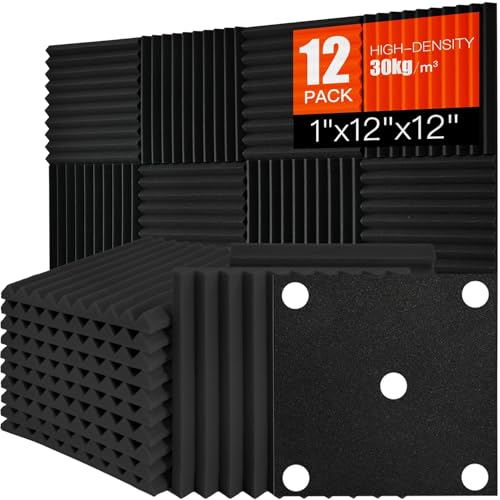
Best for professional-sounding spaces needing balanced absorption and a sleek look. These 12-pack 1″ x 12″ x 12″ panels emphasize high-density foam and black wedge design for strong diffusion and noise reduction. They’re suitable for studios, vocal booths, offices, and home theaters, aiming to soften reflections without completely deadening the space. The panels are described as fire-resistant and non-toxic for safer long-term use.
Who it’s for: Recording and podcast spaces seeking clear, controlled sound with a visually neutral panel. Why selected: Consistent performance across panels with a design that suits modern studios. Caution: As with all foam products, ensure proper ventilation and avoid overheating during installation.
Buying Guide: Key Considerations for Recording Studio Sound Panels
- What density works best? Higher-density foam generally offers better absorption and less compression over time. Expect long-term resilience from 1″ to 2″ panels, depending on room size and sound goals.
- Where to place panels? Start with reflection points on walls and ceiling, then address rear walls and corners if needed. A balanced layout improves overall intelligibility of vocals and instruments.
- Adhesive vs. mounting? Adhesives simplify installation but may leave residue. Consider wall type and rental rules. Some sets include adhesives; others require separate mounting hardware.
- Panel shape and design? Wedge and pyramid textures influence diffusion and diffusion of sound differently. Grooved or textured designs can help scatter standing waves while looking stylish.
- Material safety? Look for flame-retardant, low-VOC foams, especially in small or poorly ventilated spaces.
- How many panels are needed? Estimate room volume and target NRC; larger rooms require more coverage to achieve the same reduction in reverb as smaller spaces.
- Maintenance and cleaning? Foam panels are relatively easy to wipe down; avoid aggressive solvents that could degrade foam.
Practical Setup Tips
- Begin with panels at reflection points on the side walls and the ceiling directly above the microphone.
- Use a combination of panels of different thicknesses for varied absorption across frequencies.
- For rooms with irregular shapes, treat corners with bass traps or stepped panel arrangements to manage low-frequency buildup.
- Keep panels away from direct heat sources and moisture-prone areas to extend their life.
FAQs
- What is NRC, and why does it matter? NRC (Noise Reduction Coefficient) measures average sound absorption. Higher NRC indicates better absorption across frequencies, improving recording clarity.
- Is foam better than mineral wool for panels? Foam is lighter and easier to install, while mineral wool can offer different absorption characteristics. Foam is common for DIY studios.
- Do I need to treat the entire room? No. Start with key reflection points and then evaluate whether additional panels or bass traps are needed for your space.
- Can I reuse panels if I move? Many foam panels can be removed and reused with minimal damage, especially if adhesives are minimal or removable.
- Are these panels safe for pets or children? Look for non-toxic, flame-retardant foams and ensure good ventilation during installation.
- How do I speed up panel recovery after shipping? Lightly dampen and allow air-drying according to product guidance; this can speed up shape recovery for some foams.