Finding the right professional microphone for singing hinges on selecting gear that delivers clear vocal presence, reliability, and noise rejection. This guide highlights five top-performing options suited for live stages, studio sessions, podcasting, and broadcasting. Each pick is evaluated for who it’s best for, why it stands out, and potential limitations to consider.
| Product | Best For | Why It Stands Out | Key Limitation |
|---|---|---|---|
| Shure SM58-LC | Live performers and studios | Legendary vocal clarity; trusted on global stages; cardioid minimizes background noise | Limited on/off features |
| Shure SM58S | Singers and speakers in dynamic setups | On/off switch; built-in pop filter; reliable cardioid | No wireless option built-in |
| TONOR D5 | Budget-conscious studios and karaoke | Hypercardioid pickup; durable all-metal build; high SPL | May require proper gain for quiet environments |
| Sennheiser E 835 | Stage vocalists and clubs | Strong isolation; balanced response; presence boost for projection | Not ideal for very quiet studios |
| RØDE NT1 | Vocal tracking and streaming | Large-diaphragm condenser; exceptionally low noise | Condenser mics can be sensitive to room acoustics |
Shure SM58-LC Dynamic Vocal Microphone – Professional Handheld Cardioid XLR Mic

Best for singers who need reliable core vocal reproduction with minimal ambient noise. The SM58-LC offers a finely tuned frequency response with a midrange lift for warmth and presence. Its cardioid pattern helps isolate vocals on busy stages or in studios, reducing feedback and spill. This mic is a staple for live performances and broadcast work where consistency matters.
Who it’s best for: Professional performers, podcasters, and studio vocalists seeking a proven, stage-ready workhorse with dependable vocal clarity. Why selected: The classic Shure design delivers consistent results across venues and applications.
Caution: It lacks built-in switches or wireless options, so integration with certain setups may require extra adapters or gear.
Shure SM58S Dynamic Vocal Microphone with On/Off Switch

The SM58S adds a practical on/off switch and built-in pop filter for live use and quick stage changes, delivering a warm, present vocal tone that cuts through the mix. Its cardioid pattern focuses on the singer while rejecting background noise, making it a solid choice for clubs, churches, and rehearsal spaces where reliability is essential.
Who it’s best for: Singers and speakers who need easy on/off control during performances. Why selected: It’s a trusted stage mic with consistent performance and practical features.
Caution: The absence of wireless integration means it’s best paired with a compatible wired setup or an external wireless system if mobility is required.
TONOR D5 Professional Vocal Microphone

The TONOR D5 is built for durable use with a hypercardioid pickup that minimizes background noise and feedback. Its high sensitivity and wide SPL handling enable clean, distortion-free vocals in various environments, from home studios to live venues. The all-metal construction adds durability for frequent travel and setup.
Who it’s best for: Beginners to intermediate vocalists and karaoke enthusiasts seeking clear sound at an affordable price. Why selected: Combines robust build with strong noise rejection and easy handling.
Caution: Microphone stand technique and gain staging are important to avoid proximity effect in intimate settings.
Sennheiser E 835 Dynamic Cardioid Vocal Microphone

The E 835 delivers a strong vocal presence with a gentle presence boost that helps vocals cut through the mix while maintaining naturalness. Its cardioid pattern provides good isolation from stage noise and monitors, making it a solid choice for live venues, clubs, and rehearsal rooms.
Who it’s best for: Stage vocalists and venues needing reliable isolation and projection. Why selected: Balanced response with a presence boost for clear, confident performances.
Caution: While versatile for live use, it’s not the best option if you require a precise, studio-grade condenser alternative for detailed studio work.
RØDE NT1 Signature Series Large-Diaphragm Condenser Microphone
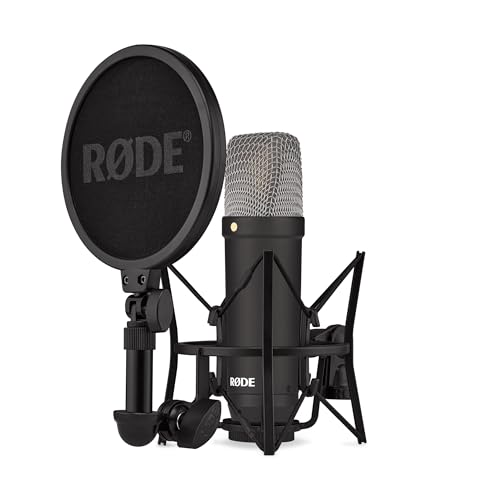
The NT1 is a condenser microphone with a large-diaphragm design, offering a smooth frequency response, high sensitivity, and extremely low noise. It is well-suited for studio vocal tracking, streaming, and podcasts where detailed vocal capture is essential. Its high SPL handling provides versatility across various vocal styles.
Who it’s best for: Studio-focused vocalists and podcasters seeking ultra-low noise and high-fidelity vocal capture. Why selected: Among the quietest studio condensers, delivering pristine detail.
Caution: Requires careful acoustic treatment to maximize performance; not ideal for untreated rooms or loud live settings.
Buying Guide
What to consider when choosing a professional microphone for singing:
- Use-case: Live stage, studio recording, or broadcast. Dynamic mics (like SM58 and E 835) excel in loud environments; condensers (like NT1) shine in controlled studios.
- Pickup pattern: Cardioid mics focus on the singer and reject off-axis noise. Hypercardioid and figure-8 patterns offer different isolation levels and room interactions.
- Durability and build: All-metal bodies and robust connectors are important for frequent transport and handling on gigs.
- Connectivity: Wired XLR mics are common; consider wireless systems for mobility, ensuring compatibility with receivers and transmitters.
- Noise handling and headroom: SPL handling and self-noise influence how clean the mic sounds in different environments.
- Room acoustics: Condenser mics require treated spaces to avoid capturing excessive room ambience.
- Budget and value: Consider the trade-off between price, durability, and the tone you want. Start with a proven dynamic mic for reliability, then explore condensers for studio polish.
FAQ
- What microphone is best for live singing? A dynamic cardioid microphone like the SM58 is widely trusted for live performances due to durability and quiet handling of stage noise.
- Do condensers work for singing on stage? Condenser mics can work on stage with proper control of room noise and power, but they’re more sensitive to feedback and require good monitoring.
- Should I choose a mic with an on/off switch? An on/off switch can be convenient for live use, but not essential for studio work where constant gain control is preferred.
- Is a hypercardioid pattern better than cardioid? Hypercardioid offers tighter pickup and more rejection from sides, useful in very noisy stages, but care is needed with placement.
- What is the benefit of a low-noise mic like the NT1? Low self-noise captures quieter passages with greater detail, ideal for studio vocal recordings and podcasts.
- Are wireless mics better for performance? Wireless systems improve mobility, but ensure clear channel performance, battery life, and compatibility with your mixer or interface.