Low profile speaker stands improve clarity and placement without adding visual bulk. Below is a concise comparison of five well-suited options for desktops, soundbars, center channels, satellite speakers, and compact amps. Use the table to match form factor and functionality to your setup.
| Product | Best For | Key Feature |
|---|---|---|
| Kanto S10 Low-Profile Stand | Sound Bar / Center Channel | 12° Upward Tilt, Low-Profile Design |
| Kanto S2 Tilted Desktop Stands | Desktop Monitors / Small Speakers | 16° Tilt, Damping Foam |
| Gator Frameworks Low Profile Amp Stand | Guitar Combo Amps / Small Powered Amps | Tilt-back Design, Collapsible |
| Monoprice Low Profile Wall Mount Brackets | Wall-Mounted Satellite Speakers | Single-Bolt Mounting, Compact Profile |
| PERLESMITH Universal Speaker Stands | Small Bookshelf / Satellite On-Floor | Adjustable Width & Height, Steel Base |
Kanto S10 Low-Profile Angled Sound Bar And Center Channel Speaker Stand

Purpose: Designed for sound bars and center channel speakers where a lower TV placement and minimal profile are desired.
Key Features: 12° upward tilt to improve on-axis response, foam padding and bent metal design to reduce vibrations and rattling, and a low-profile form that allows for comfortable viewing and placement under a television.
This stand is especially suited to setups where furniture reflections and speaker-to-surface coupling reduce clarity. The tilt and decoupling features focus sound toward listeners while limiting energy transfer into the furniture surface.
Kanto S2 Tilted Desktop Speaker Stands For Small Speakers
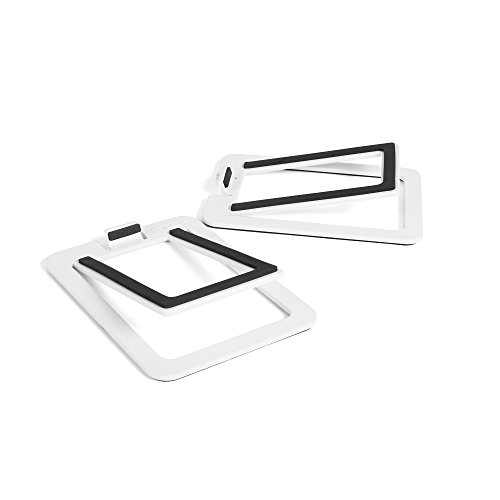
Purpose: Compact desktop stands for 2”-3” studio monitors and small bookshelf speakers used at desks or near-field listening positions.
Key Features: 16° tilt aimed at the listener for improved high-frequency response, damping foam padding on contact surfaces to reduce resonance, and a minimalistic low-profile design for a clean desktop footprint.
These stands prioritize on-axis listening and isolation for clarity. The solid metal construction provides stability while using minimal space, making them appropriate for computer desks and small studio setups.
Gator Frameworks Low Profile Guitar Combo Amp Stand (GFWGTRAMP100)

Purpose: Low-profile tilt stand optimized for guitar combo amplifiers but applicable to small powered speaker cabinets needing slight elevation and angle.
Key Features: Tilt-back design to angle the amp for improved projection, lifts the amp off the floor to reduce vibration transfer, and heavy-duty steel construction with a fully collapsible frame for transport or storage.
Its low visual profile keeps gear close to the stage or desktop while improving sound projection and reducing floor-coupled resonance. The collapsible design makes it practical for mobile musicians or compact home studios.
Monoprice Low Profile Speaker Wall Mount Brackets (Pair)
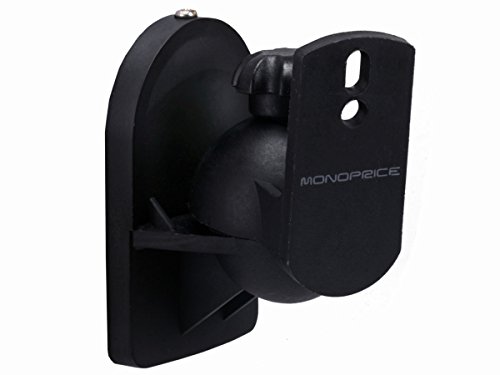
Purpose: Wall mounting small satellite speakers to achieve a low visual profile and optimized listening angle without floor stands.
Key Features: Compact single-bolt mounting system designed for small satellite speakers, minimal projection from the wall and a compact footprint suitable for multi-room audio or discrete surround setups.
Wall mounting is an effective low-profile strategy that removes floor clutter and places speakers closer to ear level or ideal surround positions. These brackets are built for lightweight satellite speakers with conventional mounting points.
PERLESMITH Universal Speaker Stands For Surround Sound

Purpose: Adjustable floor stands for satellite or bookshelf speakers where a lower floor footprint and stable base are needed.
Key Features: Adjustable width 4.5″–9″ for various rectangular/square speakers, height adjustment 33.3″–45.1″ via twist-lock, solid steel construction and wide base with non-slip foot pads for stability.
Although taller than desktop options, these stands offer a relatively slim, unobtrusive floor presence compared with bulky pedestal stands. They are compatible with many compact speakers (excluding round/irregular shapes) and emphasize stability for surround configurations.
Buying Guide: Choosing The Right Low Profile Speaker Stand
Selecting a low profile speaker stand depends on speaker type, placement goals, room acoustics, and aesthetics. Below are key considerations to help you match a stand to your setup.
1. Intended Use And Placement
- Desktop Near-Field Listening: Choose tilted desktop stands (Kanto S2) to aim tweeters toward ears and minimize desk reflections.
- Soundbar / Center Channel: Low-profile angled stands (Kanto S10) keep the TV low and improve on-axis clarity.
- Wall-Mounted Surrounds: Low-profile wall brackets (Monoprice) save floor space and position speakers near ear height.
- Small Amp Or Cabinet: Tilt-back amp stands (Gator) improve projection without raising gear high off the floor.
2. Compatibility And Mounting
- Check speaker footprint and mounting holes; stands that clamp or use keyhole mounts require matching holes or flat bases.
- Verify weight limits and width/depth compatibility for bookshelf or satellite speakers to ensure safe support.
3. Isolation And Vibration Control
- Damping Materials: Foam padding or rubber feet reduce transmitted vibration and furniture rattling.
- Decoupling Design: Bent metal or isolated pads help reduce energy transfer into shelving or TV stands for improved clarity.
4. Tilt, Angle, And On-Axis Response
- Small fixed tilts (12°–16°) are effective for desktop listening and center/soundbar alignment to achieve better high-frequency response.
- For surround or rear channels, less tilt may be needed—focus on correct aiming toward listening positions.
5. Stability And Build Quality
- Prefer steel or solid metal constructions for rigidity. Wide bases or wall anchors increase stability for low-profile mounts.
- Consider portability and collapsibility if gear will be moved frequently.
6. Aesthetics And Footprint
- Low-profile options vary from very compact wall brackets to short angled desktop risers. Match finish and color to your room for a cohesive look.
- Measure available depth under TVs or on desks to ensure the stand fits without blocking ports or controls.
7. Cable Management And Installation
- Built-in cable channels help keep wiring tidy for visible low-profile placements.
- When wall mounting, confirm wall type and hardware requirements for safe installation; use anchors appropriate for drywall or masonry as needed.
8. Multiple Comparison Perspectives
- Space-Constrained Rooms: Wall mounts and desktop stands minimize footprint and visual clutter.
- Acoustic Priorities: Choose stands with damping and tilt to improve imaging and reduce reflections.
- Portability: Collapsible designs like the Gator stand are suited to mobile setups.
- Versatility: Adjustable-width/height floor stands work across speaker families but may be taller than strictly “low-profile” choices.