Low latency Bluetooth solutions keep audio in sync with on-screen action. Below is a quick comparison of five devices selected for TV use, focusing on latency-reducing codecs, connectivity options, and multi-device pairing.
| Product | Key Low-Latency Feature | Connections |
|---|---|---|
| MEE Audio Connect | Qualcomm aptX Low Latency | 3.5mm / RCA / Optical |
| 1Mii B06TX | aptX Low Latency & HD | AUX / RCA / Optical / Coaxial |
| 1Mii B03+ | aptX Low Latency & Adaptive | Optical / RCA / 3.5mm |
| 2025 Pro Bluetooth 5.4 | Bluetooth 5.4, Dual Link Low Latency | 3.5mm / USB Type-C (charging) |
| HomeSpot JY508 Neckband Speaker | Built-In Low Latency Mode For TV | Bluetooth (requires TV or transmitter) |
MEE Audio Connect Bluetooth Audio Transmitter
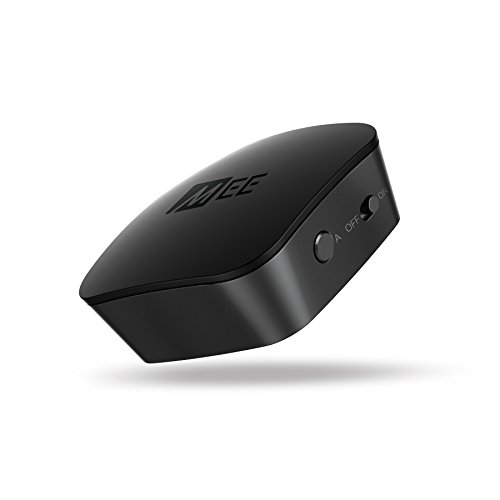
The MEE Audio Connect is a compact Bluetooth transmitter built to stream TV audio to headphones or speakers. It supports Qualcomm aptX Low Latency to reduce lip-sync issues when paired with compatible receivers. Connection options include 3.5mm auxiliary, RCA, and optical TOSLINK, making it suitable for many TV audio outputs.
Notes on operation: optical output requires setting the TV audio to PCM for compatibility; the device does not convert Dolby Digital. The unit targets users who need simple high-fidelity wireless TV audio with minimized latency when both transmitter and listening device support aptX Low Latency.
1Mii B06TX Bluetooth 5.2 Transmitter For TV

The 1Mii B06TX is a Bluetooth 5.2 transmitter designed for TVs without native Bluetooth. It lists aptX Low Latency and aptX HD support for lower lag and improved audio quality with compatible headphones or speakers. Inputs include AUX, RCA, optical, and coaxial, offering broad compatibility with modern and older TVs.
Operation is plug-and-play with a simple pairing process and a dedicated volume control. The transmitter supports dual pairing so two listeners can receive audio simultaneously. This model is suited for households wanting flexible connections and reduced lip-sync delay when using aptX LL-capable devices.
1Mii B03+ Bluetooth Transmitter Receiver For TV

The 1Mii B03+ combines transmitter and receiver modes with a display screen for easy configuration. It supports aptX Low Latency, aptX Adaptive, and aptX HD variants depending on the paired device, and offers optical, RCA, and 3.5mm connections.
Unique features include a TX bypass mode that can output to wired soundbars and wireless headphones simultaneously, beneficial when different listeners require different volumes. The on-screen display and volume controls help with precise setup and monitoring of codec/connection status, useful for users who need clear feedback while minimizing latency.
2025 Pro Bluetooth 5.4 Transmitter Receiver

The 2025 Pro advertises Bluetooth 5.4 connectivity and dual-link capability to pair two headphones or speakers simultaneously. It supports low-latency operation and automatically enters pairing mode on power-up. The unit emphasizes stable connections, a battery display, and long playtime for portable use.
This adapter is positioned for frequent travelers and TV users who need a compact transmitter with modern Bluetooth compatibility. Low-latency performance depends on matching codec support between the transmitter and the receiving device. It also functions as a receiver in RX mode for other Bluetooth sources.
HomeSpot JY508 Wireless Neckband Speaker

The HomeSpot JY508 is a wearable neckband speaker marketed for TV and gaming with a built-in low-latency mode. It provides 360-degree stereo sound and up to 12 hours of playback per charge. This device requires a TV with integrated Bluetooth or an external Bluetooth transmitter to achieve a wireless TV connection.
As a speaker rather than a dedicated transmitter, its latency performance depends on the Bluetooth codec negotiated between the TV/transmitter and the neckband. The device targets users seeking a personal speaker alternative to headphones with reduced perceived lag when paired with low-latency sources.
Buying Guide: Choosing Low Latency Bluetooth For TV
When selecting a low latency Bluetooth solution for TV, consider these key areas:
- Codec Support: Look For aptX Low Latency or aptX Adaptive on both transmitter and receiver. Without matched codec support the connection will fall back to standard SBC with higher latency.
- Connection Types: Check Your TV’s Audio Output—3.5mm, RCA, optical (TOSLINK), or coaxial. Optical often provides the best digital signal but may require setting the TV audio format to PCM.
- Dual Pairing: If You Want To Share Audio, Choose A Device That Supports Pairing Two Receivers Simultaneously (Dual Link).
- Device Role: Decide If You Need A Transmitter (TX) For The TV Or A Receiver (RX) For Older Speakers, Or A Combined TX/RX For Versatility.
- Range And Stability: Bluetooth 5.x Devices Tend To Offer Better Range And Connection Reliability Than Older Versions. Consider 2.4GHz wireless sets for very long-range, low-latency requirements.
- Battery Vs. Plugged Operation: Portable transmitters offer battery operation for travel, while plug-in models provide permanent TV setups without charging concerns.
- User Interface: OLED/LED screens and physical volume controls can simplify pairing and codec monitoring, useful for diagnosing latency issues.
- Compatibility With Sound Formats: Note That Many Transmitters Do Not Convert Dolby/DTS To PCM; You May Need To Adjust TV Audio Output Settings If Using Optical Connections.
- Latency Expectations: Even With aptX LL, small delays can remain; actual performance varies by receiving device, environmental interference, and the TV’s audio processing pipeline.
- Use Case: For Shared Listening Or Hearing Assistance Choose Devices With Bypass Modes Or Simultaneous Wired/ Wireless Output Options.
Comparison Perspectives
- Audio Purists: Prioritize transmitters supporting aptX HD and aptX Adaptive for higher fidelity when low latency is not the sole focus.
- Gamers/Action TV: Prioritize confirmed aptX Low Latency support on both ends and minimal TV audio processing to reduce sync delay.
- Travelers: Choose compact battery-powered transmitters with automatic pairing and dual-link capability for in-flight entertainment systems.
- Households: Devices with dual outputs, TX bypass, or simultaneous wired/wireless streaming suit mixed listening needs and shared viewing scenarios.