Looking for a left-handed nylon string guitar that balances playability, tone, and value? This guide highlights five top options, each chosen for left-handed players seeking comfortable necks, warm nylon tone, and reliable build quality. The featured picks suit beginners, intermediate players, and travelers who want a compact, travel-friendly instrument without sacrificing character. Below you’ll find quick comparisons and detailed sections to help you decide which guitar fits your style and goals.
| Product | Best For | Key Benefit |
|---|---|---|
| Ortega Left-Handed Student Series Full Size Nylon | Students and growing players | Cedar top, natural matte finish, easy playability |
| Ortega Family Series 3/4 Left-Handed Nylon (R122L-3/4) | Ages 8–11 and travel-friendly learners | Compact 3/4 size with durable build |
| Ortega Family Series 3/4 Left-Handed Nylon (R121L-3/4) | Young players and beginners | Spruce top with warm mahogany back/sides |
| Ortega Family Series Thinline Left-Handed Nylon (RCE125SN-L) | Travelers and stage players | Thinline body, built-in bag, acoustic-electric options |
| Ortega Lefty TourPlayer Standard Thinline Nylon (RTPSTD-SBK-L) | Live performance and practice on the go | Tour-ready thinline crossover with solid tone |
Ortega Left-Handed Student Series Full Size Nylon
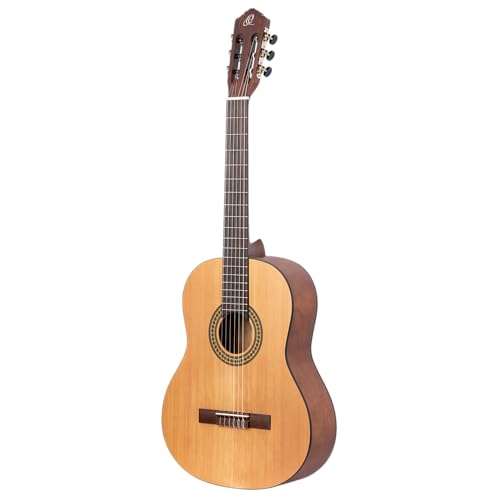
RSTC5M-L is a full-size nylon guitar designed for beginners and students. It features a cedar top, catalpa back and sides, and a natural matte finish, with a mahogany neck and walnut fretboard. The instrument emphasizes a balanced tone and comfortable action for new players. Best for learners who want a traditional nylon feel without a steep price. Caution: finish and fittings are suited for entry-level use; more advanced players might prefer higher-end woods for tonal depth.
Ortega Family Series 3/4 Left-Handed Nylon (R122L-3/4)

R122L-3/4 offers a 3/4-size left-handed nylon guitar with a cedar top and mahogany back and sides. Ideal for young players aged 8–11 or travel-friendly practice, it includes a gig bag for easy transport. Best for small-framed players who still want full nylon string tone. Limitation: smaller body size reduces low-end resonance compared to full-size models.
Ortega Family Series 3/4 Left-Handed Nylon (R121L-3/4)

R121L-3/4 is another 3/4-size left-handed nylon guitar in the Family Series. It uses a spruce top with mahogany back and sides, finished in satin and paired with a mahogany neck. Best for learners transitioning from beginner models to a more resonant nylon tone while staying travel-friendly. Limitation: similar to the 3/4 option above, it may feel small for players with larger frames or those seeking deeper bass response.
Ortega Family Series Thinline Left-Handed Nylon Acoustic-Electric (RCE125SN-L)

RCE125SN-L is a thinline left-handed nylon with built-in electronics, designed for stage and recording applications. It features a spruce top, mahogany back and sides, and a natural satin finish. Best for players who need amplified nylon string tone without sacrificing acoustic feel. Caution: electronics add complexity and may require maintenance to ensure long-term reliability in varying environments.
Ortega Lefty TourPlayer Standard Thinline (RTPSTD-SBK-L)

RTPSTD-SBK-L combines a thinline body with a crossover nylon-electric design. It features a spruce top, chambered okoume body, and a satin black finish. Best for players who perform live or record and want a streamlined, travel-friendly instrument with a modern aesthetic. Limitation: as a crossover, the electric components may affect weight and balance compared with pure acoustic nylon guitars.
Buying Guide
- Body size and feel: Full-size guitars offer fuller bass and projection; 3/4 size suits children or players with smaller frames. Choose based on reach, comfort, and how the guitar sits on your lap or against your chest.
- Top wood and tone: Cedar tops tend to yield a warmer, quicker response; spruce tops offer a brighter, projecting tone. Match to your playing style and repertoire.
- Neck and fingerboard: A comfortable neck profile and a smooth walnut or rosewood-like fingerboard aid accuracy for beginners and advanced players alike. Check string action and fret wear if possible.
- Thinline and electronics: Thinline bodies are lighter and easier to travel with; built-in electronics are useful for stage use but may introduce maintenance needs and a trade-off in acoustic resonance.
- Bag, gig gear, and durability: A quality gig bag or case helps protect the instrument in transit, especially for travel-focused models.
- Intended use: Beginners and students typically benefit from stable, easy-action guitars; performers may prioritize stage-ready electronics and lighter weight.
FAQ
- What is nylon-string tone best for? Nylon string guitars offer a softer, mellower tone and lighter tension, which is gentler on fingertips for beginners and ideal for classical repertoire.
- Are 3/4 size guitars suitable for adults? They can be, but a full-size may be preferred for comfortable reach and deeper resonance if the player has larger hands or longer arms.
- Do thinline models sound different? Yes, thinline bodies are lighter and more portable, often with less body resonance than traditional full-bodied models, but they can be amplified or paired with electronics to compensate.
- Should I choose cedar or spruce tops? Cedar offers warmth and sensitivity; spruce provides brightness and projection. Your choice depends on playing style and desired tone.
- Is a gig bag enough for transport? A dedicated gig bag offers better protection than no bag, but a hard case provides superior protection for frequent travel.
- Are left-handed guitars harder to find? Availability varies by model; many Ortega left-handed options exist, but selection may be more limited than right-handed models.