Choosing the right floor speaker stands helps unlock clearer imaging, improved bass response and safer placement for large bookshelf or satellite speakers. The table below summarizes five top Amazon options selected for stability, weight capacity, height and wire management.
| Product | Height | Weight Capacity | Key Feature |
|---|---|---|---|
| PEGZONE Speaker Stands Pair | 30.1 inches | 55 lbs | Large tempered glass base, high load capacity |
| Amazon Basics Speaker Stand | 52″–73″ | 99.2 lbs | Tripod design, long adjustable range |
| MOUNTUP Universal Speaker Stands | 31 inches | 22 lbs | Large 9.8″ top plate, cable concealing |
| Rfiver 45° Swivel Speaker Stands | 28 inches | 22 lbs | 45° swivel top, one-piece glass base |
| PERLESMITH 26 Inch Speaker Stands | 26 inches | 22 lbs | 45° adjustable top plate, 11.81″ glass base |
PEGZONE Speaker Stands Pair

PEGZONE’s pair is notable for its 55 lbs capacity per stand and an 11.8″ tempered glass base. The taller 30.1″ height positions many bookshelf speakers near ear level for seated listening. Built-in cable management keeps wires hidden through the pole, preserving a tidy install.
Included features emphasize stability and compatibility with brands like Klipsch, Sony, Yamaha, Polk and Edifier. Anti-slip pads and a wide base help reduce vibrations and improve isolation for clearer sound.
Amazon Basics Speaker Stand

This tripod floor stand offers an exceptionally high weight capacity and a large adjustable height range from 52″ to 73″. The steel construction and long tripod legs provide stability across stage, studio and home uses.
The design suits larger monitors or active speakers that require higher placement. The upper shaft measures 1.4″ diameter and it’s compatible with common speaker pole mounts; an adapter may be required for some speakers.
MOUNTUP Universal Speaker Stands
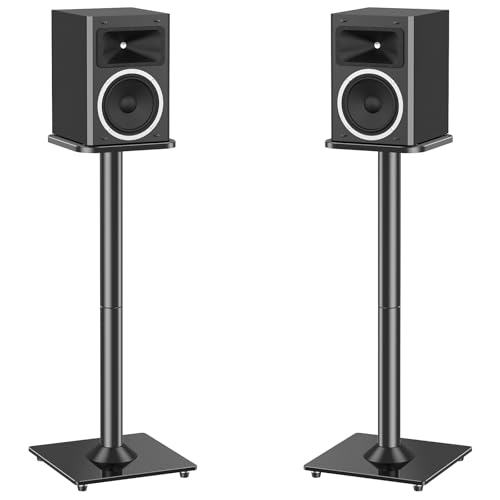
MOUNTUP provides a mid-height 31″ stand with a large 9.8″ x 9.8″ top plate suitable for many satellite and bookshelf speakers up to 22 lbs. The package includes anti-slip pads and options for carpet or hard floors for improved foot traction.
The stands use an 11.8″ tempered glass base and concealed cable routing within the pole. This design targets home theater rear-channel placement or stereo desktop relocation while maintaining a clean appearance.
Rfiver Upgraded 45° Swivel Speaker Stands

Rfiver’s 28″ stands combine a 45° swivel glass top plate with a one-piece molded glass base. The swivel top lets you fine-tune toe-in without moving the entire stand, useful for optimizing the speaker’s directivity in-room.
Designed for up to 22 lbs per stand, the pole has dual cable holes for neat wiring. The construction is alloy steel with a molded glass base, emphasizing both aesthetics and load stability.
PERLESMITH Universal Floor Speaker Stands 26 Inch
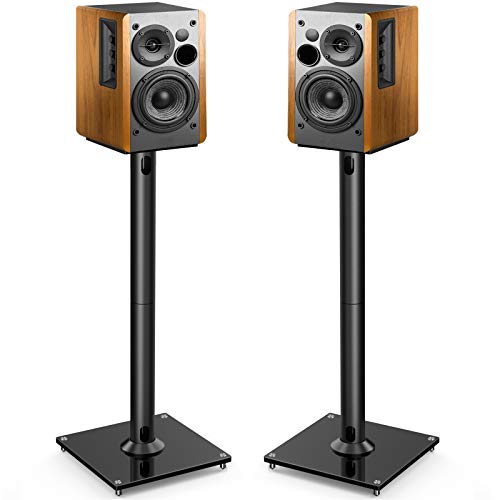
PERLESMITH’s 26″ pair features a 45° adjustable top plate with rubber isolation pads to damp vibrations. The stand supports up to 22 lbs and a 7.8″ square glass top plate to fit many satellite or bookshelf models.
The 11.81″ glass base and optional rubber or spike feet address placement on carpet, tile or hardwood while improving stability. This model balances compact height with adjustable angling for focused imaging.
Buying Guide: How To Choose Large Floor Speaker Stands
Selecting the right floor speaker stand depends on a few core considerations that affect performance, safety and aesthetics. Below are key factors to compare.
Weight Capacity And Build Material
- Weight Capacity: Match the stand capacity to your speaker’s weight plus any adapter plates. Choose a stand with a safety margin above the speaker’s listed weight.
- Materials: Steel poles and tempered glass or heavy metal bases provide better rigidity and lower resonance than lightweight plastics.
Height, Listening Position And Room Use
- Height: For seated listening, aim for the tweeter near ear height. Taller stands (30″+) suit floor-level seating; adjustable tall tripods suit multipurpose spaces or stage use.
- Placement: Consider bookshelf vs. rear-channel placement; rear surrounds often need shorter stands or wall mounts.
Stability, Base Size, And Isolation
- Base Size: Wider bases (10–12″) improve stability and reduce tipping risk for heavier speakers.
- Isolation: Rubber pads or spikes decouple stands from floor or surface, reducing transmitted vibration to the room structure.
Top Plate Shape, Anti-Slip And Mounting
- Top Plate: Flat square plates provide more surface contact for varied speaker shapes. Some offer rubber pads or adjustable clamps for secure fit.
- Adjustable/Mounting Options: Fixed tops with strong adhesive pads are simple; swivel or toe-in plates allow acoustic fine-tuning.
Cable Management And Aesthetics
- Internal Cable Routing: Hides wires for a cleaner look and reduces trip hazards.
- Finish: Matte black or glass bases are common; choose a style that complements your room.
Floor Type And Adjustable Feet
- Feet Options: Metal spikes for carpeted floors and rubber pads for hardwood help level the stand and protect flooring.
- Leveling: If your floor isn’t perfectly flat, choose stands with adjustable feet to avoid wobble.
Compatibility And Future-Proofing
- Speaker Size & Shape: Verify top-plate dimensions and that the stand supports irregular speaker bottoms or optional mounting adapters.
- Modularity: Adjustable height or interchangeable plates extend usefulness if you upgrade speakers later.
Comparison Perspectives
- Home Theater vs. Studio: Home theater setups prioritize neat cable routing and stable low-profile bases, while studio use may favor taller adjustable stands with very high weight capacity.
- Design vs. Load: Tempered glass bases and molded bases offer attractive designs; prioritize thicker plates and heavier bases for large, heavy speakers.
- Budget vs. Performance: Higher-capacity stands and premium materials cost more but improve isolation and long-term durability, important for heavy monitors.