Choosing the right subwoofer isolation pad can reduce structural vibration, improve bass definition, and limit neighbor complaints. Below is a quick comparison of five well-regarded isolation products selected for different budgets and use cases.
| Product | Type | Best For |
|---|---|---|
| SVS SoundPath Subwoofer Isolation System, 4-Pack | Feet / Decouplers | Threaded-foot subwoofers, apartment setups |
| Auralex SubDude-II Subwoofer Isolation Platform | Foam Platform | Home theater and studio applications |
| IsoAcoustics Iso-200Sub Isolation Stand | Engineered Isolation Stand | High-performance studio and critical listening |
| Sound Addicted VibeBoss P10 Foam Riser | Foam Riser With MDF Base | 8–10″ subwoofers, studio/home use |
| Pyle Sound Dampening Speaker Riser Foam PSI15 | High-Density Foam Pad | Universal compatibility, budget setups |
SVS SoundPath Subwoofer Isolation System, 4-Pack

The SVS SoundPath set is a compact decoupling solution that works as an alternative to platforms or risers. It is designed for subwoofers that accept screw-in feet, and can also be used with double-sided tape or non-abrasive adhesive pads when threaded inserts are absent.
Features highlighted by the manufacturer include an affordable and discreet design and compatibility with most subwoofers. The system aims to lower transmitted vibrations to floors, thereby generating fewer complaints from neighbors in apartments and townhouses.
Use cases: ideal when space is limited or threaded feet are available. Installation is straightforward, and the small footprint is useful for hidden or minimal setups.
Auralex Acoustics SubDude-II Subwoofer Isolation Platform

The Auralex SubDude-II is a 1.75″ thick foam platform built to decouple the subwoofer from the floor. Its core function is to diminish structural vibrations and reduce coloration and muddy sound in small to medium rooms.
Manufacturer features emphasize improved subwoofer sound and reduced structural resonance. This platform is commonly used in both home theater and studio settings to deliver a cleaner low-end.
Use cases: effective for users who want a simple platform to lift and isolate the subwoofer. The material profile emphasizes absorption and damping rather than rigid mechanical isolation.
IsoAcoustics Iso-200Sub Subwoofer Isolation Stand (Single)
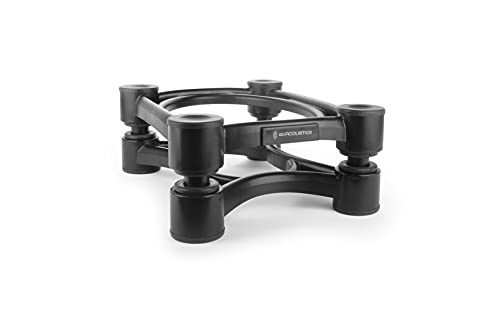
The IsoAcoustics Iso-200Sub is an engineered isolation stand with patented isolators tested at the National Research Council of Canada. It measures 7.8″ wide by 10″ deep and 3.5″ high and supports up to 75 lbs.
Manufacturer features cite award-winning isolation performance and an isolator design that manages speaker energy to reduce vibrations transferred to the supporting surface. The design aims to eliminate dissonant sounds in listening areas and adjacent rooms.
Use cases: suited for critical listening and studio environments where measured isolation performance and controlled energy transfer are priorities.
Sound Addicted VibeBoss P10 – Acoustic Isolation Platform
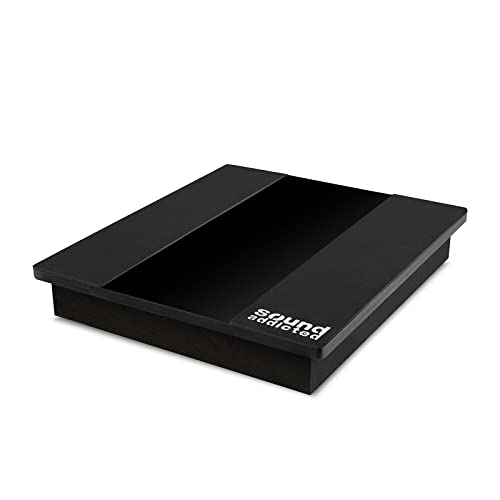
The VibeBoss P10 combines high-density foam, EVA material, and an MDF board to create a stable, thick isolation riser. It is intended for 8–10″ subwoofers and claims studio-grade acoustic performance.
Manufacturer features focus on thick sound-dampening foam and universal compatibility with 8–10 inch subwoofers. The layered construction prioritizes both stability and vibration absorption for clearer bass response.
Use cases: a practical option for home studios and small control rooms where a stable, elevated platform and improved bass clarity are desired.
Pyle Sound Dampening Speaker Riser Foam PSI15

The Pyle PSI15 is a universal sound-dampening riser made from high-density engineered foam. It is marketed to reduce vibration, eliminate unwanted resonance, and improve bass clarity.
Manufacturer features note universal compatibility with most speaker and subwoofer types. The foam aims to promote efficient stabilization and noise isolation while delivering a cleaner low-frequency response.
Use cases: fits a wide range of systems where a low-cost, straightforward foam platform is preferred for isolation and resonance control.
Buying Guide: How To Choose The Right Subwoofer Isolation Pad
Selecting the best isolation pad depends on several factors. Consider your setup, floor type, subwoofer size, and performance priorities before buying.
Isolation Method
- Decoupling Feet (e.g., SVS SoundPath): Raise and separate the subwoofer from the floor. Good for threaded-foot subs and apartment living.
- Foam Platforms (e.g., Auralex, Pyle, VibeBoss): Absorb and dampen vibration; simple and effective for many home and studio rooms.
- Engineered Stands (e.g., IsoAcoustics): Offer measured isolation and controlled energy transfer for critical listening or professional use.
Flooring And Room Type
- Hard floors (wood/tile/concrete) transmit vibration more readily; rigid isolation stands or decoupling feet can be effective.
- Carpeted floors provide some natural damping; foam platforms can further reduce energy transfer.
- Apartments and townhouses: prioritize decoupling and solutions that explicitly reduce transmitted vibration to adjoining spaces.
Subwoofer Size And Weight Capacity
- Match the isolation product’s dimensions and weight rating to your subwoofer. Platforms sized for 8–10″ subs may not be suitable for larger enclosures.
- Engineered stands often list explicit weight capacity; verify this if using heavier professional subwoofers.
Material And Construction
- High-density foam offers good damping for low to mid bass frequencies.
- EVA and MDF composites add rigidity and reduce deformation under load.
- Patented isolators or mechanical isolators can provide predictable, tested performance in studio contexts.
Stability And Slip Resistance
- Look for non-slip bases or layered constructions that prevent the subwoofer from moving during playback.
- Stability matters both for safety and consistent acoustic performance; heavier bases and larger footprints increase stability.
Installation And Compatibility
- Check whether the product requires threaded feet, adhesive, or simple placement. Some decoupling feet need screw-in points; platforms usually do not.
- Universal products are flexible but confirm fit for your subwoofer dimensions.
Performance Goals And Budget
- If the primary goal is to reduce neighbor complaints, prioritize decoupling and products designed to limit structural vibration.
- For critical listening and studio work, consider engineered stands with measured isolation performance.
- Balance budget against claims; foam platforms offer good value for general use, while specialized stands target higher fidelity.
When comparing models, evaluate material, footprint, weight capacity, and manufacturer testing information. Combining objective product specifications with your room characteristics will help select the isolation solution that meets your needs.