Choosing the right inner ear monitor (IEM) system can dramatically improve on-stage confidence and sound clarity for performers, speakers, and worship teams. This guide highlights five solid options, explaining who they’re best for, how they compare, and what to watch out for. Whether you’re a solo artist, a small band, or a church music team, these systems offer low latency, stable wireless transmission, and practical pairing features to keep you in sync with your performance.
Summary table of chosen products:
- LEKATO MS-02: Upgraded low-latency 2.4G IEM with one-to-many support, ideal for small to mid-size ensembles.
- Xvive U45: 5.8 GHz true diversity system with channel scan, great for venues with multiple wireless devices.
- JOYO JW-07: 2.4 GHz system featuring fast pairing and low latency for practice and live use.
- Xvive U4: 2.4 GHz system with long range and six-channel capability for versatile stage layouts.
- Phenyx Pro PTM-33-4B: Multi-channel UHF option with four independent monitor mixes for bands and worship groups.
LEKATO MS-02 Wireless In-Ear Monitor System

The LEKATO MS-02 is a 2.4 GHz IEM system designed for small to medium stages. It offers mono and stereo transmission with ultra-low latency under 4.5 ms, a 24-bit/48 kHz sampling rate, and clear, detailed sound. Its “one TX to many RX” capability supports up to four receivers, which is ideal for a compact band or a worship team with several performers on stage. Battery life runs up to 6–8 hours, with LED indicators showing battery level and volume. Best for: small to mid-sized band rehearsals, church groups, and solo performers who need a simple, reliable multi-monitor setup. Limitation: pairing can be manual for additional receivers, and the kit may be more suitable for smaller venues than very large stages.
Xvive U45 Wireless In-Ear Monitor System

The Xvive U45 operates on 5.8 GHz with true diversity for stable RF connections and a practical Channel Scan Mode to locate the best channel. It supports a broad 20 Hz–20 kHz frequency range with 24-bit/48 kHz audio and a high signal-to-noise ratio for clean on-stage sound. Its range—up to about 100 feet—makes it suitable for clubs or stages where interference is a concern. Best for: performers who frequently work in crowded or RF-dense venues and want a reliable, easy-to-configure system. Caution: 5.8 GHz performance can vary with building materials and nearby wireless devices.
JOYO JW-07 2.4G Wireless In-Ear Monitor System

JOYO’s JW-07 uses a 2.4 GHz wireless link with low latency under 5 ms and features automatic pairing for quick setup. It emphasizes ease of use for guitarists, singers, and DJs who practice and perform in smaller to mid-sized venues. The system supports real-time control with low delay and anti-interference technology to reduce dropout and noise. Best for: practice studios and live gigs where fast pairing and straightforward operation matter most. Limitation: primarily targeted at entry-level users; reach and feature depth may be less than pro-level UHF systems.
Xvive U4 Wireless In-Ear Monitor System Set
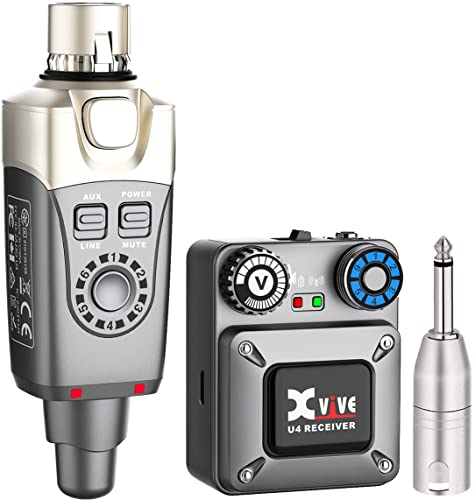
The Xvive U4 features 2.4 GHz wireless operation with a claimed 90-foot range and six channels. It emphasizes low latency (under 5 ms) for distraction-free performance and supports simultaneous broadcasts across channels. This setup can be particularly useful for bands with multiple performers needing their own monitor mixes on stage. Best for: medium to larger clubs or stages where channel flexibility and non-interfering operation are priorities. Caution: performance can vary with walls or dense obstacles between transmitter and receivers.
VOXFULL Stereo Wireless IEM System M6S

VOXFULL M6S uses a 2.4 GHz band with low noise and low delay and supports automatic pairing between transmitter and receiver for quick setup. It offers mono/stereo input options via a one-button switch and emphasizes clear sound quality with solid bass. Best for: churches and live venues that value a straightforward pairing process and dependable on-stage sound. Limitation: being a 2.4 GHz option, it may experience more interference in RF-dense environments compared with some UHF systems.
LEKATO MS-1 Wireless In-Ear Monitor System
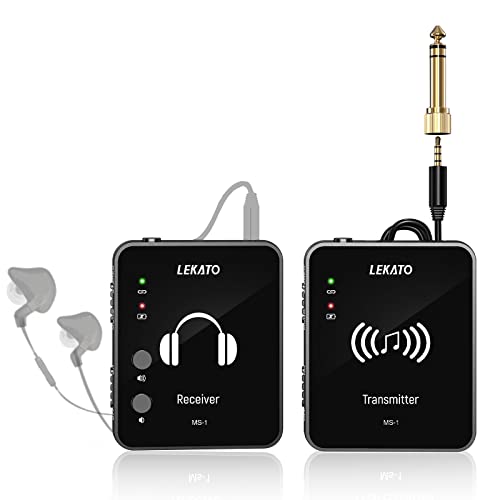
LEKATO MS-1 is another 2.4 GHz option with auto-pairing and one TX to many RX capability. It supports up to six receivers and provides stereo transmission with a simple setup suitable for practice rooms and small gigs. Best for: already familiar LEKATO users or smaller ensembles seeking a scalable, auto-pairing system. Limitation: the feature set is similar to MS-02, but with a more limited maximum channel count on some configurations; ensure it fits your performer roster.
Buying Guide
What to consider when choosing an IEM system:
- Wireless band and interference risk: 2.4 GHz systems are common and affordable but can face more congestion; 5.8 GHz and UHF options often offer steadier performance in busy RF environments.
- Latency: aim for sub-5 ms to avoid noticeable delay between your performance and monitoring feed, especially for live vocals and instrumental timing.
- Channel capacity: consider how many performers need own monitor mixes. Systems labeled as “one TX to many RX” are ideal for bands and worship teams.
- Battery life: longer battery life reduces on-stage interruptions. Check LED indicators and typical operating hours per charge.
- Sound fidelity: 24-bit/48 kHz is a strong baseline for clear high-frequency detail and accurate bass response.
- Ease of pairing: auto-pairing saves setup time, while manual pairing offers flexibility in busy rf environments.
- Portability and durability: compact beltpack receivers and sturdy transmitters help with touring or church services.
FAQs
- What is the typical latency for these IEM systems? Most models advertise under 5 ms, which is generally acceptable for live performance.
- Do I need multiple receivers for a band to share one transmitter? Yes, many systems support one transmitter to multiple receivers, enabling easy sharing among several performers.
- Is 5.8 GHz better than 2.4 GHz? 5.8 GHz often experiences less interference in RF-dense venues, but availability varies by region and device.
- Can I use IEMs for studio practice as well as live performances? Yes, these systems are suitable for both studio practice and live sound reinforcement, depending on range and channel needs.
- What should I watch for in a buying decision? Look for latency, range, channel capacity, battery life, and ease of pairing to match your performance setup.
- Do these units work with non-Lekato/Xvive brands? Most IEMs use standard 1/4″ or 3.5 mm connectors and generic audio interfaces; pair compatibility is typically with the included transmitters.