Choosing the right in-wall speaker wire affects safety, signal quality, and installation longevity. Below is a quick comparison of top in-wall cables selected for conductivity, fire rating, and installation use.
| Product | Conductor Type | Gauge / Length | Rating |
|---|---|---|---|
| Monoprice 14AWG CL2 | Oxygen-Free Copper | 14 AWG / 100 ft | CL2 |
| GearIT 12/2 OFC 250ft | Oxygen-Free Copper | 12 AWG / 250 ft | CL2 |
| Amazon Basics 14-Gauge | 99.9% Oxygen-Free Copper | 14 AWG / 200 ft | Noted for audio quality |
| NavePoint 14/2 500ft | Copper-Clad Aluminum (CCA) | 14 AWG / 500 ft | CL2 |
| Rockville RCC14-250-2 | Copper-Clad Aluminum (CCA) | 14 AWG / 250 ft | CL2 / 70V compatible |
Monoprice 14AWG CL2 Rated 2-Conductor Loud Speaker Cable

This Monoprice cable uses 99.95% oxygen-free pure copper conductors, sold on a 100-foot spool. The white jacket is CL2 rated, making it suitable for in-wall residential installs where code requires fire-safe cable. The 14 AWG sizing supports typical bookshelf and surround speaker loads while offering lower resistance than thinner gauges. The spool format helps during run routing and pull-throughs in walls or ceilings.
GearIT 12/2 Speaker Wire 250ft OFC

GearIT’s 12 AWG Pro Series is built with oxygen-free copper (OFC) and a CL2 jacket, aimed at installations where improved conductivity and corrosion resistance are desired. The thicker 12 AWG conductor reduces voltage drop for long runs and higher-power setups, making it appropriate for main front speakers or distributed systems. The product notes compatibility with common connector types (banana, spade, bent pin), and the stranded construction improves flexibility during installation.
Amazon Basics 14-Gauge Audio Speaker Wire 200ft

The Amazon Basics cable offers 99.9% oxygen-free copper in a 14 AWG format on a 200-foot roll. It’s positioned for straightforward speaker-to-receiver runs where clear signal transfer is prioritized. The listed feature emphasizes undistorted signal delivery and general-purpose suitability for home A/V connections. The combination of OFC conductors and a generous length makes this a practical choice for mid-sized installations.
NavePoint 500ft In Wall Audio Speaker Cable 14/2
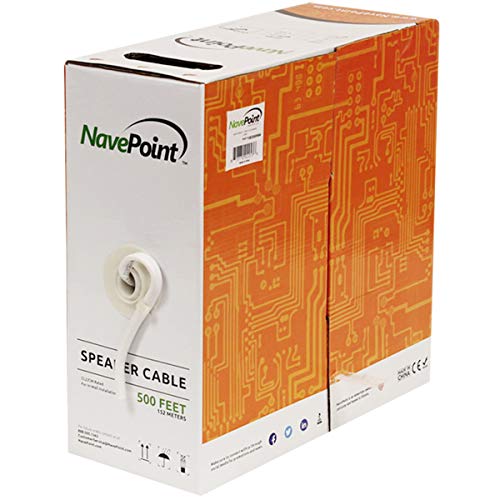
NavePoint supplies a long 500-foot roll of 14 AWG CCA (copper-clad aluminum) conductor, listed with 80 strands per conductor for added flexibility. The length and strand count make it useful for whole-house zoned runs or multi-room layouts where bulk length reduces joins. Because it’s CCA, the cable is lighter and typically lower cost than pure copper, though CCA exhibits higher resistance per foot compared to OFC options.
Rockville RCC14-250-2 14 AWG 250ft CCA Speaker Wire

Rockville’s cable is a 14 AWG, CL2-rated CCA option available in a 250-foot roll. It highlights 70V compatibility, which is relevant for commercial distributed audio or large-area paging systems. The PVC jacket is described as flexible for easier routing through walls and conduits. For large installations needing longer runs or 70V transformers, this cable is positioned as a balanced, budget-conscious choice.
Buying Guide: Choosing The Right In-Wall Speaker Wire
Selecting an in-wall speaker wire requires balancing code compliance, conductor material, gauge, and installation needs. Below are the key considerations and comparison perspectives to guide purchases.
Fire Rating And Safety
- CL2/CL3 Ratings: For most residential in-wall runs, CL2 is a common safety requirement; CL3 is rated for higher voltages or outdoor direct-burial in some products. Always verify local electrical/code requirements before installing.
- Jacket Material: Look for durable jackets that resist abrasion during pulls and meet flame spread ratings for concealed spaces.
Conductor Material: OFC vs CCA
- Oxygen-Free Copper (OFC): Lower resistance, better long-term conductivity, and superior corrosion resistance. Preferred for high-fidelity systems and long runs.
- Copper-Clad Aluminum (CCA): Lighter and more economical, suitable for budget builds and shorter runs. CCA has higher resistance per foot; account for this when sizing gauge or planning long runs.
Gauge And Length Considerations
- 12 AWG: Recommended for long runs (over ~50–75 feet) or higher-power front speakers to reduce voltage drop.
- 14 AWG: Common for bookshelf, surround, and short-to-medium runs. Works well in most home theater installs under typical distances.
- Plan For Extra Length: Buy longer than the measured run for routing, mistakes, and future adjustments.
Installation Factors
- Stranded vs Solid: Stranded conductors are more flexible and easier to pull through runs; solid conductors are stiffer and less common in speaker wire rolls.
- Spooling and Packaging: Spools help manage long runs; coils or boxes may tangle—choose packaging that matches your installation style.
- Connector Compatibility: Check compatibility with banana plugs, spades, or spring clips; stranded OFC often accepts connectors more reliably.
Performance And Use Cases
- Home Theater / Hi‑Fi: Prioritize OFC and possibly 12 AWG for front channels or subwoofer feeds to minimize loss.
- Whole-House / Multi-Room: Long runs favor lower resistance conductors; if budget is a concern, use CCA but increase gauge or shorten runs where possible.
- Commercial / 70V Systems: Consider cables explicitly rated for 70V compatibility; product specs often note this use case.
Comparing Cost Versus Performance
- Higher Cost, Higher Performance: OFC and thicker gauges yield measurable improvements in resistance and durability.
- Budget Choices: CCA provides acceptable performance for short runs and non-critical zones, but requires awareness of greater resistance and potential connector issues.
- Project Scale: For large volumes (whole-house), the cost savings of CCA may be significant; for critical channels, invest in OFC.
Final Practical Tips
- Measure twice and buy extra cable length to allow for routing and mistakes.
- Label both ends of each run to simplify system hookup and troubleshooting.
- When in doubt about code compliance for in-wall wiring, consult a licensed electrician or local building authority.