Choosing the right Hi‑Fi speaker cabinet or cabinet components can have a large effect on sound quality, bass response, and system longevity. Below is a concise comparison of selected products that help build, upgrade, or isolate Hi‑Fi cabinets for accurate home audio.
| Product | Type | Primary Use |
|---|---|---|
| Sound Town 1 x 12″ Empty Guitar Speaker Cabinet | Empty Cabinet | Cabinet Build/Replacement |
| Sanyun SW206 4” HiFi Bookshelf Speakers | Active Bookshelf Speaker | Compact Hi‑Fi Playback |
| Facmogu 3″ Tweeter Full Range Loudspeaker (2 pcs) | Driver Pair | DIY Satellite/Full‑Range Driver |
| uxcell Speaker Sound‑Absorbing Cotton Polyester Fiber | Cabinet Damping | Internal Insulation |
| Silicone Speaker Isolation Feet (4‑Pack) | Isolation Feet | Anti‑Vibration Support |
Sound Town 1 x 12″ Empty Guitar Speaker Cabinet

The Sound Town GUC112BK‑EC is an empty 1×12″ cabinet built from birch plywood with a black tolex finish and wheat cloth grill. It is offered as a chassis for installing your own speaker driver, allowing custom selection of Celestion or Eminence drivers for tonal goals.
Key attributes include robust plywood construction and compatibility with popular 12″ drivers. For Hi‑Fi cabinet applications, the solid enclosure material helps reduce cabinet resonance while the open interior enables fitting padding or bracing for improved low‑frequency control.
Consider this option if you want full control over driver choice, crossover design, and internal damping—common priorities for accurate Hi‑Fi cabinet builds.
Sanyun SW206 4” HiFi Bookshelf Speakers
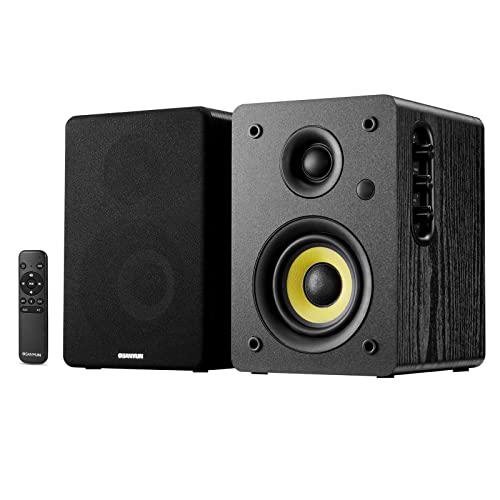
The Sanyun SW206 are active 4″ bookshelf speakers with a sealed MDF cabinet, built‑in amplification, Bluetooth 5.4, digital inputs, and a selectable Hi‑Fi or Studio mode. Their design targets both casual listening and content creation with different voicings.
Features include a carbon fiber woofer and 25mm silk dome tweeter, a 24‑bit DAC, and balanced TRS inputs for nearfield monitoring. The MDF cabinet contributes to reduced coloration and consistent resonance behavior compared to thinner materials.
As a compact Hi‑Fi solution, these speakers highlight how a well‑designed small cabinet plus focused driver selection can deliver balanced mids and controlled bass for desktop and small‑room listening.
Facmogu 3″ Tweeter Speakers HiFi Full Range Woofer (2 PCS)

Facmogu’s 3″ full range drivers are compact full‑range speakers suitable for satellite cabinets, 2.0/2.1 DIY projects, and small Hi‑Fi enclosures. Sold in pairs, they offer a frequency response from approximately 108Hz to 18kHz and a sensitivity around 88dB.
Specifications note a 4Ω impedance and recommended power between 5–15W. The units emphasize clear voice and smooth treble without large cabinet requirements. They are best used in carefully tuned small enclosures or as mid/tweet components in multi‑way cabinets.
For builders targeting compact, space‑efficient Hi‑Fi cabinets, these drivers provide a practical balance of bandwidth, sensitivity, and size. Cabinet volume and damping adjustments will affect low‑end performance.
uxcell Speaker Sound-Absorbing Cotton Polyester Fiber Interior Insulation

uxcell acoustic polyester fiber is designed as internal cabinet damping to absorb standing waves and control cavity reflections. Its stated effect is to make bass tighter and reduce low‑frequency smearing when applied appropriately inside enclosures.
The sheet measures 62x100cm and can be cut to size for lining walls or creating distributed damping inside sealed or ported cabinets. Proper placement helps simulate a larger acoustic volume and reduces internal resonances that color sound.
Using absorber material is a common Hi‑Fi cabinet practice to refine low‑frequency response and improve midrange clarity by reducing internal reflections and standing waves.
Silicone Speaker Isolation Feet (4-Pack, 1″)

Hudson Hi‑Fi silicone isolation feet are soft rubber pads designed to reduce vibration and resonance transmitted from speakers or cabinets to stands and furniture. The four‑pack supports small to medium speakers and audio equipment.
Key data: 20 Shore A durometer, temperature resilience, and a rated support range per pad. The manufacturer notes up to 95% vibration absorption for micro‑vibrations, targeting subsonic and supersonic damping to increase perceived clarity.
Isolation pads improve low‑frequency definition and prevent energy transfer to surfaces that can color sound. They are an economical, non‑invasive upgrade for Hi‑Fi cabinets and stands.
Buying Guide: Choosing The Best Hi‑Fi Speaker Cabinet Or Components
This guide outlines essential considerations when selecting cabinets, drivers, and accessories to build or refine a Hi‑Fi speaker system.
Cabinet Construction And Material
- MDF vs Birch Plywood: MDF offers uniform density and low coloration; birch plywood is lighter and provides structural strength for ported designs.
- Bracing: Internal bracing reduces panel resonance; look for solid construction or plan to add braces during custom builds.
- Sealed vs Ported: Sealed cabinets yield tighter bass and simpler tuning; ported cabinets extend low end but require accurate tuning and larger volume.
Driver Selection And Compatibility
- Driver Size and Thiele/Small Parameters: Match driver parameters to cabinet volume for desired low‑end response.
- Sensitivity And Power Handling: Higher sensitivity drivers require less amplifier power for a given loudness; ensure amplifier match.
- Full‑Range vs Multi‑Way: Full‑range drivers simplify crossover needs but may compromise bandwidth; multi‑way designs demand quality crossovers and driver matching.
Internal Damping And Acoustic Treatment
- Absorptive Material: Polyester fiber or damping wool reduces standing waves and smooths midbass response.
- Placement: Distribute material rather than packing it densely; strategic placement near panels and internal corners is effective.
- Port Lining And Fiber: Avoid obstructing ports—use damping to control internal reflections without blocking airflow.
Isolation And Mounting
- Isolation Feet Or Pads: Use compliant feet to decouple cabinets from stands and furniture, reducing coloration from surface vibrations.
- Speaker Stands: Stands with adjustable spikes/pads help align tweeter height and improve soundstage.
Connectivity And Active Vs Passive
- Active Speakers: Built‑in amplifiers and DSP allow optimized cabinet/driver tuning and simplified setup for nearfield listening.
- Passive Cabinets: Require external amplification and careful impedance matching; offer flexibility for amplifier selection.
- Inputs And DSP: Optical, USB DACs, and selectable EQ or modes (Hi‑Fi vs Studio) can affect perceived neutrality and warmth.
Measurement And Listening Considerations
- Room Influence: Room size, treatments, and speaker placement can change bass behavior and imaging more than small cabinet differences.
- Objective Measurements: Where possible, use frequency response plots and impulse measurements to compare cabinets and drivers.
- Critical Listening: Evaluate midrange clarity, bass tightness, and stereo imaging using familiar reference tracks.
Comparative Perspectives
- Custom Build vs Ready‑Made: Empty cabinets allow tailored driver and crossover choices; ready speakers simplify setup and include matched drivers and cabinets.
- Small Cabinets vs Large Cabinets: Small cabinets provide nearfield accuracy and space savings; larger cabinets typically deliver deeper bass but need more room and design care.
- Cost vs Performance: Higher material quality, precision drivers, and internal bracing yield measurable acoustic improvements, but careful tuning and room treatment often provide equal value.