If you’re shopping for a guitar amp simulator pedal, you want a unit that delivers true amp-like tone, flexible control, and easy direct-recording options. This guide highlights five strong choices for different players—from live performers to home studio enthusiasts. The top picks are best for: gigging players needing direct-to-PA versatility, studio players seeking authentic cab IRs and multiple tones, and beginners who want straightforward, reliable options. Below is a quick comparison and a buying table to help you decide before you dive into the details.
| Product | Best For | Key Benefit | Notes |
|---|---|---|---|
| JOYO American Tube Amp Simulator & Preamp (JF-14) | Live/gigging and studio | Built-in cabinet sim for direct recording | Classic American tones with 6-knob control |
| BOSS IR-2 Amp & Cabinet | Studio and stage with IR versatility | 11 amp types and Celestion IRs | Compact, high-quality processing |
| JOYO Preamp House R-15 | Varied tones and on-stage versatility | 9 amp models, dual channels, IR cab sim | XLR/FX Loop options |
| LEKATO EP-01 | Broad tone palette, portable | Pure analog path, true bypass | USB-C and 9V DC power |
| Two Notes Revolt All-Analog | Pro studio and stage with MIDI support | All-analog with cab sim | MIDI I/O for advanced setups |
JOYO American Tube Amp Simulator & Preamp (JF-14)
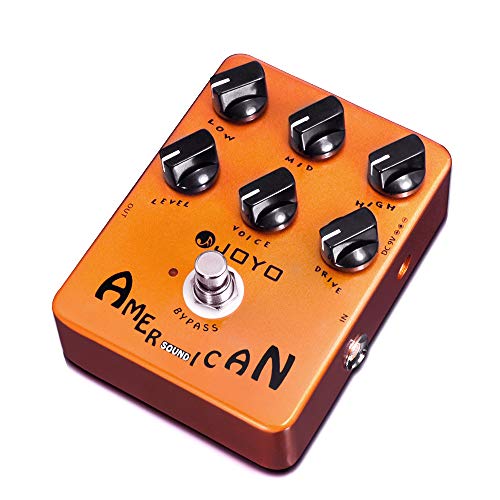
Best for players who want classic American clean-to-overdrive tones with direct recording options. The American Sound reproduces sparkling Blackface cleans and mid-forward Tweed overdrive. It includes 6-knob precision control for Level, Drive, Low, Mid, High, and Voice. The Voice knob offers scooped cleans at one extreme and thicker, mid-rich overdrive at the other, making it ideal for quick tone sculpting during gigs or in-studio work. A built-in cabinet simulator allows direct connection to a PA or audio interface, helpful when a mic’d cabinet isn’t available.
Who it’s best for: performers needing reliable live-ready tones and engineers seeking a direct-recording solution without external mics. Caution: on-board tone shaping relies on analog paths; it may require initial tweaking to match your rig’s perceived balance in a mix.
Why selected: it combines classic American amp character with practical direct-output capability, reducing the need for separate mics on stage or in the studio.
BOSS IR-2 Amp & Cabinet

Best for players who want premium amp emulation with a robust cabinet IR loader. The IR-2 combines high-quality 32-bit floating-point processing and 96 kHz sampling with 11 amp types and Celestion cab IRs. The result is a clear, detailed tone suitable for direct-to-PA, recording, or live use. Its interface focuses on quick access to essential amp and cab tones while maintaining sound integrity through a compact pedal format.
Who it’s best for: studio engineers and live players who rely on consistent, reliable amp and cabinet simulations with flexible routing. Caution: some users may prefer deeper pedalboard integration or more extensive preset memory than smaller rigs.
LEKATO Amp Simulator EP-01

Best for players seeking a versatile, analog-signal-path amp simulator with true bypass. The EP-01 offers tone-tuning inspired by iconic models across genres, while preserving the amp’s original character through a premium analog signal path. It supports USB-C and provides 9V DC power, enabling flexible stage or studio setups. This pedal is well-suited for performers who want a broad palette of tones without digital coloration.
Who it’s best for: players who value authentic, uncolored tone and easy power options for travel gigs. Caution: some users may want more DSP-based effects or a broader cab-emulation library for extreme tonal options.
Two Notes Revolt All-Analog
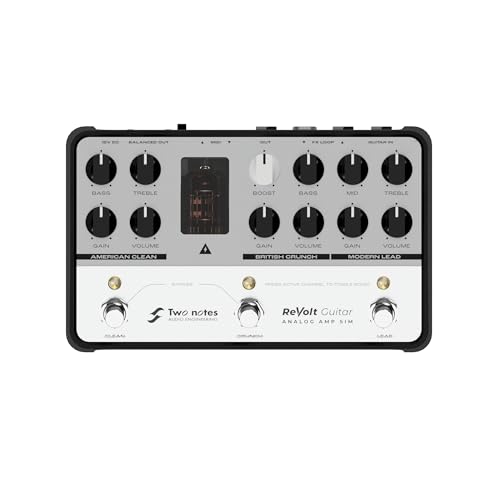
Best for studio and stage environments needing a fully analog preamp with cab sim. The Revolt uses a 3-channel design with a 12AX7 tube stage and analog cab simulation, supported by MIDI I/O for advanced routing. This setup appeals to players who want a tactile, tube-like response and straightforward external control for complex rigs. It is a solid choice when a purely analog signal chain is preferred for consistency and feel.
Who it’s best for: tone purists and professional players who value hand-rolled analog response with MIDI-ready routing. Caution: the all-analog path might lack certain digital conveniences found in DSP-based units.
Buying Guide: Key Purchase Considerations
- Type of Tone Modeling: Do you want all-analog warmth or advanced DSP and IR loading? Analog paths preserve feel; DSP offers wide tone libraries.
- Direct Recording and Live Use: Is cabinet IR or built-in cab simulation crucial for quiet practice or direct-to-PA gigs?
- Power and Connectivity: Are USB-C, 9V DC, XLR outputs, and FX loops important for your setup?
- Channel Options and Presets: Do you need multiple channels or easily savable presets for live switching?
- Size and Portability: Will you travel with the pedal, or is a compact unit preferred for studio desks?
- Budget and Expansion: Consider the value of expanded cab libraries, MIDI control, and future-proofing against your evolving rig.
FAQ
- What is an amp simulator pedal?
It emulates guitar amp tones and cabinet sounds in a compact pedal, often including built-in cab simulations or IR loading for direct recording or PA gigs.
- Do I need a cabinet IR with a pedal?
Not always, but IRs enhance direct-to-PA tones and reduce the need for miking a cabinet live.
- Which pedal is best for a versatile studio rig?
Pedals with multiple amp models, high-quality IRs, and MIDI control tend to be best for studios seeking flexible tones.
- Should I choose analog or digital modeling?
Analog paths deliver a natural, immediate feel; digital modeling offers broader tone libraries and easy recall.
- Can these pedals replace an amplifier in a live setup?
For some venues, yes, especially when a robust DI setup or silent-stage performance is required. Always verify the venue’s input options.