Direct answer: If you need to tame loud guitar or bass rigs without losing core tone, a power attenuator offers controlled volume with preserved feel. This article compares five top options to help players choose based on amp type, output needs, and recording or live use. Best for quiet practice and studio work are the Bugera POWER SOAK PS1 and JHS Little Black Amp Box, while the Donner EMO AMP Box delivers flexible signal control. For players seeking high-wattage, the Tone King Ironman II 100‑Watt and the Universal Audio Ox Amp Top Box provide robust power handling and authentic cabinet feel. The table below highlights core strengths for quick reference.
| Product | Best For | Key Feature |
|---|---|---|
| Bugera POWER SOAK PS1 | Gigging guitarists needing 100W attenuation with mic‑like direct output | Emulated Mic Output, multi-impedance input |
| JHS Little Black Amp Box | Fans who want front‑end feel while lowering stage volume | Effects loop integration, natural front‑end push |
| Donner EMO AMP Box | Budget‑conscious players seeking true bypass and flexible tone control | True bypass, mute footswitch, push front end at low volume |
| Tone King Ironman II 100W | High‑power amps needing reactive attenuation and DI/cab sim | Reactive, DI Output, Dual Impedance |
| Universal Audio Ox Amp Top Box | Studio players needing premium analog load box with cabinet emulation | Analog cabinet simulation, instant mic/room tones |
Bugera POWER SOAK PS1 Passive 100W Power Attenuator

The Bugera PS1 is a passive 100‑watt power attenuator suitable for guitar and bass amps. It offers multi‑impedance inputs (4, 8, and 16 ohms) to match most amplifiers and includes a line output with a dedicated level control. Best for players who want to push a tube amp for natural breakup while keeping stage volume under control. Caution: ensure your amp’s impedance matches PS1 settings to avoid mismatched load or tone loss.
JHS Pedals JHS Little Black Amp Box Signal Converter
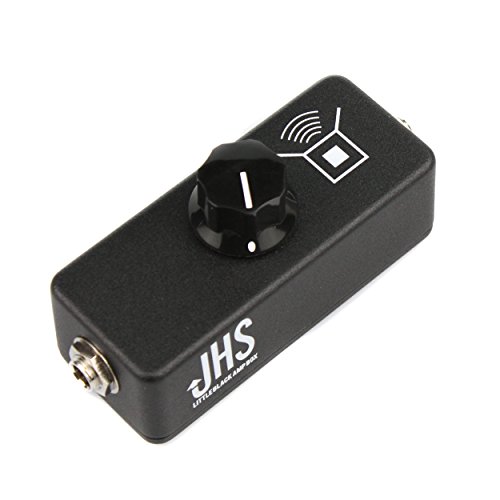
The Little Black Amp Box is designed to tame a screaming tube amp by inserting it in the effects loop and controlling how much signal reaches the power section. It helps push the front end for a natural tone while retaining the core character of the amp’s “sweet spot” at lower volumes. Best for players who want to retain dynamic response with reduced stage volume. Limitation: purposefully trims signal; excessive attenuation can change perceived dynamics in some rigs.
Donner Amp Attenuator Pedal EMO AMP Box

The Donner EMO AMP Box is a compact signal converter pedal with a mute footswitch and true bypass. It keeps your amp’s dynamics at lower volumes and offers flexible tone control suited for studio or stage use. Best for players who want clear tone retention with quick on/off control. Limitation: may not deliver the same high‑end cab‑like feel as more premium units at extreme attenuation levels.
Tone King Ironman II 100‑Watt Reactive Power Attenuator

The Ironman II 100‑Watt Attenuator uses a reactive load design and includes a DI output along with analog cabinet simulation and dual impedance controls. Best for players running high‑power amps who want preserved feel and a direct‑to‑desk output for recording. Limitation: higher price and complexity compared to basic attenuators.
Universal Audio Ox Amp Top Box

The Universal Audio Ox Amp Top Box is a premium analog reactive load box and recording system for tube amps. It provides instant, studio‑quality mic and cabinet tones via front‑panel controls and virtual mics/cabs in its workflow, making it ideal for professional studio work. Best for studio players needing accurate cabinet emulation without miking a physical cab. Limitation: premium price and larger footprint; may be more than needed for casual practice.
Buying Guide
What should you consider when choosing a guitar amp power attenuator?
- Power compatibility: Match the attenuator’s rated wattage to your amplifier’s output. Higher wattage units preserve more headroom and tone at reduced volumes.
- Impedance matching: Ensure impedance settings (4/8/16 ohms) align with your amp’s output to maintain tone integrity.
- Output options: Look for direct outputs (line or DI) if you plan to record or run into a PA or audio interface. Some units offer speaker‑cab emulation for a mic‑less take.
- Signal path and bypass: Consider whether you want true bypass, effects loop integration, or front‑end push to keep your core feel intact.
- Cabinet and mic emulation: If you record or perform without a mic, cabinet simulation helps recreate a live cab sound accurately.
- Portability and setup: For gigging players, a lighter, simpler unit is advantageous; studio users may prioritize recording features over portability.
- Budget vs. features: Higher‑end units provide more accurate cab sims and DI quality, while budget models cover essential attenuation with basic outputs.
FAQ
- What is a power attenuator for guitar amps?
- Do I need a DI output on an attenuator?
- Can attenuation affect tone?
- Is cabinet emulation necessary for recording?
- How do I choose the right impedance?
- Are there risks in running a high‑wattage amp through an attenuator?
It reduces the output volume of a high‑powered amplifier while attempting to preserve the feel and response of the amp’s preamp and power sections.
A DI output is useful for direct recording or feeding a PA without miking, making it a common feature on higher‑end units.
Yes, attenuation can change perceived dynamics and feel; look for units with reactive load or cabinet emulation to minimize tone loss.
Cabinet emulation provides a more realistic recorded tone when not miking a real cabinet.
Match the attenuator’s impedance to your amplifier’s output cabinet or speaker load to avoid impedance mismatch and tonal changes.
Improper impedance matching or over‑driving a device can affect tone and potentially harm gear. Follow manufacturer guidelines.