Finding a reliable external speaker or ringer for a landline helps ensure important calls are never missed, especially for seniors or hearing impaired users. Below is a quick comparison of five top options focused on loudness, visual alerts, compatibility, and ease of setup.
| Product | Type | Key Features |
|---|---|---|
| Connected Essentials CEA-40 | Wired Ringer Amplifier | Up To 95dB, Flashing Light, Plug & Play |
| AKOAK RJ11 Ringer | Inline Ringer Amplifier | 75dB Output, Compact RJ11 |
| Serene Innovations Ringer & Flasher | External Ringer For Cell & Landline | LED Flasher, Multi-Mode, Works With Vibration |
| Ablefector Bluetooth Ringer Amplifier | Wireless Ringer + Bluetooth | 70–93dB, Flashing Lights, Bluetooth Answering |
| Lativu Big Button Landline Phone | Corded Phone With Loud Ringer | Up To 120dB Ringer, LED Flash, Speed Dial |
Connected Essentials CEA-40 Ringer

The Connected Essentials CEA-40 is a plug-and-play ringer amplifier designed for traditional BT-style telephone sockets. It requires no mains power or batteries and mounts on the wall for a fixed external alert. The unit provides ringer amplification up to 95dB and includes a bright flashing light for visual notification.
Key practical points: it connects directly to the BT wall socket, so it’s suitable forcorded landlines and many VoIP adapters using an analog adapter. The lack of mains power reduces installation complexity, and the flashing light helps in noisy environments or for users with hearing loss. As an inline amplifier fitted at the socket, it increases the audible ring volume for all phones on that line.
AKOAK RJ11 Telephone Ringer
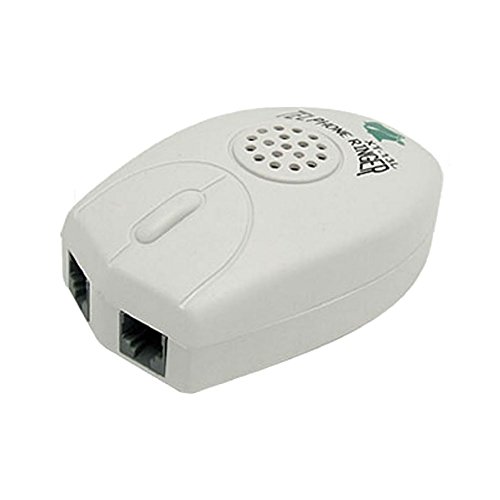
The AKOAK inline telephone ringer connects via RJ11 and aims to amplify ring output in noisy places. The stated volume is approximately 75dB, and the unit is compact for in-line use between the wall jack and phone.
Benefits include simple connection and portability—ideal for renters or those who want a minimal installation. The smaller output compared with larger amplifiers makes it useful in moderately noisy households or shared spaces. It provides a cost-effective way to boost ring audibility without replacing the phone itself.
Serene Innovations Ringer & Flasher

The Serene Innovations ringer functions as an external alert device for both cell phones and landlines. It uses the cell phone’s vibration or a wired landline connection to trigger a loud speaker and an LED strobe, providing dual auditory and visual notification.
Its multi-device capability makes it versatile for homes using both mobile and traditional lines. Users can place a cell phone on the unit to use vibration-triggered alerts, or connect a landline for direct ring detection. Settings typically include multiple volume or flash modes, enabling customization for hearing-impaired users.
Ablefector Bluetooth Ringer Amplifier

The Ablefector device combines a loud ringer (advertised ~70–93dB) with flashing lights and Bluetooth connectivity. This offers both external ringing and the option to answer calls via the unit when paired to a smartphone.
Important technical notes: it supports Bluetooth calling, so it can act as a wireless speakerphone and external alert for modern cell-centric households. It also advertises battery-free operation in some modes and adjustable volume levels. For users who want an external ringer that also works with mobile devices, this unit blends traditional ringer amplification with contemporary connectivity.
Lativu Big Button Phone With Loud Ringer

The Lativu corded landline phone is a purpose-built handset for seniors, offering a built-in loud ringer, large buttons, and a flashing LED alert. The product states ringer capability up to 120dB with multi-level handset volume and speakerphone reaching 96dB.
As an integrated phone rather than a separate external speaker, it replaces the handset while delivering extreme loudness and visual alerts. It includes features such as nine one-touch speed dials, an SOS button option, and adjustable ringer levels. This option suits users who prefer a single device with both calling and amplified alert functions built in.
Buying Guide: Choosing The Right External Speaker For A Landline
When selecting an external speaker or ringer for a landline, compare these core factors to ensure fit and performance.
- Compatibility With Your Phone Line: Verify whether the device connects to a standard RJ11/BT wall jack, pairs via a phone’s vibration, or requires a specific adapter for VoIP gateways. Inline amplifiers need access at the wall jack; some units operate via Bluetooth or vibration detection for cell-plus-landline setups.
- Audible Output (Decibel Levels): Look for published dB ratings to assess loudness. Typical values range from ~75dB for compact inline units to over 95dB for dedicated amplifiers. Consider the ambient noise level of the environment when choosing a target dB.
- Visual Alerts: Flashing lights or LED strobes are important for hearing-impaired users or noisy settings. Evaluate flash brightness and placement to ensure visibility from common rooms.
- Power Requirements: Some amplifiers are plug-and-play from the line and need no mains or batteries, while others require USB or mains power. Battery-free options reduce maintenance, but powered devices often provide higher volume or additional features.
- Installation And Portability: Wall-mounted or inline devices are more permanent, while compact RJ11 or tabletop units are portable and suited to renters or multiple rooms.
- Additional Features: Bluetooth calling, speakerphone capability, speed-dial integration, and SOS buttons offer extra utility. Decide if you need purely an alert amplifier or a multifunction phone system replacement.
- Target User Needs: For seniors and hearing-impaired users, prioritize higher dB ratings, clear tone quality, visual flashes, and large interface elements. For general noisy environments, a mid-range amplifier with a bright strobe may suffice.
- Durability And Build: Inline connectors should have secure RJ11 fittings. Wall-mounted units benefit from robust mounting and easily visible indicators.
- Coverage And Placement: Consider whether a single amplifier will be heard throughout the living space. Extremely loud standalone phones may eliminate the need for multiple external speakers.
- Regulatory And Safety Considerations: Ensure devices meet local telephone wiring and safety standards for household telecom equipment. Some amplifiers are designed specifically for BT wall sockets and may require adapters outside those regions.
Comparison perspectives to weigh:
- Inline Amplifier vs. Replacement Phone: Inline amplifiers boost the existing phone’s ring without changing the handset; replacement phones integrate alerts and controls but require replacing the device.
- Passive vs. Powered Devices: Passive, line-powered units reduce wiring and power needs but may deliver lower peak volume than USB/mains-powered amplifiers.
- Landline-Only vs. Hybrid Solutions: Hybrid units that support cell phone vibration or Bluetooth add flexibility for homes that rely on both cell and landline calls.
- Portability vs. Permanence: Portable RJ11 or tabletop solutions allow moving the ringer closer to where it’s needed. Wall-mounted or base-station solutions offer fixed, always-on notification in a key location.