Choosing a digital piano that suits an intermediate player involves balancing realistic touch, piano tone, features, and room fit. The following selections reflect reliable action, expressive sound engines, and practical design for homes, studios, and practice spaces. Each model is well-suited for progressing skills, offering weighted keyboards, robust sound, and helpful playback or learning features.
| Product | Key Feature | Brand | Notes |
|---|---|---|---|
| Yamaha Arius Series YDP105R | Grand piano sound, weighted action, 3-pedal unit | Yamaha | Upright-style design with bench |
| Roland FP-10 | SuperNATURAL tone, authentic feel, 88 keys | Roland | Compact, Bluetooth/MIDI enabled |
| The ONE 88-Key Keyboard | Hammer action keys, lighting keys for lessons | The ONE | Integrated learning features |
| Yamaha YDPS55WH | GH3 with synthetic key tops, VRM Lite | Yamaha | Slim upright digital design |
| AKLOT AUR-IV | 88-key weighted action, 128 voices, LCD | AKLOT | Home-friendly aesthetic with MIDI |
Below are five highly relevant picks for intermediate players, each with a direct Amazon link and image to help you compare at a glance. The sections include notable features, and practical notes to help you decide which instrument best fits your space, budget, and progression goals.
Yamaha Arius Series YDP105R — Rich Upright Style

The YDP105R offers essential grand piano sounds with nine additional instrument voices. Its Acoustic Piano Touch uses a Graded Hammer Standard keyboard and Touch Response, providing a natural feel that helps intermediate players refine dynamics. The upright, wood-grain cabinet with a 3-pedal unit combines classic aesthetics with modern digital versatility, fitting comfortably in living rooms or practice spaces. This model emphasizes a traditional look without sacrificing expressive capability, making it a strong choice for players seeking a familiar touch and a robust piano voice.
Yamaha Arius YDP105B — Classic Black Upright

This YDP105B mirrors the YDP105R’s strengths with essential grand piano sound and a graded hammer action. The 3-pedal unit and traditional upright design mirror the feel of an acoustic instrument, which can ease the transition for players moving from acoustic pianos. The black finish provides a sleek, minimal look that blends with most room decors while delivering reliable performance for intermediate practice sessions and recital-ready repertoire.
Roland FP-10 — Compact, Expressive

The FP-10 delivers a compact footprint without sacrificing touch or tone, featuring Roland’s renowned SuperNATURAL Piano sound engine. The keys offer an authentic acoustic feel with responsive touch, making it suitable for intermediate learners who value real-key weighting. Bluetooth and MIDI connectivity expand practice and composition options, allowing you to play along with recordings or connect to learning apps, which can support steady progress between lessons and self-guided practice sessions.
The ONE 88-Key Digital Piano — GuidedLearning
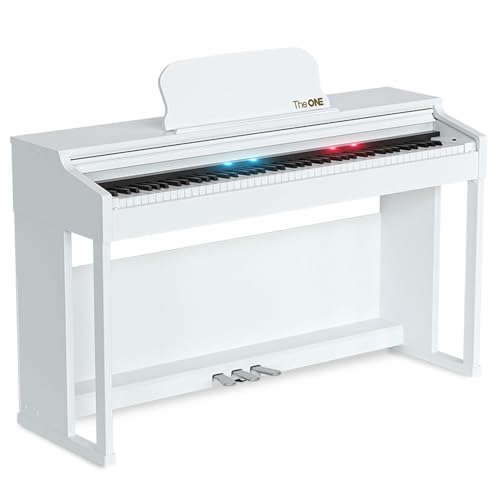
The ONE keyboard emphasizes beginner-to-intermediate progression with 88 hammer-action keys and built-in learning features, including lighted keys synced to app-based scores. It offers a grand piano sound with four Hi-Fi speakers for a full, immersive practice environment. The hammer action and weighted feel encourage technique development, especially in legato and dynamic control, while the educational tools help sustain motivation during long practice sessions.
Yamaha YDPS55WH — Slim Upright Digital Piano

The YDPS55WH emphasizes a slim upright design with high-quality sound, featuring GH3 graded hammer action and synthetic ebony/ivory key tops for a tactile grip that minimizes slipping. Virtual Resonance Modeling Lite enhances acoustic-like resonance for more natural sustain and pedaling interactions. This model suits players seeking a compact footprint without sacrificing key touch and a realistic grand-like tone, ideal for apartments or smaller studios.
AKLOT AUR-IV — Modern Wood- Finish Keyboard
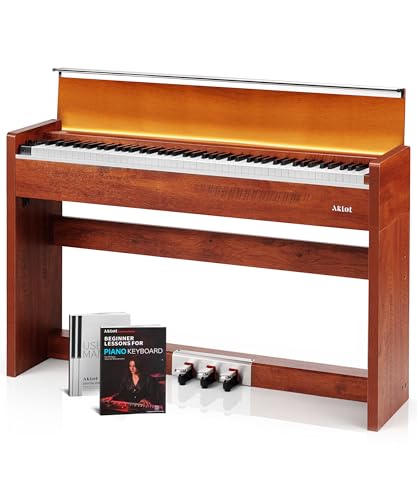
The AKLOT AUR-IV combines a contemporary home design with an 88-key weighted hammer action and a substantial sounds library (128 voices). The built-in LCD screen and dual-mode wireless connectivity expand creative potential for practice and learning. This model targets intermediate players who want a feature-rich instrument that blends with interior décor while offering a broad sonic palette and flexible connectivity for recording or teaching apps.
Buying Guide
- Keyboard action and feel: For intermediate players, prioritize weighted or graded hammer action to encourage dynamic control. Compare the keyboard type (GH3, PHA, or equivalent) and how it responds across registers.
- Sound engine and tone: Look for authentic grand piano sound with responsive sustain. Engines like SuperNATURAL, Yamaha CFX-inspired sampling, or VRM Lite offer nuanced resonance suitable for expressive playing.
- Pedal configuration: A 3-pedal setup (soft, sostenuto, sustain) provides realistic pedaling opportunities for classical and contemporary pieces. Some compact models may include only essential pedal configurations—consider whether a full set is important for your repertoire.
- Footprint and design: Upright-style cabinets save space and suit living rooms, while slim models suit apartments. Aesthetic integration with your space can influence practice consistency.
- Connectivity and learning features: Bluetooth, MIDI, and app integration enable practice with tracks, lessons, and compositions. If you plan to learn with apps or connect to a computer, prioritize models with robust connectivity.
- Speaker system and output options: Built-in speakers are sufficient for most homes, but consider output options for external amplification or recording if needed.
- Reliability and updates: Brands with long-standing piano heritage often provide stable firmware updates and support, which is valuable for intermediate players building a long-term setup.
- Budget vs. features: Weigh feature sets against price. A higher upfront cost can be justified by better touch, tone, and learning tools that support progression over several years.
These considerations help compare models across key performance areas—from keyboard feel and tone to space fit and educational utilities. Each recommended instrument on this list targets intermediate players who need a reliable bridge between practice and performance, balancing tactile realism with modern features.