When choosing a coax cable for CB and HAM radio use, the priority is reliable signal transmission, flexibility for tight installations, and corrosion-resistant connectors. This guide highlights five well-suited options, explaining who each is best for and why. Whether you’re a casual hobbyist, a vehicle-based operator, or a field technician, these cables help maintain solid SWR and reduce signal loss across typical CB and VHF frequencies.
Summary table of selected products
| Product | Best For | Key Benefit | Potential Limitation |
|---|---|---|---|
| MOOKEERF PL259 10ft UHF Coax Cable | Compact setups; mobile operators | Low loss at 450 MHz; durable shield | 10 ft length may be short for some installations |
| Wilson 305-830 18-Foot Belden Coax Cable | Long runs; fixed installations | Long reach; easy install | Long length may add weight |
| RFAdapter RG58 10ft Coax Cable | Budget-conscious setups | Low loss; robust shielding | 10 ft may limit routing options |
| Ullnosoo CB Coax 10ft RG8X | Tight spaces; outdoor use | Removable UHF connector; low loss | RG8X heavier than RG58 |
| RFAdapter RG8x 50ft Coax | Extensive outdoor networks | 50 ft with low loss; strong shielding | Long length requires careful routing |
MOOKEERF PL259 10ft UHF Coax Cable Review
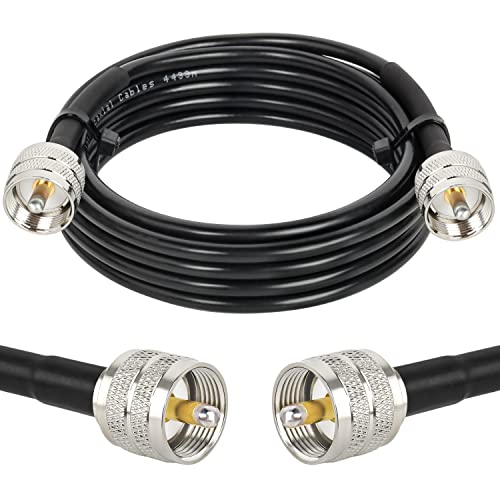
The MOOKEERF PL259 10ft UHF Coax Cable uses a high-density tinned copper braid to protect the signal over longer distances. It claims a maximum signal loss of 0.96 dB at 450 MHz and an SWR of ≤1.15, making it suitable for mid-range CB and HAM setups. The copper-nickel plated shell offers improved oxidation resistance, ideal for outdoor use on vehicles or fixed installations. A 2.2″ heat-shrink seal helps prevent connector pull-out, useful for mobile antennas on bumpy roads.
Best for: Operators who need a compact, rugged 10-foot run with solid shielding and corrosion resistance. If your installation requires frequent vehicle mounting and dismounting, this cable’s reinforced end connection helps avoid common stress failures.
Limitation: The 10-foot length may be short for longer routing paths or tall antenna masts, where extra length would be helpful.
Wilson 305-830 18-Foot Belden Coax Cable

Wilson’s 305-830 uses Belden coax with PL-259/FME connectors, featuring a tinned copper stranded center conductor and a vinyl boot for connector protection. This setup supports straightforward installation for longer runs, reducing the need for frequent mid-cable connections. The product emphasizes ease of installation and durable connections, which helps maintain consistent signal integrity in longer, fixed installations.
Best for: Users planning a longer, stationary antenna run where a reliable, easy-to-connect cable matters more than ultra-flexibility. It’s a good match for base stations or vehicles docking in a single location for extended periods.
Caution: The 18-foot length adds more weight and bulk, so plan routing to minimize stress on connectors and reduce snag risks.
RFAdapter RG58 10ft Coax Cable
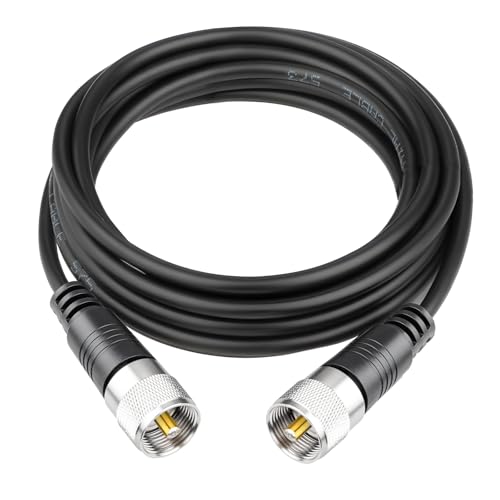
The RFAdapter 10ft RG58 coaxial jumper uses tinned copper inner conductors with a robust shielding arrangement, designed for 50 ohm impedance. It supports CB and ham radio uses along with SWR meters and analyzers. The connector construction includes nickel-plated brass UHF PL259 connectors with gold-plated center pins, delivering corrosion resistance and improved conductivity.
Best for: Operators seeking a cost-effective, versatile cable compatible with multiple devices such as tuners, analyzers, or car radios. Its 50-ohm rating and shield coverage make it a solid general-purpose option.
Limitation: While affordable, the 10-foot length may not suit all outdoor or vehicle installations that require longer runs or multiple connection points.
Ullnosoo CB Coax Cable 10ft RG8X

This 10-foot RG8X cable features a removable UHF connector designed for tight spaces, a flexible RG8X jacket, and dual shielding (aluminum foil + tinned copper braid). It uses nickel-plated solid copper shells with gold-plated brass center pins, improving conductivity and resistance to corrosion. The design emphasizes a reliable outdoor-ready connection for field installations and mobile setups that require occasional reconfiguration.
Best for: Operators needing a compact, rugged run with a removable connector for tight installations, such as trunk or engine bay layouts. It’s particularly suitable where frequent plugging and unplugging occurs.
Note: RG8X is heavier and less flexible than RG58, so plan routing to minimize strain on connectors.
RFAdapter RG8x 50ft Coaxial Cable

This 50-foot RG8x cable is designed for longer, outdoor links with low loss, featuring a pure copper inner conductor and double shielding. The fully molded nickel-plated UHF PL259 connectors with gold-plated center pins provide enhanced conductivity and corrosion resistance. The PVC jacket supports weather resistance, making it suitable for outdoor installations, tall antennas, and complex mobile setups.
Best for: Longer-range, outdoor CB or HAM installations that require a substantial run between the antenna and receiver or tuner. Choose this if your setup demands flexibility and reduced signal loss across a large footprint.
Limitation: The length adds potential signal delay and requires careful routing to prevent mechanical damage from bends or snagging.
Buying Guide
Key questions to guide your selection:
- What frequency range will you operate in? For most CB and VHF tasks, 50 ohm cables like RG58 or RG8X perform well within typical CB/HAM bands.
- How long is your installation path? Longer runs benefit from lower loss cables and sturdier connectors, but weight and routing become important.
- Do you need flexibility for tight spaces? Cables with removable UHF connectors and more flexible jackets help with vehicle installations and confined compartments.
- Is outdoor exposure likely? Look for corrosion-resistant connectors (nickel-plated, gold-plated) and weatherproof boots or heat-shrink sealing.
- Will you frequently connect and disconnect? Reinforced connectors and strain relief reduce joint failure due to repeated plugging and unplugging.
Practical comparison tips
- For mobile setups, prioritize 10 ft to 18 ft lengths with robust strain relief and weatherproofing.
- For base stations, longer cables (15–50 ft) can reduce noise but require careful routing to avoid signal loss and power handling issues.
- Always verify adapter compatibility (PL-259 to FME, etc.) to minimize impedance mismatches that degrade performance.
FAQ
- What is a PL-259 connector and why is it common? It is a standard UHF connector widely used in CB and HAM radio installations for rugged, easy-to-mate connections.
- Is RG8X better than RG58? RG8X offers lower loss for longer runs and better durability, but is heavier and less flexible than RG58.
- Can I use any coax for CB radios? While many cables can work, matching impedance (50 ohm) and connector types to your equipment improves performance and reduces SWR issues.
- Do outdoor cables require weatherproofing? Yes. Weatherproof boots, heat-shrink seals, and corrosion-resistant connectors help maintain signal integrity outdoors.
- How do I measure signal quality after installation? Use an SWR meter or antenna analyzer to verify SWR and adjust as needed for optimal performance.
- Should I buy a 50 ft cable for a short setup? Generally no; longer cables introduce more loss and stiffness. Choose the shortest length that fits your routing needs.