Finding a china cymbal with holes can reduce sustain and add a punchy, trashy edge ideal for accents. This guide highlights five top options suited for different players: beginners seeking durability, intermediate players needing clearer articulation, and pros chasing a controlled, fast response. Each pick emphasizes a combination of cut-out holes for quick decay, solid construction, and distinct voice. The list focuses on models that are commonly described as having holes for trashy tone and quick decay, making them practical for practice rooms, live gigs, and studio setups.
| Product | Size | Best For | Why It Stands Out |
|---|---|---|---|
| ULUOBO 16″ China Cymbal With Holes | 16 in | Practice rooms and beginners | Solid build, bright/crispy tone, holes aid quick decay |
| Meinl 16″ Trash China HCS | 16 in | Energetic accents | Trashy tone with faster decay, durable brass |
| Meinl 16″ Trash China CC16TRCH-B | 16 in | Studio and live play | German engineering, quick decay from holes, bright voice |
| Meinl 16″ Trash Crash with Holes HCS | 16 in | Layered cymbal setups | Trashy blend of china and dark crash, fast response |
| Meinl 18″ HCS Trash China with Holes | 18 in | Loud accents | Bold trash tone, holes shorten sustain for punchy hits |
ULUOBO 16 Inch China Cymbal With Holes

Best for entry-level kits and practice spaces, the 16″ ULUOBO China with Holes delivers a bright, crispy voice. The upward lip provides a gong-like edge, and the holes help shorten sustain for quicker responses. Use this if you want a straightforward trashy china tone without sacrificing build quality. Caution: as a budget-friendly option, you may notice less tonal complexity compared to higher-end brass options.
Meinl Trash China 18″ HCS

This 18″ trash china from Meinl HCS line is ideal for drummers seeking a bold, explosive accent with durable brass. The cut-out holes enhance its trashy tone and reduce sustain for quick, punchy hits. It’s a strong choice for rock and metal setups or any kit needing a pronounced, short decay sound. Best for players who want a robust, budget-friendly china with a fast response.
Meinl Trash China 16″ HCS

Suitable for practice spaces and stage work, this 16″ trash china adds a sharp, trashy voice with quick decay. Holes help shorten sustain and maximize attack, making it easier to place accents precisely. Choose this if you want a compact, reliable trash china that cuts through a full drum mix without overwhelming other elements.
Meinl Trash Crash 16″ With Holes — HCS
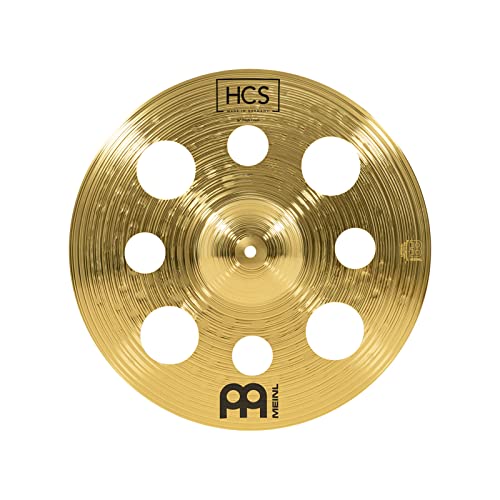
This 16″ trash crash blends china-like brightness with a crash character, aided by holes that shorten sustain. It’s well-suited for accents, stacks, and heavy fills. Best for players who want a versatile piece that can double as a bright crash and a trashy china in one cymbal. Limitation: its brighter finish may respond differently in live rooms with loud guitars.
Meinl 16″ Trash China CC16TRCH-B

Manufactured in Germany, the CC16TRCH-B uses a high-tech engineering approach to deliver a bright, cutting trash china voice. The 16″ size with holes yields fast decay for clear accents and punchy responses in dense mixes. Best for players aiming for a professional-sounding trash china that integrates smoothly with a full kit. Caution: slightly higher price compared to budget lines, but the tonal consistency justifies the investment.
Meinl 18″ HCS Trash China With Holes
For larger setups, this 18″ trash china brings extra presence with holes that emphasize a trashy, dry tone. It’s a practical choice for loud venues or jam spaces where a prominent, fast-decaying china is desired. Best for players who want extended reach and stronger projection, but consider room acoustics to avoid overpowering cymbal clashes.
Buying Guide: Key Purchase Considerations
- Size and purpose: Smaller models (14-16″) are great for tight spaces and faster responses, while 18″ models offer more projection for live stages.
- Hole pattern and decay: More aggressive hole designs typically shorten sustain and enhance trashiness; consider how quickly you want your accents to cut through the mix.
- BRASS vs B20 bronze: HCS lines use brass for durability and accessible tone, while higher-end lines may use bronze with a crisper voice. Choose based on budget and desired brightness.
- Sound characteristics: Look for a balance between brightness, sustain, and decay. If your kit already sounds bright, a darker trash china can help blend.
- Durability and setup: For practice rooms or schools, a sturdy build matters. Check edge finish and mounting compatibility with your hardware.
How to Choose By Playing Style
- Studio and precise accents: lean toward 16″ trash chinas with shorter decay and a clean edge.
- Live performing with loud guitars: prefer larger 18″ trash chinas or classic loud-brush models for maximum cut.
- Beginner practice: a reliable 16″ model with holes provides a forgiving response with durable construction.
Care and Maintenance Tips
- Wipe down after use to remove oils and sweat that can affect finish and tone.
- Avoid banging cymbals together; use protective sleeves or cushions to minimize edge chipping.
- Inspect for cracks around holes and edges; replace if structural integrity is compromised.
FAQ
- What is the benefit of holes in a china cymbal? The holes shorten sustain, creating a quicker, trashier decay that helps accents stand out in a full drum mix.
- Are 16″ or 18″ holey china cymbals better for beginners? 16″ models are generally easier to control and more forgiving for beginners, while 18″ options provide more projection for live settings.
- Do hot-holes affect durability? Not significantly if the cymbal is well-made; all listed options use reinforced construction to maintain longevity.
- Should I choose HCS or Classics/Pro lines for holes? HCS is budget-friendly and durable; Classics/Pro lines offer more refined tone and consistent feel, with a higher price.
- Can I use these cymbals on a practice kit? Yes, many players use holey china cymbals in practice spaces to control volume and decay during quiet sessions.
- Is the color or finish important for tone? Finish has minimal impact on tone; it mainly affects aesthetic appearance and visual stage presence.