Choosing the right ported (vented) subwoofer enclosure matters for deep, efficient bass. Below is a quick comparison of five 12″ subwoofer enclosures and boxes chosen for compatibility, tuning, and construction to help match your vehicle setup.
| Product | Type | Tuning / Notes |
|---|---|---|
| Bbox Dual Sealed 12 Inch Subwoofer Enclosure | Sealed | Precision MDF, airtight construction |
| Q Power 12 Inch Dual Subwoofer Box | Vented / Dual Chamber | Dual-chamber vented design for 2x 12″ |
| QPower Single Car Audio Subwoofer Box (Dual-Vented) | Vented / Dual-Vented | Tuned to 42 Hz, 1.65 cu ft |
| Q Power Single Triangle Ported Subwoofer Box | Vented / Triangle Ported | Tuned to 54 Hz, 2.2 cu ft |
| American Sound Connection Single 12″ Vented Subwoofer | Vented / Ported | Precision 5/8″ MDF, ported for enhanced bass |
Bbox Dual Sealed 12 Inch Subwoofer Enclosure – Pro Series Dual Sealed Car Subwoofer Boxes

This enclosure is a sealed dual 12″ box built from 3/4″ MDF with precise dado joints and aliphatic wood glue for airtight seals. Sealed enclosures emphasize transient accuracy and tighter low-end response compared with ported boxes. The Pro Series construction aims to reduce rattles and internal air leaks via CNC mitered joints and a second glue application around internal seams.
- Construction: 3/4″ high-grade MDF, CNC precision cuts.
- Sealing: Aliphatic wood glue and additional joint sealing.
- Sonic Character: Tight, controlled bass response typical of sealed enclosures.
Q Power 12 Inch Dual Subwoofer Box, High-Performance Vented Enclosure

The Q Power dual 12″ box is a vented, dual-chamber design intended for two 12″ subwoofers. Vented boxes increase acoustic output around the tuning frequency and can yield louder, deeper bass with improved efficiency. The shared slot port vent helps cooling and maintains speaker safety under higher power loads.
- Design: Dual chambers for two 12″ subs.
- Porting: Shared slot port vent for airflow and cooling.
- Application: Suited for louder, room-filling low frequencies in vehicles.
QPower Single Car Audio Subwoofer Box With Dual-Vented Design

This single 12″ enclosure features a dual-vented design and is tuned to 42 Hz with 1.65 cubic feet of internal air space. The MDF construction and tabletop mounting option improve portability and reduce floor vibration. Dual vents help manage heat and enhance the subwoofer’s low-frequency output while keeping driver temperatures in check.
- Tuning: 42 Hz for robust low-bass extension.
- Volume: 1.65 cu ft optimized for many 12″ drivers.
- Build: Sturdy MDF, dual vents for efficiency.
Q Power Single Triangle Car Audio Ported Subwoofer Box

The triangle-shaped ported design uses a vented geometry tuned to 54 Hz with 2.2 cubic feet of internal volume. This enclosure emphasizes louder, deeper bass in the mid-bass region while its bed liner finish improves durability and resistance to wear. The larger internal volume can support higher output from subwoofers that require more airspace.
- Port Design: Triangle vented shape to improve airflow and reduce distortion.
- Air Volume: 2.2 cu ft supports higher excursion drivers.
- Coating: Bed liner finish for ruggedness and vibration resistance.
American Sound Connection Single 12″ Vented Subwoofer Stereo Sub Box
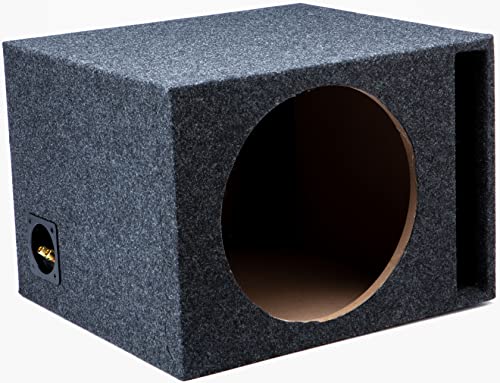
This American Sound Connection enclosure is a vented/ported design built from 5/8″ MDF with precise joins aimed at minimizing air leaks. The ported layout is tuned to enhance low-frequency output and maintain cooler subwoofer operation during extended use. It is presented as a balanced option for improved bass response in car audio systems.
- Construction: 5/8″ MDF with tight joins for airtight chambers.
- Porting: Tuned vented design for deeper bass and cooling.
- Goal: Enhanced, concert-like low-frequency reproduction.
Buying Guide: How To Choose A Ported Enclosure For A 12″ Subwoofer
Selecting the right enclosure depends on several technical and practical factors. This guide outlines the main considerations so you can match enclosure type to your subwoofer and listening goals.
Tuning Frequency And Desired Bass Character
Ported enclosures are tuned to a frequency that reinforces output near that tuning point. Lower tuning favors deeper sub-bass extension, while higher tuning gives stronger punch in the mid-bass. Check your subwoofer’s Thiele/Small (T/S) specs and manufacturer recommendations for recommended enclosure tuning.
Internal Volume And Driver Compatibility
Enclosure airspace (cubic feet) is critical. Many 12″ drivers specify optimal sealed or ported volumes. Undersized or oversized boxes can change the frequency response and power handling. Match the enclosure’s stated internal volume to the driver’s recommended range when possible.
Port Size, Shape, And Airflow
Port diameter, length, and shape affect tuning and port noise. Slot or triangle ports can distribute airflow and reduce chuffing. Dual-ported designs can lower air velocity per port, improving efficiency and lowering noise at high output.
Construction Materials And Build Quality
MDF thickness, sealed joints, and bracing reduce panel resonance and unwanted vibrations. CNC-cut joints and proper glue increase airtightness. A durable finish or bed-liner coating helps with wear and reduces rattles in automotive environments.
Cooling And Power Handling
Vented enclosures typically aid in driver cooling and can allow higher continuous output without thermal stress. Check the amp-subwoofer match: ported boxes can increase sensitivity, which may require appropriate amplifier power and filtering to avoid over-excursion.
Vehicle Fit And Space Constraints
Consider the physical footprint and mounting orientation for your vehicle cab, trunk, or truck bed. Dual-sub boxes are wider and deeper; single-port designs may offer more flexible placement. Ensure port placement won’t be obstructed in your installation location.
Comparison Perspectives
- Sealed vs Ported: Sealed equals tighter, quicker bass; ported equals louder, more efficient low-frequency output near tuning.
- Dual vs Single Port: Dual chambers or ports can distribute airflow and support multiple drivers safely; single port may be simpler and more compact.
- Volume vs Tuning: Larger internal volume with a higher tuning yields more output at mid-bass; smaller volume with lower tuning targets deeper bass extension.
Use the above factors to compare specs like internal cubic feet, tuning frequency, port design, and construction quality. Matching these to your subwoofer’s T/S parameters and your listening priorities will produce the best installed result.