If you want to pair a turntable with compact powered speakers, this guide highlights five solid options that balance sound, versatility, and ease of use. These picks are best for vinyl enthusiasts who want rich, room-filling audio without a separate receiver. The top choices vary from classic wood-finish designs to modern Bluetooth-enabled models, making it easier to connect turntables with RCA, 3.5mm, optical, or Bluetooth inputs. A quick buyer hint: prioritize speakers with built-in amplification and a wide input selector to simplify setup.
| Product | Brand | Best For | Key Advantage |
|---|---|---|---|
| Edifier R1280T | Edifier | Vinyl newbies and desk setups | Two AUX inputs and built-in power |
| RIOWOIS DS6701NP | RIOWOIS | Turntable users who want wireless streaming | No receiver needed; Bluetooth built-in |
| Electrohome Huntley EB10 | Electrohome | Versatile home entertainment | Built-in amplifier; multiple inputs |
| Saiyin 40W X 2 | Saiyin | Bundles with TV or turntable setups | Subwoofer out and multiple wired inputs |
| Edifier R980T | Edifier | Budget-conscious, compact rooms | Solid power and wood finish |
Edifier R1280T Powered Bookshelf Speakers
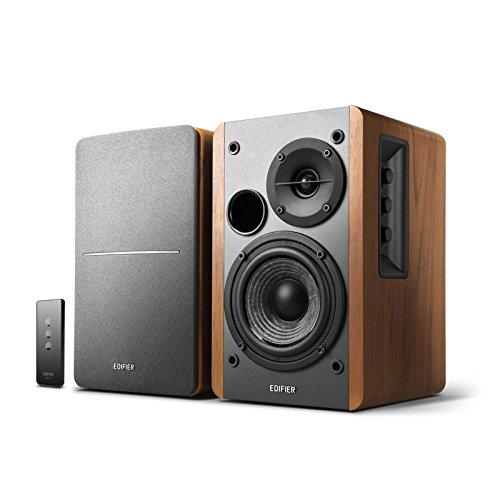
Best for: entry-to-mid level turntable users who want simple, reliable sound without a separate amp. The R1280T provides two AUX inputs, enabling easy connection to two devices at once, which is helpful if you want to switch between a turntable and a streaming device without re-connecting cables. Its wooden enclosure offers a classic look that fits most desks or living rooms. The built-in power supply and adjustable bass/treble simplify setup for small-to-medium rooms.
Caution: The two AUX inputs require manual selection; there is no Bluetooth, so wireless listening is not supported unless you add a Bluetooth adapter. Choose this if you want a timeless, compact solution with straightforward controls.
RIOWOIS DS6701NP Powered Bookshelf Speakers

Best for: turntable users who want wireless streaming and simple setup. These 40W per channel powered speakers connect directly without needing a separate receiver, and Bluetooth 5.3 supports easy streaming from phones, tablets, or computers. They include multiple wired inputs (AUX, Optical, TV-ARC) to accommodate TVs or game consoles. A limitation: the Optical/ARC connections may require additional cables not included in the box, and the pairing with turntables depends on Bluetooth transmitter/receiver compatibility.
Electrohome Huntley Powered Bookshelf Speakers

Best for: users seeking a versatile all-in-one package with a built-in amp and broad input options. This model supports Bluetooth 5, RCA, and Aux, making it easy to connect a turntable or TV. The 3-inch drivers deliver a balanced, warm sound, suitable for casual listening and small home theaters. Caution: volume and bass/treble controls are on the speaker’s side, which might be less convenient from a seated listening position.
Saiyin Bluetooth Bookshelf Speakers 40W X 2

Best for: turntable setups that benefit from wireless ability and an additional subwoofer output. The 0.5-inch tweeter and 4-inch woofer deliver a broad range, and the product supports Optical/AUX/RCA inputs plus a dedicated Sub Out for adding a powered sub for deeper bass. Useful for multi-device listening and TV connectivity. Limitation: Bluetooth pairing depends on the turntable having a Bluetooth transmitter; many traditional turntables do not, so a wired approach remains necessary for pure analog playback.
Powered Bookshelf Speakers Studio Monitors 36W RMS

Best for: budget-conscious buyers who still want solid, studio-like monitoring performance. With a 36W RMS total, a 1-inch tweeter and a 5-inch woofer, these speakers emphasize clear mid-to-high frequencies and a controlled bass response. They include USB digital input for direct digital audio, which can simplify some turntable setups that support USB output. Caution: ensure your turntable’s outputs match the speaker inputs to avoid extra adapters, and verify Bluetooth compatibility if wireless playback is desired.
Buying Guide: key considerations for bookshelf speakers with a turntable
- Built-in amplification vs. separate amp: Built-in amps simplify setup and reduce clutter. If you already own a separate amp or receiver, passive bookshelf speakers are an option to save space and cost.
- Input options: For turntables, consider RCA or 3.5mm inputs. If you want TV or computer use, Optical or ARC inputs can be helpful. Bluetooth is convenient but may introduce latency or compression.
- Speaker size and room fit: Smaller 3-4 inch woofer speakers suit desks and small rooms; larger 4-5 inch woofers handle bigger rooms with more bass.
- Sound goals: Warm, natural tones work well for vinyl; choose speakers with a balanced midrange and controlled highs to avoid listener fatigue.
- Build and aesthetics: A wooden enclosure offers classic aesthetics and can lessen resonance. Finishes should complement your decor while providing solid internal wiring quality.
- Subwoofer and expansion: If you crave deeper bass, prefer models with a dedicated subwoofer output or easy sub integration.
Frequently asked questions
- Do I need an amp with these bookshelf speakers? Some models have built-in amplifiers; others require an external amp. Check the product description to confirm.
- Can I connect a turntable directly to Bluetooth speakers? If the turntable lacks Bluetooth output, you’ll need a Bluetooth transmitter or a wired connection. Many turntables with built-in Bluetooth are rare.
- Is Bluetooth audio as good as wired for vinyl playback? Wired connections typically provide lower latency and less compression, which some listeners prefer for vinyl accuracy.
- What input should I prioritize for a turntable? RCA or 3.5mm inputs are common for direct turntable connections; Optical/ARC are useful if you pair with a TV or computer.
- Can I add a subwoofer later? Look for a dedicated Sub Out or line-out on the speaker so you can expand bass with an external subwoofer when desired.
- Which speaker is best for small spaces? Compact 3- to 4-inch woofer models with integrated amplification are typically best for desks and small rooms.