Choosing the right bookshelf speaker stand can improve audio clarity, reduce vibration, and create a clean installation. Below is a quick comparison of five well-reviewed stands, followed by individual product details and a buying guide to help you match stands to speakers and rooms.
| Product | Key Features | Max Load |
|---|---|---|
| SANUS Speaker Stands Pair | Tool-free height adjust, steel construction, cable channel | 3.5 lbs |
| PERLESMITH PSSS2 Universal Speaker Stands | Height 33.3″–45.1″, adjustable width, solid steel base | 11 lbs |
| Rfiver 45° Swivel Speaker Stands | 45° swivel top plate, 27″ pole, one-piece glass base | 22 lbs |
| Perlegear PGSS6 28″ Bookshelf Stands | 7.79″ top plate, 11.8″ square base, 27.5″ height | 22 lbs |
| Atlantic Bookshelf Speaker Stands PN 77335799 | Steel pedestal design, 45° option, built-in wire management | 20 lbs |
SANUS Speaker Stands Pair

The SANUS Speaker Stands Pair is built for lightweight satellite and bookshelf speakers. These stands support small speakers up to 3.5 lbs and offer tool-free height adjustment across a 10″ range, from 28″ to 38″. The steel construction and wide base provide stable support for compact speakers and the integrated cable channel keeps wiring neat.
Because of their lower load capacity, these stands are best for compact satellite units and smaller bookshelf models. The quick collar adjustment is useful when repositioning speakers for listening tests or switching between seated and standing listening positions.
PERLESMITH Universal Speaker Stands PSSS2

The PERLESMITH PSSS2 pair targets surround sound setups that need adjustable width and height. Height extends from 33.3″ to 45.1″ with a twist-lock mechanism for tool-free changes. The top width adjusts from 4.5″ to 9″, accommodating many rectangular bookshelf and satellite speakers (not ideal for round or irregular shapes).
Constructed from solid steel with deeper threaded connections and non-slip foot pads, these stands emphasize enhanced stability. They carry speakers up to 11 lbs, making them suitable for heavier compact monitors while offering cable management through the pole.
Rfiver 45° Swivel Speaker Stands

The Rfiver stands add articulation with a glass top plate that swivels up to 45°, allowing precise toe-in for improved imaging and surround placement. Each stand uses a 27″ pole with cable-routing holes and a one-piece molded glass base for stability and aesthetics.
These stands support up to 22 lbs per column, accommodating larger bookshelf and studio monitors. The swivel top and robust base make them a strong choice where directional tuning and heavier speakers are required.
Perlegear PGSS6 28 Inch Speaker Stands
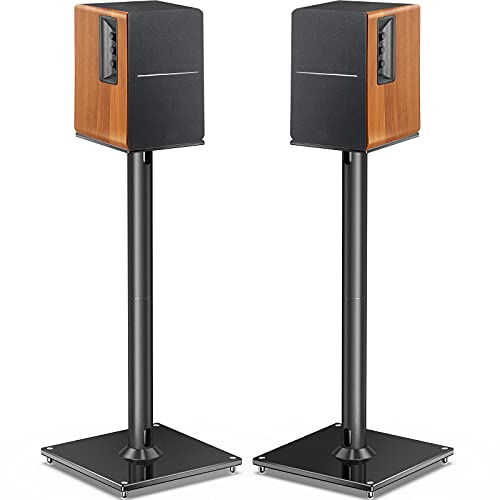
The Perlegear PGSS6 stands are designed for common home listening heights with a fixed 27.5″ height and a 7.79″ square top plate that supports speakers up to 22 lbs. The wide 11.8″ base and rubber pads help reduce vibration and improve steadiness.
These stands are marketed as multifunctional for TVs, gaming, and studio use. Their larger load rating and substantial base suit heavier bookshelf speakers and nearfield monitors where a stable platform is needed.
Atlantic Bookshelf Speaker Stands PN 77335799

The Atlantic pedestal-style stands provide a traditional look with all-steel construction and built-in wire management. The mounting plate can be set straight or at 45° for directional tuning. Their design supports bookshelf-style speakers up to 20 lbs and prioritizes durable long-term use.
These stands are intended for typical living-room installations where a steel pedestal and integrated cable routing create a minimal visual footprint while maintaining secure support for medium-weight speakers.
Buying Guide: How To Choose A Bookshelf Speaker Stand
Selecting the right stand depends on speaker size, room layout, and the listening position. The following factors will guide your selection across multiple comparison perspectives.
Load Capacity And Speaker Size
- Match Weight Ratings: Ensure the stand’s maximum load exceeds your speaker’s weight. Under-rated stands risk tipping or damage.
- Top Plate Dimensions: Check the plate size and width adjustability for non-standard speaker footprints.
Height And Listening Position
- Ideal Listening Height: For seated listening, aim the speaker’s tweeter at ear level. Many stands range from 27″ to 45″.
- Adjustability: Adjustable-height stands are useful for multi-use rooms or if you test placement frequently.
Stability, Base Design, And Floor Types
- Base Size And Material: Wider bases and heavier materials (steel, glass) improve stability. Consider triangular, square, or round footprint for balance.
- Floor Protection: Look for rubber feet or optional spikes depending on carpet or hard floors to prevent slipping and protect surfaces.
Tuning Options: Tilt, Swivel, And Toe-In
- Swivel/Toe-In: Adjustable top plates or swivels (up to 45°) allow precise imaging and better staging.
- Isolation Pads: Rubber or foam pads reduce resonance transfer from speaker to stand for cleaner sound.
Cable Management And Aesthetics
- Integrated Cable Channels: Hollow poles or cable channels create a tidy look and prevent exposed wires from tangling.
- Finish And Design: Choose finishes that blend with room décor—glass bases, steel pedestals, or matte black powder-coats are common.
Use Case Comparisons
- Home Theater/Surround: Prioritize height adjustability and toe-in capability to align speakers with seating positions.
- Desktop/Studio Monitors: Choose stands with precise height and isolation to reduce reflections and improve imaging.
- Large Bookshelf Speakers: Pick stands rated for higher weight (20–22 lbs) and with a broad base for stability.
Installation And Assembly
- Tool-Free Adjustment: Quick-release collars or twist locks speed setup and repositioning.
- Assembly Complexity: Check whether stands ship partially assembled or require more extensive DIY installation if that matters.
Durability And Long-Term Value
- Materials: Steel and alloy poles with solid bases last longer under repeated load changes.
- Warranty And Brand Support: Consider brands with clear product support for replacement parts or guidance.
Use the comparison perspectives above to narrow choices: light satellite speakers benefit from compact, tool-free stands; heavier bookshelf speakers require robust bases and higher weight ratings; critical listening benefits from stands with isolation and toe-in adjustments. Match the stand to your speaker dimensions, room acoustics, and aesthetic preferences to optimize performance.