If you’re shopping for Bluetooth earbuds for hearing-impaired listening, prioritize devices that enhance voice clarity, preserve situational awareness, and offer easy-access controls. The top picks below focus on open-ear designs, built-in amplification, or dual-function listening aids to help users hear conversations, alarms, and media more clearly. Ideal buyers include seniors seeking amplified voices, active individuals needing safety-aware design, and those who want lightweight, non-intrusive wear. This summary table highlights the five most relevant products to consider, based on design, ease of use, and intended use case.
| Product | Brand | Best For |
|---|---|---|
| Soundcore V20i Open-Ear Headphones | Soundcore | All-day comfort with open-ear design and multipoint Bluetooth |
| TTQ Bluetooth Hearing Aids for Seniors | TTQ | Automatic voice enhancement and 42dB gain for seniors |
| QXUFV Open Ear Headphones | QXUFV | Open-ear safety with clear calls and strong bass |
| TRAUSI Open Ear Wireless Earbuds | TRAUSI | Very long total playtime and stable Bluetooth 5.4 |
| OHAYO Open Ear Headphones | OHAYO | High-fidelity open-ear audio with emphasis on long wear |
Soundcore V20i Open-Ear Headphones

The Soundcore V20i uses an open-ear design for ultra-comfort and situational awareness. It offers four adjustable positions for a secure fit and is built for all-day wear. This model emphasizes a snug fit that reduces pressure on the ear canal, making it a practical option for hearing-impaired users who need to stay aware of their surroundings while listening to voices and media. Best for users who prioritize comfort and awareness in busy environments.
Best for: Those who want a non-intrusive listening experience with clear audio and continuous situational awareness. Choose this if comfort and everyday use are primary concerns. Limitation: Open-ear devices may deliver less bass impact than in-ear designs, which can affect certain music preferences.
Bluetooth Hearing Aids For Seniors (TTQ)

This device blends hearing-aid functionality with Bluetooth earbud features. It emphasizes a built-in smart DSP for voice enhancement and up to 42 dB amplification across five volume levels. It also includes automatic noise reduction to improve conversations in dynamic environments. Best for seniors or hearing-impaired users who need stronger voice amplification integrated into a compact form factor.
Best for: Seniors or users needing amplified speech with simple one-button operation. Caution: As with all amplification devices, individual comfort and amplification levels may require adaptation and testing in various environments.
QXUFV Open Ear Headphones

QXUFV’s open-ear design is aimed at maintaining situational awareness while delivering clear calls and HD stereo sound via upgraded 14.2mm drivers. The ultra-lightweight build reduces fatigue for long listening sessions, making it a strong pick for users who need ongoing conversational clarity in active settings. Best for: People who want all-day comfort with safety-friendly awareness. Limitation: Some users may prefer deeper bass which open-ear designs may underdeliver compared to in-ear options.
TRAUSI Open Ear Wireless Earbuds

TRAUSI focuses on long playtime and reliable Bluetooth 5.4 connectivity. The design keeps ears outside the canal for safety and comfort, with a claimed total playtime of up to 80 hours when using the case. Best for: active users who need extended listening with dependable pairing. Caution: Real-world battery life may vary with volume and usage patterns; open-ear bass performance can be less pronounced than sealed designs.
OHAYO Open Ear Headphones
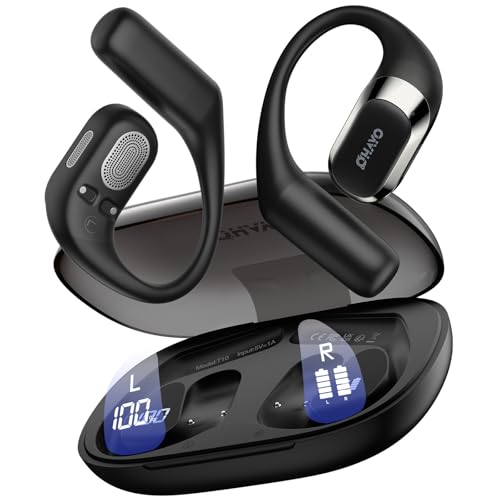
OHAYO emphasizes high-fidelity audio in an open-ear configuration, with a quad-speaker arrangement and 15mm drivers for vivid sound. The lightweight buds are designed for long wear, and the 40-hour total playtime supports extended use without frequent recharging. Best for: Listeners who want rich audio with extended wear comfort and ambient awareness. Limitation: Open-ear may not satisfy bass enthusiasts who prefer deep low-end response.
Buying Guide
What should you consider when choosing Bluetooth earbuds for hearing-impaired listening?
- Sound amplification vs. audio quality: Some devices offer amplified voices and ambient sound, others emphasize raw audio fidelity. Pick based on whether conversations or media clarity is the priority.
- Open-ear vs. in-ear: Open-ear designs preserve situational awareness and reduce ear fatigue, but may provide less bass. In-ear designs deliver stronger bass but can reduce awareness and comfort for extended wear.
- Voice enhancement features: Look for DSP, noise reduction, and adjustable gain. These help improve speech intelligibility in noisy environments.
- Battery life and charging: Consider total playtime with the case, especially for all-day use or travel. Wireless charging can add convenience for frequent top-ups.
- Ease of use and accessibility: One-button operation or simple interfaces help users with dexterity challenges or limited tech experience.
- Durability and water resistance: IP ratings matter for workouts and outdoor use. Ensure the model matches your activity level.
FAQ
- What is the main advantage of open-ear earbuds for the hearing impaired?
They keep ears open to ambient sounds, helping with safety and conversation while listening to audio. - Can amplification affect music quality?
Amplification focuses on voices and clarity; some models may trade off deep bass for speech intelligibility. - Are these devices suitable for seniors?
Yes, several options offer simple controls, voice enhancement, and comfortable fits tailored for seniors. - Do open-ear devices block background noise?
They usually do not fully block noise, which is why they preserve situational awareness. - What should I test first when choosing?
Test voice clarity in typical environments (home, street, store) and verify comfort for long wear. - Is Bluetooth 5.4 important?
It provides stronger connections and lower latency, which can improve call clarity and media sync.