Choosing a center channel speaker is critical for clear dialogue and accurate midrange reproduction in a home theater. Below is a concise comparison followed by detailed reviews of five center channel speakers suited to audiophile tastes.
| Product | Brand | Key Features |
|---|---|---|
| Klipsch R-52C Powerful Detailed Center Channel | Klipsch | Dual 5.25″ spun-copper woofers, 1″ aluminum LTS tweeter, 90×90 tractrix horn |
| KEF T301C Center Channel Speaker | KEF | Ultra-slim profile, dual 4.5″ mid drivers, 1″ aluminum tweeter, wall-mountable |
| Polk Signature Elite ES35 Slim Center Channel | Polk Audio | 1″ terylene tweeter, (6) 3″ woofers, Power Port technology, Dynamically Balanced Array |
| Klipsch RP-504C Center Channel Speaker | Klipsch | Reference Premiere series design for high output and detailed mids |
| Yamaha NS-C210BL Center Channel Speaker | Yamaha Audio | 2-way bass-reflex design, lightweight aluminum cone woofers, HD source reproduction |
Klipsch R-52C Powerful Detailed Center Channel Home Speaker – Black
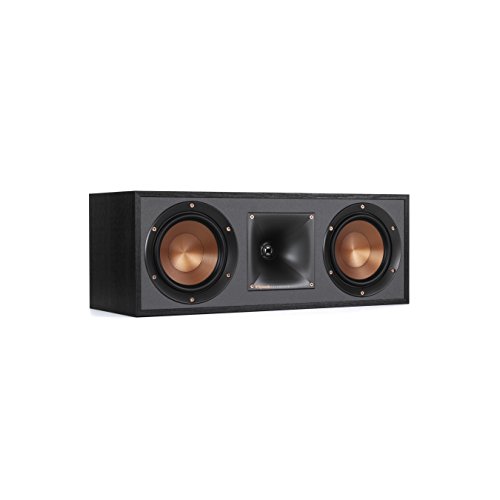
The Klipsch R-52C is built around dual 5.25″ spun-copper IMG woofers and a 1″ aluminum LTS tweeter mated to a 90×90 square tractrix horn. The tractrix horn design aims to improve directivity and efficiency, which can yield clearer dialogue at lower amplifier power levels.
Frequency response is specified at 89Hz–21kHz ±3dB, indicating focused midrange performance and controlled highs. The dual woofer layout supports strong midbass presence and helps anchor voices. This model is appropriate where efficiency and vocal clarity are priorities.
KEF T301C Center Channel Speaker – White

The KEF T301C emphasizes a low-profile aesthetic and accurate mid/high reproduction. Its 1.25-inch depth allows discreet placement under a TV or on a stand, reducing visual impact behind a display.
Internally, it uses two 4.5″ double-layered mid-frequency drivers with a 1″ aluminum tweeter. The documented sensitivity varies with mounting (91dB wall mount, 88dB floor stand), so placement affects perceived loudness. The tweeter design focuses on vocal clarity and natural timbre, making this a choice for tight integration with modern flat-panel setups.
Polk Signature Elite ES35 Slim Center Channel Speaker – Stunning Black

The Polk Signature Elite ES35 is designed for wider bandwidth and higher output. It features a 1″ terylene tweeter plus six 3″ woofers arranged as a Dynamically Balanced Acoustic Array with cascading crossovers. This configuration aims to deliver coherent vocals and a wide soundstage.
Polk’s patented Power Port technology contributes to extended low-frequency extension from a slim cabinet, supporting a robust frontal impact for dialogue and effects. High sensitivity and 4/8-ohm compatibility help in pairing with a range of AV receivers.
Klipsch RP-504C Center Channel Speaker (Ebony)

The Klipsch RP-504C from the Reference Premiere line is engineered for higher output and low distortion. While the provided feature list is brief, this model is known for the combination of horn-loaded tweeters and multiple high-excursion woofers to maintain clarity at elevated listening levels.
As a center channel, the RP-504C prioritizes projection and dynamic range, targeting listeners who value crisp articulation and the ability to sustain complex on-screen mixes without losing midrange detail.
Yamaha Audio NS-C210BL Center Channel Speaker – Each (Black)

The Yamaha NS-C210 is a 2-way bass-reflex center channel with light aluminum cone woofers intended for fast transient response. Yamaha emphasizes reproduction of HD sources and accurate dialog clarity across the midrange.
This speaker is positioned as a reliable match for AV systems where tonal accuracy and integration with existing Yamaha equipment are desired. Its enclosure and driver choices support responsive midrange performance suitable for dialogue-forward content.
Buying Guide: How To Choose An Audiophile Center Channel Speaker
Selecting a center channel requires balancing voice clarity, integration with existing speakers, room size, and placement. Below are key factors to evaluate before purchase.
1. Voice Clarity And Midrange Accuracy
- Tweeter Type: Aluminum or soft-dome tweeters each have distinct tonal signatures. Aluminum tends to be more detailed; soft domes can be smoother.
- Driver Arrangement: Multiple midrange drivers or specialized horns can enhance vocal focus and off-axis dispersion.
2. Sensitivity And Power Handling
- Sensitivity: Higher sensitivity speakers require less amplifier power for the same loudness. Check sensitivity ratings when pairing with lower-powered receivers.
- Power Handling: Match speaker power handling with your AVR or amp headroom to avoid clipping and distortion at high SPLs.
3. Cabinet Size, Placement, And Aesthetics
- Profile: Slim center channels like the KEF T301C and some Polk models are easier to place under modern TVs.
- Wall-Mount vs Stand: Decide if you need a wall-mountable design or a stand/shelf placement; mounting changes measured sensitivity and dispersion.
4. Frequency Response And Bass Extension
- Low-End Role: The center channel typically handles a portion of bass for on-screen effects. If you want stronger low-end from the center, look for Power Port or larger woofer arrays.
- Integration With Subwoofer: For extended bass, plan to cross over to a subwoofer and align slopes to avoid overlap or gaps.
5. Imaging And Dispersion
- Directivity Controls: Horn-loaded tweeters (e.g., Klipsch tractrix) can provide focused dispersion, improving clarity in larger rooms.
- Driver Alignment: Time-aligned or vertically aligned drivers help maintain a cohesive center image and reduce phase-related smearing.
6. Compatibility With Main Speakers
- Tonal Match: For best cohesion, choose a center that complements the voicing of your left/right speakers, especially if from the same brand or series.
- Impedance: Verify 4/8-ohm compatibility for safe amplifier pairing and consistent power delivery.
7. Room Size And Listening Distance
- Small Rooms: Compact centers with controlled dispersion are often preferable to avoid excessive reflections.
- Large Rooms: Higher output designs with multiple woofers or horn loading help maintain clarity at distance.
8. Practical Considerations
- Mounting Options: Check for wall-mount capability and bracket compatibility.
- Finish And Fit: Match cabinet finishes and width to your media console or wall-mount area to avoid blocking a TV screen or IR sensors.
- Cabling And Connections: Use quality speaker cable and proper terminations; cable capacitance and resistance matter over long runs.
Comparison Perspectives
- Dialogue-Centric: Look for speakers with focused midrange and controlled highs (e.g., KEF T301C, Yamaha NS-C210).
- High Output / Dynamic: Horn-loaded or multi-woofer centers (Klipsch R-52C, RP-504C, Polk ES35) suit louder, more dynamic mixes.
- Slim/Low-Profile: Models designed to sit under TVs or mount flush (KEF, select Polk models) reduce visual footprint while preserving clarity.
Use the above factors to refine choices based on listening priorities, room acoustics, and system matching. Comparing specifications such as sensitivity, driver materials, and mounting options will help identify the center channel that best aligns with your audiophile goals.