Clear, professional sound starts with the right acoustic panels. This guide highlights top options for a home or professional music studio, focusing on effective sound absorption, easy installation, and practical features. Suitable buyers include home-recording hobbyists, podcasters, and small-studio engineers seeking better speech clarity, reduced flutter echoes, and controlled reverberation. Below is a quick table of five well-rounded picks followed by in-depth sections for each product.
| Product | ||
|---|---|---|
| Focusound 52 Pack Acoustic Panels | 1″ Foam, 12″x12″ | Includes 300 adhesive tabs; rapid recovery; strong noise absorption |
| TroyStudio Thick Acoustic Foam Panels | 2″ Foam, 12″x12″ | High density, good NRC values; decorative groove design |
| SD SODOCT 24 Pack Pyramid Panels | 2″ Foam, 12″x12″ | Pyramid design, high NRC, flame retardant |
Dailycooper 12 Pack Self-Adhesive Panels

Focus: Best for quick installs with no additional tools required. These 12″ x 10″ panels use a self-adhesive backing, offering simple placement on walls, doors, or ceilings. Ideal for small home studios, bedrooms, or dorm rooms where a quick acoustic upgrade is needed. Limitation: adhesive performance can vary on textured surfaces or rental walls; ensure the surface is clean for best results.
TOUO 12 Pack Acoustic Panels

Best for: Professionals seeking a balance of sound absorption and installer-friendly features. These 1″ wedge panels include 60 adhesive tapes for residue-free mounting and provide fast recovery with vacuum-sealed storage. Suitable for home studios, podcast rooms, and small theaters. Caution: the adhesive system is designed for interiors; heavy humidity or rough walls may affect bond strength.
Focusound 52 Pack Acoustic Foam Panels

Best for: Budget-conscious studios needing broad coverage and complete kit simplicity. The 1″ foam with triangular grooves offers solid noise absorption and reduced echoes. The included 300 double-sided adhesives simplify wall mounting and help protect surfaces. Limitation: 1″ thickness provides moderate low-frequency absorption; consider thicker panels for strong bass control.
TroyStudio Thick Acoustic Foam Panels
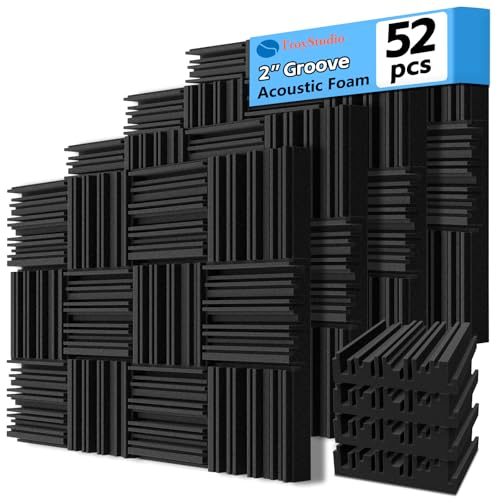
Better for: Medium-sized studios needing stronger bass control and a decorative, functional wall accent. At 2″ thickness and 52 panels, they cover more area with a higher absorption capacity. Pros include high density and flame retardant features. Choose this if your space has noticeable low-frequency issues. Limitation: bulkier panels require more wall space and alignment planning.
SD SODOCT 24 Pack Pyramid Panels

Best for: Rooms where a sleek, modern look is desired alongside acoustics. The pyramid design increases surface area for diffusion and absorption, contributing to a balanced acoustic environment. Noted as flame-retardant, making them suitable for home theaters and studios. Limitation: pyramid shapes can create visual texture; ensure their appearance fits your decor.
Buying Guide
What thickness should I choose for a home studio?
Thicker panels (2″) excel at low-frequency absorption, beneficial in rooms with standing waves. If your space mainly experiences mid-to-high frequency issues, 1″ panels can be effective with proper placement and coverage.
Do I need adhesive panels or can I use frames?
Adhesive-backed panels offer quick installation and surface protection but are best on smooth, clean walls. For rentals or textured surfaces, consider mounting frames or removable mounting systems to avoid wall damage.
How many panels do I need?
Start with a coverage goal: about 15-25% of wall area in key reflection zones (behind speakers, first reflection points). For larger rooms, scale coverage accordingly. A mix of panel shapes and thickness can balance absorption across frequencies.
Are flame-retardant options important?
Flame retardant materials improve safety in enclosed spaces. If you use panels in home theaters, studios, or shared living areas, prioritize flame-retardant foam that complies with recognized standards.
What about aesthetics and placement?
Besides acoustics, consider aesthetics: groove or pyramid textures can double as decor. Place panels at first reflection points on walls and ceiling to maximize effectiveness; use bass traps or thicker panels in corners for bass management.
Frequently Asked Questions
- What is NRC and why does it matter?
– NRC stands for Noise Reduction Coefficient and indicates how well a panel absorbs sound across frequency bands. A higher NRC means better overall absorption. - Can panels ruin walls or paint?
- Will panels affect bass response?
- Is one brand better than another for recording clarity?
- How long do panels last in a studio?
Note: For exact installation details and material specifications, refer to each product’s listing. This guide presents objective information based on provided features to assist buyers in selecting suitable acoustic panels for music studios and related spaces.