The list below compares compact and portable 8 ohm audio devices that advertise or pair with 25-watt ratings, plus practical lower‑power alternatives for specific projects. This guide highlights form factor, power handling, frequency coverage, and mounting or DIY suitability to help match a speaker to your application.
| Product | Type | Rated Power / Impedance |
|---|---|---|
| Dayton Audio DAEX58FP Flat Pack Exciter | Exciter / Transducer | 25 W / 8 Ω |
| Pyle PHSP6K 6.3” Portable PA Horn | Horn PA Speaker | 25 W Peak / 8 Ω |
| Pyle 5” All‑Weather Trumpet Horn | Outdoor Horn Speaker | 15 W Peak (8 W RMS) / 8 Ω |
| uxcell 28mm 1W 8 Ohm DIY Speaker | Mini Replacement Speaker | 1 W / 8 Ω |
| ProTechTrader 26mm 0.25W 8 Ohm Speaker | Tiny Loudspeaker For Projects | 0.25 W Nominal / 8 Ω |
Dayton Audio DAEX58FP Flat Pack 58mm Exciter 25W 8 Ohm

The Dayton Audio DAEX58FP is a small exciter/transducer that converts flat surfaces into radiating panels. Its 8 ohm impedance allows compatibility with common amplifiers, and the unit is rated for up to 25 W input. The package includes a mounting plate and is designed for low-profile installations where a traditional cone driver won’t fit.
- Use Case: Custom enclosures, furniture, or hidden audio installations.
- Key Features: Super small size, low profile height, mounting plate included.
- Performance Notes: Frequency response and output depend heavily on the chosen mounting surface; expect limited bass unless paired with a resonant panel or enclosure.
Pyle Indoor/Outdoor PA Horn Speaker PHSP6K 6.3” 25W

The Pyle PHSP6K is a horn‑style PA speaker designed for indoor/outdoor announcements. It lists 8 ohms impedance and a 25‑watt peak power rating, with a frequency emphasis tailored to voice frequencies from roughly 400 Hz to 6 kHz. The unit includes mounting hardware for wall or pole installation.
- Use Case: Public address, paging, or outdoor voice projection.
- Key Features: Loud output, horn dispersion for mid/high frequencies, mounting bracket included.
- Performance Notes: Horn speakers prioritize clarity and projection over low-frequency extension; suitable where intelligibility is primary.
Pyle Portable 5” All-Weather Trumpet Horn Speaker 8 Ohm

This compact trumpet horn from Pyle is an all‑weather option with an 8 ohm nominal impedance. It advertises 15 watts peak and about 8 watts RMS, with a frequency range biased toward mid and high frequencies (approx. 450–5,000 Hz). The adjustable swiveling bracket helps aim coverage.
- Use Case: Vehicle PA, small outdoor installations, or emergency warning systems.
- Key Features: Weather resistant housing, adjustable mounting bracket, focused dispersion.
- Performance Notes: Lower power compared to 25W peak models; still effective for voice and short-range projection.
uxcell 1W 8 Ohm DIY Magnetic Speaker 28mm Round Replacement

The uxcell 28mm mini speaker is a 1W rated, 8 ohm replacement driver for small enclosures, electronics, or DIY projects. It offers high sensitivity for its size and comes with small terminal lines for easy connection. It is not a high‑power speaker but can serve as a component in compact sound devices.
- Use Case: Replacements for portable devices, hobby electronics, or small custom enclosures.
- Key Features: Small diameter, PH2.0/1.25mm interface compatibility, clear mid/high performance for its size.
- Performance Notes: Limited low-frequency output; match to enclosure volume for best reproduction.
1in Speaker 26mm 8 Ohm 0.25W Nominal Loud Speaker
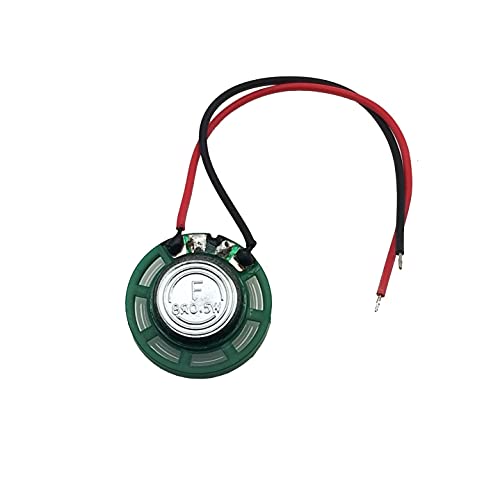
This tiny 26mm loudspeaker is rated at 0.25 W nominal with 8 ohm impedance. It’s intended for toys, basic electronics, and small DIY audio projects where volume and fidelity requirements are modest. It comes loose packaged and is aimed at users needing an economical signal transducer.
- Use Case: Toys, small indicators, educational electronics.
- Key Features: Very small footprint, easy wiring, low power draw.
- Performance Notes: Not appropriate for demanding audio or PA applications; intended for low-power signal reproduction.
Buying Guide: Choosing The Right 8 Ohm, ~25 Watt Speaker
Selecting the right speaker requires matching electrical, acoustic, and mechanical factors to your intended use. The sections below outline the key considerations.
Power Handling And Ratings
RMS vs Peak: Manufacturers often list peak power as a marketing spec; RMS (continuous) is a better indicator of sustained capability. For reliable performance, match the speaker RMS rating with amplifier output and allow headroom.
Impedance Compatibility
8 Ohm Standard: Most consumer amplifiers expect 8 ohm loads. Verify amplifier minimum load and speaker impedance to prevent overcurrent or reduced output.
Form Factor And Mounting
Type Matters: Horn speakers and exciters serve different roles. Horns provide focused projection and clarity for voice; exciters transmit vibrations to panels for hidden audio. Choose based on where and how sound should be heard.
Frequency Response And Application
Voice vs Music: PA horns emphasize mid/high frequencies for intelligibility. Full-range cone drivers or properly sized enclosures are preferable for music and bass reproduction. Mini speakers are fine for notifications or small devices.
Environmental Considerations
Outdoor Use: Weather-resistant housings and corrosion-resistant hardware are important for speakers mounted outside. Ensure ingress protection and UV-resistant materials when necessary.
Efficiency And Sensitivity
SPL Per Watt: Higher sensitivity speakers produce more volume for a given input power. For battery‑powered or low-power amps, prioritize sensitivity to get usable loudness without pushing the amp.
Mounting And Directionality
Dispersion: Horns have narrow dispersion, increasing on-axis SPL but reducing off-axis coverage. Exciters depend on the radiating surface; enclosure design affects pattern. Plan locations and aiming to cover your listening or announcement area.
DIY And Replacement Options
Miniature Drivers: Low-power 1W or 0.25W speakers are suitable for repair and hobby projects. For custom installations, exciters provide creative mounting options but require careful surface selection to achieve desired tonal balance.
Amplifier Matching And Protection
Headroom And Limits: Avoid driving small speakers beyond their thermal limits. Use limiters, appropriate gain staging, and consider series resistors or attenuators if using a more powerful amplifier to prevent damage.
Multiple Comparison Perspectives
- Power Handling: Compare RMS vs peak and ensure amplifier headroom.
- Acoustic Role: Horn for projection/voice; exciter for hidden installations; cone drivers for balanced music.
- Durability: Weatherproofing and mounting robustness are critical for outdoor use.
- Installation Needs: Brackets, mounting plates, and wiring terminations influence ease of setup.