Choosing the right 8-channel speaker selector can streamline multiroom audio and protect your amplifier. Below is a quick comparison of top options, followed by detailed product sections and a practical buying guide to help you select the best model for your setup.
| Product | Brand | Key Feature |
|---|---|---|
| Pyle PSS8 8 Zone Speaker Switch | Pyle | 8-zone selector designed for multi-channel stereo amplifiers |
| Monoprice SS-Pro 8 High Power | Monoprice | Impedance-matching transformers, dual source support |
| Monoprice 8 Zone Distribution Hub | Monoprice | Connects up to 8 pairs; removable terminal blocks |
| Monoprice SSVC-6.1 (6-Channel) | Monoprice | Volume control per zone, impedance protection |
| Monoprice SS-6 Premium (6-Channel) | Monoprice | Automatic impedance protection, 100W RMS per channel |
Pyle PSS8 8 Zone Channel Speaker Switch
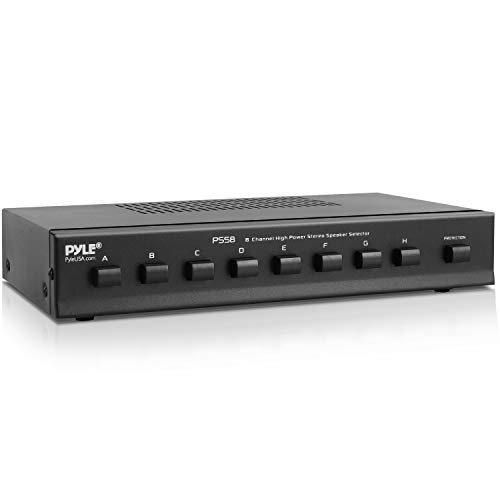
The Pyle PSS8 is built as an 8-channel distribution box for multi-zone setups. It is designed to work with high-power stereo amplifiers and supports multiple speaker pairs. The unit focuses on straightforward A/B/C/D-style switching for enabling or disabling zones.
Features listed by the manufacturer emphasize compatibility with high-power stereo systems and a simple switch-based interface. This model is suitable where basic multi-zone control is needed without built-in volume knobs per zone.
Monoprice SS-Pro 8 High Power Dual Source

The Monoprice SS-Pro 8 is an 8-zone selector that supports up to eight pairs of speakers and includes impedance-matching transformers. It also offers dual source selection via front panel controls, allowing two input sources to be routed to zones.
Manufacturer features highlight audiophile-grade transformers for safe power distribution, front-panel push-buttons for each zone, and high-power handling. This model is targeted at installations where maintaining amplifier load and power balance is important.
Monoprice 8 Zone Single Input Distribution Hub

The Monoprice 8 Zone Hub connects up to eight pairs of speakers to one amplifier. The design uses removable terminal blocks for neat connections and easy changes during installation.
Manufacturer notes state this unit does not include impedance matching circuitry. It is most applicable when the amplifier can handle multiple loads directly or when external protection is planned. This hub is a simple, wiring-friendly option for large installations.
Monoprice SSVC-6.1 6-Channel With Volume Control

Although a 6-channel model, the Monoprice SSVC-6.1 is frequently considered alongside 8-channel units because it offers per-zone volume control and automatic impedance protection. It supports continuous power handling and has on/off controls for individual zones.
Manufacturer features include 100 watts per channel continuous and 200 watts peak, and impedance protection to safeguard amplifiers. This model suits systems where per-room level control is desired and fewer than eight zones are acceptable.
Monoprice SS-6 Premium 6 Channel Speaker Selector
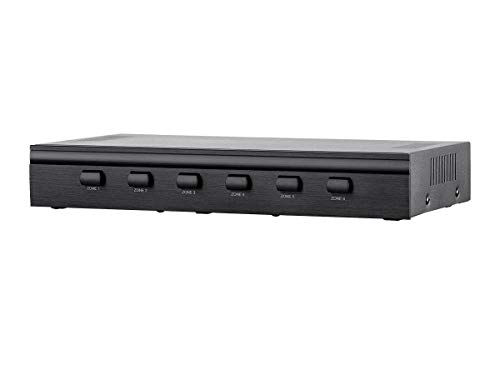
The Monoprice SS-6 Premium provides automatic impedance protection and supports 100 watts RMS per channel. It accepts 12–16 AWG speaker wire and features individual on/off buttons for each zone.
Manufacturer details note minimum amplifier impedance requirements depending on speaker configurations, making this model useful where amplifier safety is a priority but full 8-zone capacity is not required.
Buying Guide: How To Choose An 8 Channel Speaker Selector
Selecting the right speaker selector depends on amplifier capability, speaker impedance, and control needs. Below are key considerations and comparison perspectives to help decide between models.
1. Impedance Matching And Amplifier Protection
- Impedance-Matching Transformers: Look for units like the Monoprice SS-Pro 8 when you need to protect your amplifier while powering many speakers.
- Automatic Protection Circuits: Some models provide automatic impedance protection; these reduce risk when zones are turned on simultaneously.
- No Matching Hub: Simple distribution hubs lack impedance protection and require an amplifier that can handle multiple loads or external protection devices.
2. Zone Count And Expandability
- True 8-Zone Devices: Choose an 8-zone selector if you plan to wire eight rooms or speaker pairs from one amplifier.
- 6-Channel Alternatives: Consider 6-channel units when fewer zones suffice, especially if they include per-zone volume controls.
- Modular Wiring: Removable terminal blocks simplify installation and future changes.
3. Volume Control And Zone Management
- Per-Zone Volume: Models with volume knobs let you balance sound levels in each room without remote attenuators.
- On/Off Buttons: Basic push-button selectors are simpler but lack fine control over room levels.
- Source Selection: Some units support multiple input sources to route different audio to different zones.
4. Power Handling And Wiring
- Wattage Ratings: Check continuous and peak power handling to ensure the selector supports your amplifier and speaker needs.
- Wire Gauge: Support for 12–16 AWG provides flexibility for longer runs and lower loss.
- Terminal Quality: Screw terminals or removable blocks affect installation speed and reliability.
5. Installation And Practical Considerations
- Physical Size and Mounting: Rack-mountable vs tabletop units matter for placement and ventilation.
- Heat Dissipation: Higher-power setups may need units with heat sinks or airflow to avoid thermal issues.
- Labeling And User Interface: Clear zone labeling and intuitive switches reduce mistakes during use.
6. Comparison Perspectives
- Protection-Focused: Choose impedance-matching or automatic protection models if amplifier safety is the top priority.
- Control-Focused: Select models with per-zone volume if room-level customization matters most.
- Wiring-Focused: Use simple distribution hubs for straightforward installations where amplifier load is already managed.