Choosing the right 4-way speaker switch box helps distribute audio to multiple zones while protecting your amplifier and matching impedance. The table below summarizes the five selected options reviewed in this article, showing brand, primary feature, and intended use to help you compare at a glance.
| Product | Brand | Primary Feature |
|---|---|---|
| Audioflow 4 Way Speaker Switch Selector Box Smart Wi‑Fi | Audioflow | Wi‑Fi and voice control for four speaker pairs |
| Pyle 4-Zone Speaker Switch Selector (PSS4) | Pyle | Basic A/B/C/D selector for four speaker pairs |
| Pyle PSLSW4 4 Channel Speaker Selector | Pyle | Per‑zone volume control, 100W per channel |
| Monoprice 4-Channel Speaker Selector | Monoprice | Up to 70–140W per channel with protection option |
| XtremPro 2 Or 4 Way Speaker Switch | XtremPro | Metal box, screw terminals, wide impedance range |
Audioflow 4 Way Speaker Switch Selector Box
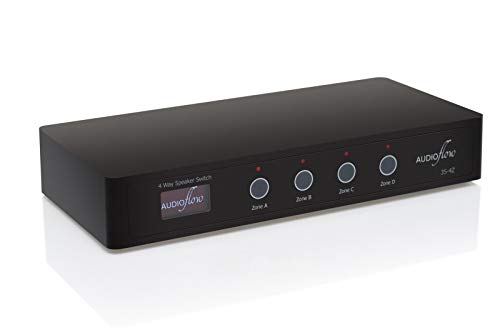
This Audioflow switch connects up to four pairs of speakers and adds networked control via Wi‑Fi. The unit supports control with the Audioflow mobile app for iOS and Android and integrates with Amazon Alexa for voice commands.
- Connectivity: Wi‑Fi control via app and Alexa voice control.
- Zones: Four pairs of speakers supported.
- Use case: Smart home setups where remote or voice control is desired.
As a networked option, this model prioritizes convenience and integration. It fits installations where app-based selection of zones and voice activation are valued. Consider network reliability and compatibility with your home automation when evaluating this unit.
Pyle 4-Zone Speaker Switch Selector PSS4
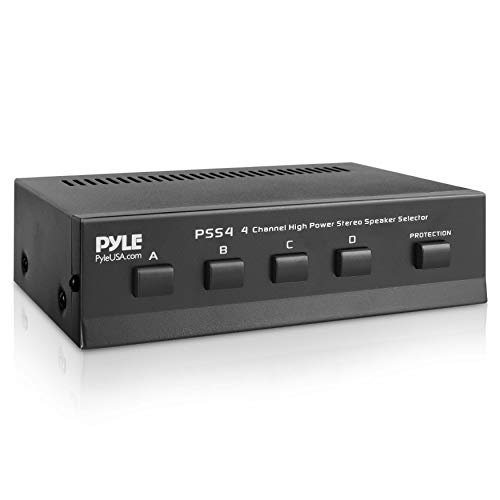
The Pyle PSS4 is a straightforward speaker selector designed to switch audio to up to four speaker pairs using A/B/C/D switches. Its simple push‑button interface makes it easy to select which zones to power.
- Design: Basic distribution box with dedicated switches for each zone.
- Target user: Installations needing uncomplicated manual switching.
- Considerations: Lacks advanced impedance protection or per‑zone volume controls.
This model is suitable when you want a low-complexity device to route stereo output to multiple rooms. Check amplifier compatibility and speaker impedance to avoid overload when multiple zones are active.
Pyle PSLSW4 Multi Zone Speaker Selector
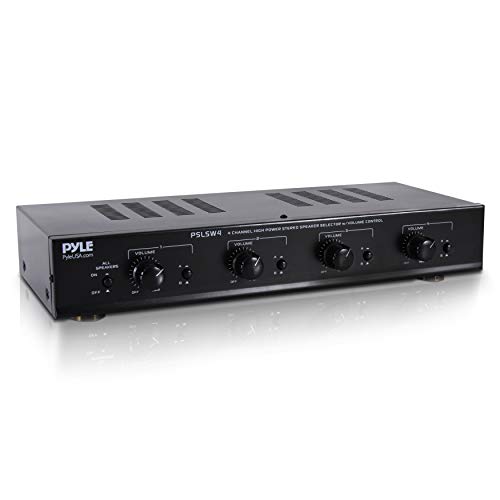
The Pyle PSLSW4 adds independent volume control for each of its four channels and supports up to 100W max per channel at 8 ohms. It uses screw terminal connectors and a compact tabletop form factor.
- Power handling: 100 watts max per channel, 8Ω speakers recommended.
- Controls: Individual volume knobs and push‑button activation for each pair.
- Installation: Screw terminals accept up to 14AWG speaker wire.
This unit is appropriate if you need per‑zone level adjustment while distributing audio from a single amplifier. The independent volume controls help balance room loudness without changing the main amp settings.
Monoprice 4-Channel Speaker Selector

The Monoprice 4-channel selector distributes audio to four zones and features a protection circuit that affects the wattage rating. It supports up to 70W per channel with protection enabled and up to 140W per channel without the protection circuit.
- Protection: Optional protection circuit to safeguard your amplifier.
- Power options: Two operating modes for higher output or added protection.
- Use case: Home theater systems where speaker load management is important.
The selectable protection mode is useful to prevent amplifier stress when many speakers are connected. Verify speaker impedance and expected combined load to choose the correct operating mode for your setup.
XtremPro 2 Or 4 Way Speaker Switch

The XtremPro selector supports either 2‑ or 4‑channel configurations with screw type connections and a metal, non‑slip enclosure. It accepts a broad impedance range and lists 150W per channel with a combined max of 300W.
- Flexibility: Configure as 1×2 or 1×4 speaker distribution.
- Connections: Screw terminals for secure wiring; supports long cable runs.
- Impedance: Designed to keep impedance relatively constant between 4–16Ω.
The metal housing and screw terminal design suit installations that require durable hardware and reliable connections. Its wide impedance compatibility works well for varied speaker types in residential or commercial environments.
Buying Guide: How To Choose A 4 Way Speaker Switch Box
This guide outlines the main factors to compare when selecting a 4-way speaker switch box for your audio system.
Zone Control And Features
Decide whether you need simple manual switching, per‑zone volume control, or smart features like Wi‑Fi and voice control. Basic selectors work for simple setups while advanced units add convenience and individual level adjustments.
Power Handling And Protection
Match the switch box’s power rating to your amplifier and speakers. Some units offer protection circuits that limit usable wattage but prevent amplifier overload when multiple zones are active. Consider whether you prefer higher raw wattage or built‑in protection for reliability.
Impedance And Amplifier Load
Check the device’s impedance behavior when multiple zones are engaged. Look for features like impedance matching or constant impedance design to avoid overloading the amplifier. Verify your speakers’ nominal impedance (commonly 8Ω or 4Ω) against the switch’s supported range.
Connection Type And Installation
Screw terminals provide secure, professional connections and often accept thicker gauge wire for longer runs. Binding posts or spring clips may be easier for occasional use. Consider input/output locations, mounting options, and cable length limits for your room layout.
Build Quality And Physical Design
Metal enclosures and robust switches increase durability, especially in commercial or high‑use installations. Compact tabletop units suit casual home use, while rack‑mountable or wall‑mounted boxes fit integrated systems better.
Smart Integration And Remote Control
If you use a smart home ecosystem, choose models with app control or voice assistant compatibility. Ensure app reliability, network security, and compatibility with existing smart hubs before relying on networked features.
Use Cases And Comparison Perspectives
- Whole‑home audio: Prefer selectors with protection circuits and impedance control for many simultaneous zones.
- Multiroom with level balance: Choose per‑zone volume control to fine‑tune room loudness.
- Smart home setups: Opt for Wi‑Fi/Alexa enabled selectors for remote and voice control convenience.
- Budget/simple installs: Basic A/B/C/D selector boxes provide low‑cost switching without advanced features.
When comparing options, weigh power handling, impedance management, and whether remote or per‑zone control improves usability in your specific environment. Test compatibility with your amplifier and speaker configuration before finalizing the purchase.