Choosing the right 3-way tower speaker can transform home theater and music experiences by delivering clearer highs, defined midrange, and deeper bass. Below is a quick comparison of the five selected 3-way tower speakers featured in this guide.
| Product | Brand | Key Feature |
|---|---|---|
| Sony SS-CS3 3-Way Floor-Standing Speaker – Pair | Sony | 3-way, 4-driver design with polyester tweeter |
| Sony SSCS3 3-Way Floor-Standing Speaker (Single) | Sony | Hi-Res Audio ready, three-way coaxial four-driver |
| SVS Ultra Evolution Titan 3-Way Tower Speaker | SVS | Quad 6.5″ woofers in opposed array |
| SVS Ultra Evolution 3-Way Tower Speaker | SVS | Quad 5.25″ woofers, time-aligned array |
| Polk Signature Elite ES60 Tower Speaker | Polk Audio | Dynamically Balanced Array with Power Port tech |
Sony SS-CS3 Floor-Standing Speaker Pair
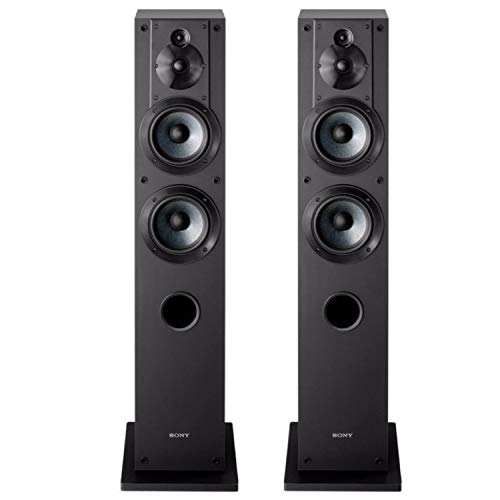
The Sony SS-CS3 is a 3-way, 4-driver floor speaker sold as a pair, aimed at delivering balanced sound for music and movies. It uses a 1″ polyester main tweeter, a ¾” super tweeter, and mid/woofer drivers tuned to provide clear highs and robust midrange.
Features include 145W peak power and a nominal 6 Ohm impedance that pairs well with a variety of amplifiers. The cabinet design emphasizes rigidity and reduced resonance for cleaner output. This model is positioned for users who want an accessible 3-way speaker with solid component layout for home audio setups.
Sony SSCS3 Single 3-Way Floor Speaker

This model is the single-unit version of the Sony CS series designed for flexible placement and Hi-Res Audio support. The speaker incorporates a three-way coaxial, four-driver system to reproduce a wide frequency range suitable for music and home theater.
Its design integrates with other CS-series components to form a Dolby Atmos-capable 5.1.2 system when combined with height modules and subwoofers. The single-unit option suits buyers expanding an existing system or those who need an individual replacement/upgrade speaker.
SVS Ultra Evolution Titan Tower Speaker
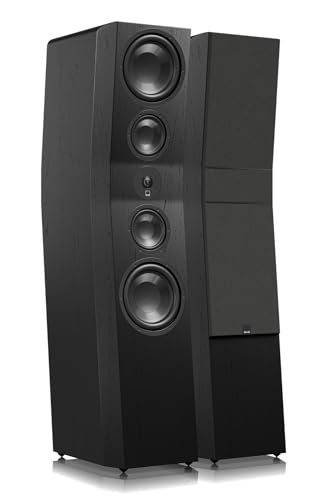
The SVS Ultra Evolution Titan is a high-performance 3-way tower speaker using a Force-Balanced Opposed Array with four 6.5″ woofers. That driver arrangement aims to deliver deep, evenly distributed bass with lower cabinet vibration.
The speaker emphasizes time-coherent architecture and composite glass-fiber cones for improved stiffness-to-mass ratio, which supports high sensitivity and controlled pistonic motion. This approach focuses on accurate imaging and natural tonal balance across frequencies, useful for critical listening and large-room setups.
SVS Ultra Evolution 3-Way Tower Speaker

This SVS model follows the same Ultra Evolution design philosophy but uses quad 5.25″ woofers arranged for balanced bass with an acoustically-centered time alignment. The speaker is tuned for accurate midrange clarity and controlled low-frequency output.
Key construction highlights include a sophisticated driver array, attention to phase alignment, and composite cones intended to maintain linear behavior under load. The overall design prioritizes coherent imaging and low distortion for both stereo music and multichannel film playback.
Polk Signature Elite ES60 Tower Speaker

The Polk Signature Elite ES60 is a high-performance 3-way tower using a Dynamically Balanced Acoustic Array and a 1″ Terylene tweeter with three 6.5″ woofers. Polk’s Power Port technology is included to enhance bass output while reducing port turbulence.
The speaker is Hi-Res Audio certified and compatible with Dolby Atmos and DTS:X systems when paired with height modules. The ES60 focuses on a wide soundstage, clear dialogue reproduction, and increased low-frequency impact for cinematic use.
Buying Guide: How To Choose A 3-Way Tower Speaker
Selecting the right 3-way tower speaker involves matching technical capabilities to listening priorities and room characteristics. Below are the primary factors to consider.
Driver Configuration And Crossover Design
3-way speakers separate frequencies across tweeter, midrange, and woofer drivers via a crossover network. Evaluate the quality of crossover components and whether the manufacturer references time-alignment or phase coherence, which help unify the soundstage.
Driver Sizes And Array Type
Larger woofers typically yield deeper bass but require cabinet control. Opposed or force-balanced arrays (seen in SVS models) aim to reduce cabinet vibration and distribute bass more evenly. Consider whether you want punchy impact or precision low-end.
Cabinet Construction And Resonance Control
Rigid cabinet materials and bracing reduce coloration. Look for descriptions of composite cones, bracing, and port design. Port technology (such as Polk’s Power Port) can improve bass extension without increasing turbulence.
Power Handling And Sensitivity
Check nominal impedance and sensitivity ratings to ensure compatibility with your amplifier or AVR. Lower impedance (e.g., 4–6 Ohm) can demand more robust amplification. Higher sensitivity makes speakers easier to drive at louder volumes.
Room Size And Placement
Tower speakers with multiple woofers are better suited to medium to large rooms. Ensure you can position speakers with adequate toe-in and distance from walls to manage bass reinforcement and reflection effects.
Intended Use: Music Vs Home Theater
For music-focused systems, prioritize midrange clarity and neutral tonal balance. For home theater, look for speakers with strong low-frequency impact and compatibility with surround and height modules for Dolby Atmos immersion.
System Integration And Expandability
Consider whether you want a matched line of speakers for center and surrounds. Some brands design towers to integrate with center channels and Atmos modules for coherent multichannel sound.
Build Quality And Long-Term Value
Assess manufacturer reputation, warranty, and customer feedback on reliability. Features like Hi-Res certification and refined crossover components often indicate greater attention to sonic detail and longevity.
Comparison Perspectives
- Value-Focused: Look for balanced driver arrays and solid cabinet construction without premium boutique materials.
- Performance-Focused: Prioritize time-aligned arrays, composite cones, and multi-woofer opposed arrays for large-room clarity and controlled bass.
- System Builders: Choose speakers with matched center and surround options if you plan a multichannel setup.
Using these considerations will help you narrow 3-way tower speaker choices to those that best fit your room, amp pairing, and listening priorities. Compare specifications such as driver size, impedance, sensitivity, and cabinet design to decide which model aligns with your needs.