Small two-way speakers are a practical choice for tight spaces, car door replacements, marine mounts, and DIY satellite or boombox projects. Below is a quick comparison of selected 3-inch (and near-3-inch) 2-way speakers and close alternatives that match the search for compact, balanced audio.
| Product | Type / Size | Key Feature |
|---|---|---|
| Pioneer A-Series Plus TS-A709 | 2.75″ 2-Way | Wide frequency response to 34 kHz |
| Skar Audio TX35 | 3.5″ 2-Way Coaxial | Silk dome tweeter, 120W peak |
| Facmogu 3 Inch HiFi Full Range | 3″ Full Range (compact) | Designed for 2.0/2.1 DIY satellites |
| ORION Cobalt CB35 | 3.5″ 2-Way Coaxial | Polypropylene cone with butyl surround |
| Herdio 3 Inch Waterproof Marine Speakers | 3″ 2-Way Full Range (Marine) | IP44 splash-proof, compact mount |
Pioneer A-Series Plus TS-A709 2.75″ 2-Way Speakers (Pair)

The Pioneer TS-A709 is a compact 2-way car speaker with separate drivers for highs and lows. Its listed maximum power handling is 450 watts (peak) and continuous 100 watts, designed for dynamic playback without adding large depth in door mounts.
Key specifications from the listing include a frequency response reported to 34 kHz, which suggests emphasis on clear treble extension, and a design aimed at balanced reproduction across genres. The 2-way design helps maintain separation between tweeter and woofer duties in a small footprint, making it a common stock-replacement option where space is limited.
Skar Audio TX35 3.5″ 120W 2-Way Elite Coaxial Speakers (Pair)

The Skar Audio TX35 is a 3.5-inch coaxial 2-way system targeting compact car installs and small enclosures. The pair has a peak power rating of 120 watts and an RMS spec of 60 watts per pair listed, with a 0.8″ silk dome tweeter for smoother high-frequency response.
This model’s coaxial layout places the tweeter over the woofer, simplifying installation where separate mounting locations are unavailable. The 4-ohm impedance makes it compatible with most car stereos and small amplifiers, and the silk-tweeter emphasis tends to favor less aggressive treble for daily driving applications.
Facmogu 3 Inch Tweeter HiFi Full Range Woofer Loudspeaker (Pair)

Facmogu’s 3-inch units are described as full-range compact speakers intended for DIY satellite or boombox projects. Listed sensitivity is 88 dB with an effective frequency range of about 108 Hz to 18 kHz, and a recommended power range of 5–15 watts.
Although not a strict two-way in the traditional sense, the listing notes a 3-band equalizer suitability and clear voice reproduction, making these units useful where space is limited and a single-driver solution is preferred for simplicity in 2.0/2.1 home audio builds.
ORION Cobalt Series CB35 3.5” 2-Way Coaxial Car Speakers (Pair)

The ORION CB35 is a 3.5-inch 2-way coaxial speaker designed for in-car upgrades. The listing highlights a polypropylene cone with butyl rubber surround for improved low-frequency control and durability, and a dedicated tweeter for higher frequencies.
Performance notes from the product listing include peak power up to 120W and an RMS around 30W, a typical configuration for compact coaxials intended to provide a balance of enhanced bass and clear highs without significant enclosure depth.
Herdio 3 Inch Waterproof 2 Way Full Range Stereo Speaker (Pair)
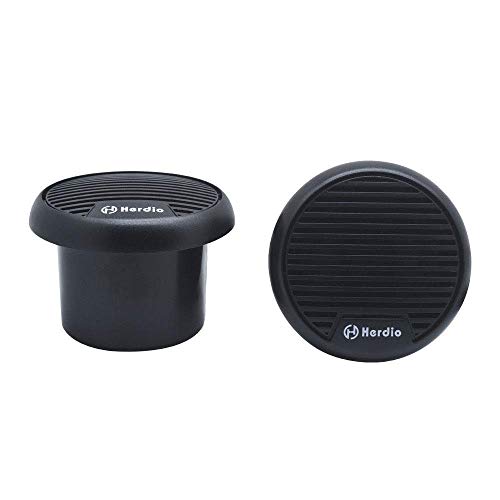
Herdio’s compact speakers are marketed as 3-inch, 2-way full-range units suitable for marine, motorcycle, and small outdoor installations. The listing specifies IP44 splash protection and a polypropylene cone with rubber edge for weather resistance.
Listed frequency response begins around 120 Hz up to 20 kHz, with a 140W peak power claim for the pair. Their compact diameter and shallow mounting depth are emphasized for installations with limited space where water resistance is a priority.
Buying Guide: How To Choose A 3-Inch 2-Way Speaker
Selecting a small 2-way speaker requires balancing size constraints with desired sound quality. Below are key considerations and comparison perspectives to guide your choice.
1. Confirm Actual Size And Mounting Depth
Check the listed diameter and mounting depth against your vehicle or enclosure. A speaker may be advertised close to 3 inches but require additional clearance for the magnet and basket. Measure before purchase.
2. Two-Way Versus Full-Range
Two-way speakers separate tweeter and woofer roles for improved clarity and treble detail. Full-range drivers simplify installation and are common in DIY satellites. Choose two-way if you prioritize separation and full-range if space and simplicity matter most.
3. Power Handling And Amplifier Matching
Compare RMS power handling and peak claims. RMS is the reliable spec to match with your head unit or amplifier. Most compact speakers list modest RMS values; avoid overpowering them to reduce distortion and risk of damage.
4. Sensitivity And Loudness Expectations
Sensitivity (dB at 1W/1m) indicates how loud a speaker will play for a given power level. Higher sensitivity is useful when driven by stock car stereos. Lower sensitivity may require more amplification for the same perceived volume.
5. Frequency Response And Tonal Balance
Look at the advertised frequency range. Many small speakers struggle below ~100 Hz; consider a subwoofer or larger woofer if deep bass is required. For clearer highs, silk-dome or dedicated tweeter designs can reduce harshness.
6. Impedance And Compatibility
Most car speakers are 4 ohms. Ensure your amplifier/head unit supports the speaker impedance to avoid overloading either component or reducing output.
7. Environment: Road, Marine, Or Home
For marine or outdoor use, prioritize weather resistance and corrosion-safe materials (IP ratings, rubber surrounds, sealed baskets). For interior car installs, heat and moisture resilience are still relevant.
8. Installation And Wiring Options
Coaxial speakers simplify installs by integrating tweeters, while component or separate tweeter setups may improve imaging but require more space and mounting effort. For DIY speaker boxes, also consider terminal options and sealing for box integrity.
9. Materials And Build Quality
Cones of polypropylene, treated paper, or composites each affect tone. Rubber surrounds typically last longer than foam in automotive or marine environments. Check listed materials when durability is important.
10. Compare Use Cases
- Stock replacement in cars: prioritize compact two-way coaxials with good midrange clarity.
- DIY satellites/2.0 systems: a high-quality small full-range driver can be efficient and simple.
- Outdoor/marine installs: look for IP-rated, splash-proof designs and corrosion-resistant hardware.
When comparing models, weigh listed frequency response, RMS power, sensitivity, impedance, and physical dimensions together to ensure the speaker fits both your space and sonic goals.