Choosing a 2.1 multimedia speaker system means balancing sound clarity, bass depth, and connectivity. The five systems below cover desktop setups, home theater desks, and Bluetooth-enabled living rooms. The summary table highlights core specs for quick comparison.
| Product | Power/Certification | Inputs | Special Features |
|---|---|---|---|
| Logitech Z533 | 120W Peak (60W RMS) | 3.5mm, RCA | Front-Facing Subwoofer, Room-Filling Sound |
| Cyber Acoustics CA-3610 | 62W Peak (30W RMS) | 3.5mm Aux, Headphone Jack | Control Pod, Down-Firing Subwoofer |
| Logitech Z623 | 400W Peak, THX-Certified | RCA, 3.5mm | THX Certification, High Output |
| Cyber Acoustics CA-3908 | 92W Peak (46W RMS) | 3.5mm Aux, Headphone Jack | Ported 6.5″ Side-Firing Subwoofer, Passive Radiator |
| Acoustic Audio AA2170 | 350W System Power | Bluetooth, Optical, RCA, USB, SD | Bluetooth, Optical Input, USB/SD Playback |
Logitech Z533 2.1 Multimedia Speaker System

The Logitech Z533 offers powerful yet balanced acoustics, rated at 120 watts peak with 60W RMS. It uses 2.25-inch full-range drivers with designed sound directivity intended to fill a room. The front-facing subwoofer emphasizes bass you can feel, producing deeper low frequencies for music, movies, or gaming.
Connectivity includes both 3.5mm and RCA inputs, making this system compatible with PCs, consoles, TVs, smartphones, and tablets. Controls are straightforward and the design aims for easy integration with desktop or entertainment setups. Features emphasize room-filling sound and a subwoofer profile intended to enhance immersion.
Cyber Acoustics CA-3610 2.1 Multimedia Speaker System

The Cyber Acoustics CA-3610 is positioned as a desktop-oriented 2.1 system delivering 62W peak power and 30W RMS. Each satellite features dual 2-inch titanium drivers to reproduce crisp highs and warm mid-tones. The 5.25-inch down-firing subwoofer with tuned port is designed to generate deeper bass for small-to-medium rooms.
A convenient control pod provides easy access to volume and bass adjustments and includes a 3.5mm aux input and headphone jack for private listening. The system is compatible with PCs, Macs, gaming consoles, tablets, and smartphones. Practical aspects emphasize usability, desktop fit, and quick connection options.
Logitech Z623 400 Watt Home Speaker System
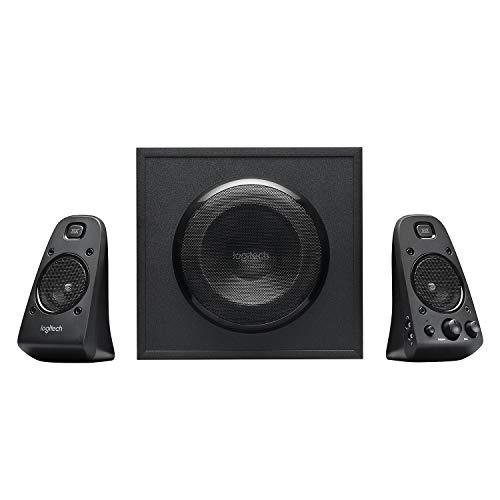
The Logitech Z623 is a higher-output 2.1 system marketed with 400 watts peak power and THX certification. The system consists of two 35-watt satellites plus a powerful subwoofer designed to fill large rooms and deliver immersive audio for movies, music, and games.
Input options include RCA and 3.5mm, enabling connection of up to three audio devices. The specification and THX certification indicate emphasis on studio-quality audio reproduction and dynamic range. The system is better suited to larger spaces where higher output and room-filling performance are desired.
Cyber Acoustics CA-3908 2.1 Multimedia Speaker System
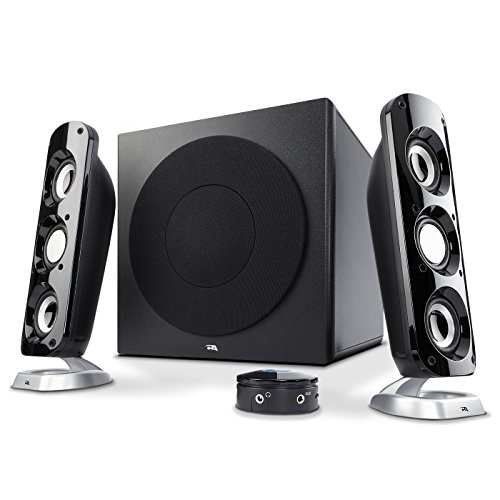
The CA-3908 provides 92 watts peak power and 46W RMS, targeting users who want a balance between desktop convenience and louder output. The system features a ported 6.5-inch side-firing subwoofer and dual 2-inch drivers plus a passive radiator for enhanced low-frequency response.
Controls include a control pod for volume and bass adjustments and an accessible 3.5mm aux input and headphone jack. Usage is versatile—appropriate for desktop PCs, laptops, and game consoles—and engineering notes recommend setting source volume between 65-80% for optimal fidelity before adjusting the speaker controls.
Acoustic Audio By Goldwood Bluetooth 2.1 Speaker System AA2170

The Acoustic Audio AA2170 is a Bluetooth-enabled 2.1 system with an integrated power amp and a system power rating of 350 watts. It supports Bluetooth streaming as well as optical and dual RCA inputs, offering broader connectivity for TVs and digital sources.
Additional features include illuminated front-panel controls, a full-function remote, and USB/SD playback. The subwoofer dimensions and frequency range (40Hz–20kHz) indicate the system is intended for home theater-style setups where wireless streaming and multiple input types are important.
Buying Guide: How To Choose A 2.1 Multimedia Speaker System
Selecting a 2.1 system involves matching room size, source devices, and your priorities for clarity versus bass. The following factors can guide a confident purchase.
Room Size And Power
Small Desks/Bedrooms: Look for systems with lower RMS (20–50W) and compact subwoofers to avoid overpowering the space. Medium Rooms: Systems in the 40–100W RMS range provide fuller sound without distortion. Large Rooms/Home Theater: Higher peak and RMS budgets and certifications (e.g., THX) suggest better performance at higher volumes.
Subwoofer Type And Placement
Front-Facing Subwoofers: Deliver directional bass and can be easier to position. Down-Firing/Side-Firing Subwoofers: Interact differently with floors and walls; may produce more perceived low-end depending on room acoustics. Ported vs Sealed: Ported subwoofers typically deliver more low frequency output for the same power but may trade some tightness in the bass.
Connectivity And Compatibility
Evaluate inputs: 3.5mm and RCA are standard for PC and consoles. Optical input benefits TVs and digital sources. Bluetooth and USB/SD add convenience for streaming music without extra gear. Ensure the system supports the devices you plan to connect.
Controls And Accessibility
Look for reachable volume/bass controls or a control pod for desktop use. A headphone jack is useful for private listening. Remote control and illuminated panels add convenience for living-room setups.
Sound Signature And Fidelity
Driver Design: Full-range satellites deliver mid/high clarity; titanium or specialized cones can affect treble character. Passive radiators and tuned ports help increase low-frequency output without extra power. Certifications (like THX) indicate adherence to performance standards but consider listening tests where possible.
Power Ratings: Peak Vs RMS
Peak power indicates maximum transient capability while RMS represents continuous output. RMS is the more reliable measurement for sustained listening levels. Comparing RMS across models yields a better sense of practical loudness and headroom.
Use Case Comparisons
- Desktop Workstation / Gaming: Prioritize compact satellites, reachable controls, and low-latency wired inputs.
- Living Room / TV: Optical inputs and Bluetooth can simplify connections; a larger subwoofer and higher power suit bigger rooms.
- Music Focus: Seek balanced mids and controlled bass; passive radiators and careful tuning can improve fidelity.
Durability And Build
Wooden or thicker enclosures reduce cabinet resonance and can improve sound purity. Check mounting type (tabletop) and cable lengths for practical placement. Remote controls and illuminated displays add usability but verify build quality and customer support reputation where possible.
Final Comparison Tips
- Match RMS power to room size rather than relying on peak wattage claims.
- Choose a subwoofer design that complements room acoustics (front vs down vs side firing).
- Prioritize inputs you will use most often: optical for TVs, Bluetooth for phones, 3.5mm/RCA for PCs.
- Consider control accessibility (pod or remote) for daily convenience.