Looking For A Reliable 1200 Watt Subwoofer Amplifier? This Guide Compares Five Popular Mono Amplifiers With Different power ratings, stability, filters and control options. Below Is A Quick Comparison Table To Help You Scan Key Specs At A Glance.
| Product | Peak / RMS Notes | Key Controls |
|---|---|---|
| Skar Audio RP-1200.1D | Peak 1,600W / RMS 1,200W @1Ω | Bass EQ Switch, Remote Level |
| KICKER CXA12001 | 1200W Class D Mono (1Ω stable) | Variable 12dB Crossover, KickEQ |
| RECOIL DI600.1 | 1200W Peak; 600W RMS @2Ω | Bass Remote, 4-Way Protection |
| Alpine S2-A120M | 1200W RMS At 1Ω/2Ω | Selectable Remote Turn-On, Side Controls |
| Rockville RVA600.1 | 1200W Peak, 200W Dyno RMS @4Ω | Subsonic Filter, Narrow Q Bass EQ |
Skar Audio RP-1200.1D Monoblock
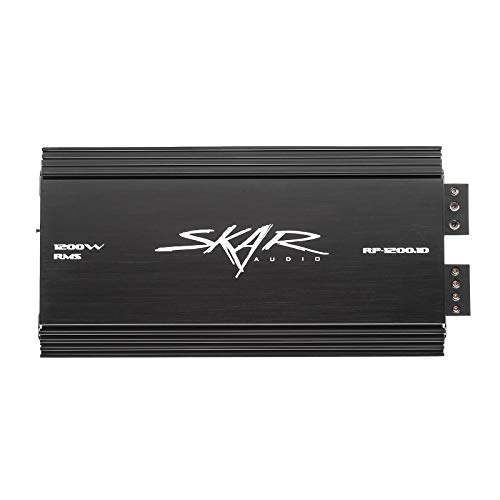
The Skar Audio RP-1200.1D Is A Class D MOSFET Monoblock Designed For High-Output Subwoofer Systems. It Lists A Peak Power Of 1,600 Watts And RMS Of 1,200 Watts At 1 Ohm, Making It Suited For Low-Impedance Loads And Multiple Subwoofer configurations. Frequency Response Is Focused On Sub Bass From 20Hz To 250Hz.
Included Controls And Features: An On-Board Bass EQ Switch Offers +6 Or +12dB Boost At 45Hz And The Unit Supports A Remote Subwoofer Level Control. The MOSFET Power Topology And Class D Efficiency Aim To Deliver High Power While Minimizing Heat Dissipation Requirements.
Application Notes: Best For Installations Where 1-Ohm Stability And A Strong Low-Frequency Boost Are Desired. Consider Enclosure, wiring gauge, and alternator capacity when pairing with high-draw subwoofers.
KICKER CXA12001 Mono Amp

The KICKER CXA12001 Is A Mono Class D Subwoofer Amp Emphasizing Flexibility And Reliability. Designed To Be Stable Down To 1 Ohm, It Supports multiple sub configurations and includes a variable 12dB crossover and a KickEQ 6dB variable bass boost.
Additional Controls: The Amp Features A 24dB Subsonic Filter On Mono Units, Enabling Protection And Cleaner Low-End Output For Sealed And Ported Boxes. KICKER Highlights Durability And User-Tunable Controls For System Tuning.
Application Notes: Useful For Installations That Require Fine-Grained Control Over Low-Frequency Roll-Off And Boost. The combination of crossover, subsonic filter, and EQ makes it adaptable across sealed or vented subwoofer boxes.
RECOIL DI600.1 Class-D Mono

The RECOIL DI600.1 Is A Class-D Mono-Block With A High-Speed MOSFET Power Supply And Multi-Layer Protection Circuitry. The Spec Sheet Lists 1200 Watts Peak With RMS Options Of 600W @2Ω And 350W @4Ω, Reflecting Different measurement conventions.
Included Features: 4-Way Protection (protect/thermal/short/overload), Premium Internal Components, And A Remote Bass Control For On-The-Fly Level Changes. The Amp Uses Efficient Heatsinks For Sustained Performance.
Application Notes: This Amp Is Geared Toward Installations Needing Robust Protection And A Convenient Remote Level Adjustment. Verify your required RMS rating and impedance compatibility before sizing subs and enclosure volume.
Alpine S2-A120M S-Series Mono

The Alpine S2-A120M Is A Hi-Res Certified Class-D Mono Amp Rated At 1200W RMS At 1Ω Or 2Ω Drive, Targeting High-Fidelity Subwoofer Playback. This Next-Generation S-Series Model Adds A Selectable Remote Turn-On Circuit For Better Integration With Modern Head Units.
Design And Controls: Alpine Places Sound Controls On Side Panels For Easier Access After Installation, Including Gain And Crossover Adjustments. The Amp Is Built With Installation-Friendly Features To Improve Usability In Tight Spaces.
Application Notes: Designed For Users Who Prioritize Both High Output And Clean Signal Delivery. The Hi-Res Certification And 1Ω/2Ω Ratings Make It Suitable For Demanding sub designs and multi-driver arrays.
Rockville RVA600.1 Mono Amplifier

The Rockville RVA600.1 Is A Mono Amplifier That Combines Class-AB Topology With MOSFET Power Supply Elements. The Unit Lists 1200W Peak And A Dyno-Certified 200W RMS @ 4Ω, Indicating Conservative RMS performance at higher impedance.
Included Sound Controls: Adjustable Low-Pass Crossover (50–250Hz), A Subsonic Filter (10–50Hz), And A Narrow Q Bass Equalizer At 45Hz. A Remote Bass Control Is Also Included For Quick Adjustments.
Application Notes: Suitable For Setups That Prioritize Tunability Over Absolute Peak Output. Check RMS specifications at the target impedance and match subwoofer power handling to avoid mismatch.
Buying Guide
This Buying Guide Covers Key Considerations When Choosing A 1200 Watt Subwoofer Amplifier For Car Audio. Use Multiple Perspectives—Power, Impedance, Controls, Efficiency, And Installation—To Determine The Best Match For Your System.
Power Ratings And Measurement Types
Manufacturers May Quote Peak Or RMS Values. RMS (Continuous) Power Is The Practical Figure For Matching An Amplifier To Subwoofer Power Handling. Peak Power Indicates Short Bursts And Is Less Useful For Continuous Performance.
Impedance Stability
Check If The Amp Is Stable At 1Ω, 2Ω, Or 4Ω. Stability At Lower Impedance Lets You Wire Multiple Subwoofers In Parallel Or Series. However, Lower Impedance Demands More Current From The Vehicle’s Electrical System.
Efficiency And Class Type
Class D Amps Offer Higher Efficiency And Lower Heat, Often Preferred For High-Power Mono Applications. Class-AB Can Provide Specific sonic traits but may run hotter and draw more current.
Controls And Filters
Useful Controls Include Low-Pass Crossover, Subsonic Filter, Bass EQ/Boost, And Remote Level Control. A subsonic filter helps protect subs in ported boxes while narrow Q EQ allows targeted boosts without affecting adjacent frequencies.
Thermal And Protection Features
Look For Thermal, Short, And Overload Protection To Ensure Reliability During High-Demand Playback. Robust MOSFET Supplies And Heatsinks Improve Sustained Output Capability.
Installation Considerations
Consider Physical Size, Terminal Types, Wiring Gauge Requirements, And Accessibility Of Controls Post-Installation. Side-Mounted Controls Or Remote Knobs Make Tuning Easier Once The Amp Is Mounted.
System Matching And Electrical Load
Confirm Your Vehicle’s Charging System Can Support The Amplifier’s Current Draw. Evaluate Subwoofer Power Handling And Enclosure Type (sealed vs vented) To Avoid Underpowering Or Overdriving Components.
Measurement And Verification
If Possible, Use Independent RMS/Dyno Measurements Or Manufacturer Detailed Specs To Verify Claimed Outputs. RMS At Target Impedance Provides A Realistic Expectation Of Performance.
Multiple Comparison Perspectives
- Power Delivery Perspective: Compare RMS Figures At The Same Impedance (1Ω/2Ω/4Ω) Rather Than Peak Numbers.
- Tuning Perspective: Prioritize Amps With Relevant Filters/EQ If You Need Precise Bass Shaping.
- Reliability Perspective: Choose Units With Protective Circuitry And Proven Thermal Management For Sustained High Output.
- Installation Perspective: Factor In Size, Terminal Accessibility, Remote Control Options, And Turn-On Features For Seamless Integration.