Choosing the right 1/4″ speaker cable splitter depends on whether you need a simple Y-adapter, a mono-to-stereo breakout, or a multi-output box. The table below summarizes the five selected products with quick specs to help comparison.
| Product | Type | Key Feature |
|---|---|---|
| HOSONGIN 1/4″ Splitter Cable | TRS Male To Dual TRS Female (Y Cable) | Gold-Plated Connectors, Shielded |
| ukiism 1/4 Splitter Cable | 6.35mm Stereo Male To Dual TRS Female | Nylon Braid, High-Fidelity |
| XMSJSIY 6.35mm TS Guitar Y Splitter | TS Mono Male To Dual TS Female | OFC Copper, Guitar Signal Focus |
| Disino TRS Stereo Y-Splitter Insert Cable | TRS Male To Dual TS Male Breakout | Stereo To Dual Mono Insert / Combine |
| Cubilux 5-Way Quarter Inch Signal Splitter | Passive Multiport Splitter Box | Five Outputs, Metal Housing |
HOSONGIN 1/4″ Splitter Cable

This TRS Male to Dual TRS Female Y adapter is designed to split a single stereo signal into two outputs. The product features a 1/4″ TRS male plug and two 1/4″ female stereo jacks for duplication of stereo feeds. The manufacturer notes it does not combine two outputs into one input, which is an important wiring limitation to be aware of.
Construction highlights include tinned copper wiring, gold-plated connectors, and a fully molded, shielded design to reduce EMI/RFI interference. These attributes aim to minimize signal loss and keep audio distortion low, making the cable suitable for studio, DJ, or live sound use where a straightforward split of a stereo line is required.
ukiism 1/4 Splitter Cable

The ukiism cable is an 8-inch (20cm) stereo Y-splitter built for short patching and desktop setups. It splits one stereo output into two identical stereo outputs, prioritizing high-fidelity sound reproduction and lossless audio after splitting.
Materials include pure copper, gold-plated plugs, a 128 woven mesh shell, and an aluminum alloy receptacle. The listing also mentions a built-in chip for interference filtering to stabilize performance. This product is positioned for listeners and performers who need a durable, compact splitter for studio or live use.
XMSJSIY 6.35mm TS Guitar Y Splitter

This cable is a TS (mono) style Y-splitter intended primarily for instrument signals—most notably guitar. The cable splits a mono instrument output into two identical mono outputs rather than preserving a stereo field, so it’s suited to routing a guitar or mono source to two amps or pedals.
Construction notes emphasize gold-plated plugs, 28AWG oxygen-free copper, and an aluminum alloy shell. The product description cautions that it cannot combine two outputs into one input. Choose this when duplicating a mono instrument feed is required rather than splitting stereo channels.
Disino 1/4 TRS Stereo Y-Splitter Insert Cable

The Disino insert cable is designed to split a stereo TRS into two mono TS signals or to combine two mono signals into stereo when wiring and equipment allow. This makes it useful for consoles, preamps, and insert/send-return applications where tip/ring carry separate channels.
Features include 24k gold-plated connectors, a split point located about 19.6 inches from the end, and color-coded connectors for channel identification. The listing emphasizes professional compatibility and durable grip-friendly connectors, useful in repeated patching scenarios in studios or live rigs.
Cubilux 5-Way Quarter Inch Signal Splitter
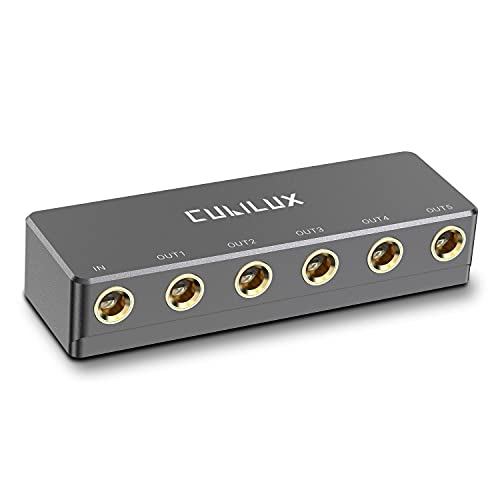
The Cubilux splitter is a passive multiport splitter box with five 1/4″ output jacks. It’s intended to distribute a single feed to multiple destinations—speakers, monitors, amps, or headphones—without active electronics. The metal housing and gold-plated jacks aim to preserve signal integrity.
The manufacturer notes that, due to its passive design, multiple outputs can result in reduced level at each output and recommends adjusting volume accordingly. The unit is aimed at live performance or simple studio setups where multiple identical outputs are needed from one source without complex routing.
Buying Guide
When selecting a 1/4″ speaker cable splitter, consider these factors to match your application needs across studio, live, and instrument setups.
- Connector Type (TRS vs TS): TRS splitters maintain stereo signals (tip=left, ring=right), while TS splitters handle mono signals. Use TRS-to-dual-TRS for stereo duplication, TS splitters for mono instrument duplication.
- Passive vs Active Splitting: Passive splitters (Y cables, multiport boxes without electronics) are simple and inexpensive but can reduce output level or impedance. Active splitters buffer signals and preserve levels but require power and cost more.
- Intended Routing: For inserts or console send/return uses, look for TRS-to-dual-TS breakout cables designed to map tip/ring to separate mono channels. For guitars, choose TS mono splitters.
- Signal Combining Caveats: Most passive Y-splitters duplicate a signal but do not safely combine two outputs into one input. Combining outputs can damage gear unless using a proper mixer or combine circuit.
- Cable Length And Build: Shorter cables reduce noise and capacitance; look for shielding, braided jackets, and molded strain relief for durability in live use. Nylon braid and aluminum shells improve longevity.
- Materials And Contacts: Gold-plated connectors resist corrosion and can reduce contact noise. Oxygen-free copper conductors and dual shielding help maintain fidelity in critical audio paths.
- Number Of Outputs: Choose a simple Y-cable for two-way duplication or a multiport box if you need to feed many devices. Remember multiple passive outputs may need level adjustments on receiving gear.
- Compatibility: Verify that the splitter wiring matches your devices. Some gear expects balanced TRS signals; splitting a balanced line into two unbalanced outputs can change levels and noise characteristics.
- Application Examples: Use TRS Y-splitters for headphone distribution or stereo line duplication. Use TS splitters for sending a guitar to two amps. Use TRS-to-dual-TS insert cables for signal processing chains on consoles.
- Durability For Live Use: For frequent plugging and transport, prioritize reinforced jackets, molded connectors, and metal housings to avoid failures on stage.
Compare these perspectives—connector wiring, passive vs active design, and mechanical construction—when matching a splitter to your specific audio setup. Each product type has trade-offs in signal integrity, convenience, and robustness that matter for studio and live environments.